Draw your family tree
Why children should decide for themselves how much family history they tell in class.
Guest Article
Let us imagine a school assignment: «Draw your family tree.» Enter your parents, add your grandparents, colour it in, present it to the class.
For some children that is an afternoon with felt-tip pens. For others it starts with a question they cannot answer. Or an answer they would rather not give in front of the class.
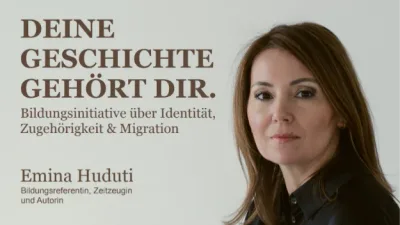
I run workshops on identity and belonging in schools. I come from Bosnia, have survived two wars and have lived in Germany since 2000. From my own history I know that origin is more than names and places of birth. It also includes war, displacement and the question of what one wants to tell about one's past.
An empty field on a family tree can stand for loss, for lost contact or for information that is unknown. It need not be something a child wants to explain. And certainly not in front of an audience.
Whoever asks must leave room for boundaries
Family histories can have a valuable place in the classroom. They can make diversity visible, open up conversations and show children that different life paths are part of the community.
An assignment becomes difficult when it assumes that every family history is fully known and can be told in public.
A child may not know where their grandparents live. Another knows exactly, but does not want to talk about their death or a separation. Yet another lives with a foster family or does not know their biological parents.
A family with two mothers also needs no explanation for being a family. A template that provides only fields for mother and father, however, turns their reality into a deviation from the form.
The difficulty lies not in the family. It lies in an assignment that leaves too few options.
Belonging needs no performance
The question goes beyond the family tree. «Bring a typical dish.» «Tell us about your country.» «Say something in your language.»
Such invitations can spark curiosity and exchange. But they can also pin a child to an origin that others ascribe to them. Which country is meant if the child was born here? Which language if the child speaks several? And may the child also say that today they would rather talk about something else?
What matters is whether a child can choose. Whether they may share something without having to reveal something.
Belonging must not depend on how much a child tells about their family history. No child should first have to perform a special story to be seen as part of the class.
The International Rescue Committee also stresses the importance of voluntariness in its guidance on working with refugee children: children should be able to decide for themselves whether and when they talk about their experiences. That is no reason to avoid personal conversations. It is a reason to design them as an offer.
What would be possible instead
I do not want to banish family history from the classroom. I want assignments that take different families into account and respect personal boundaries.
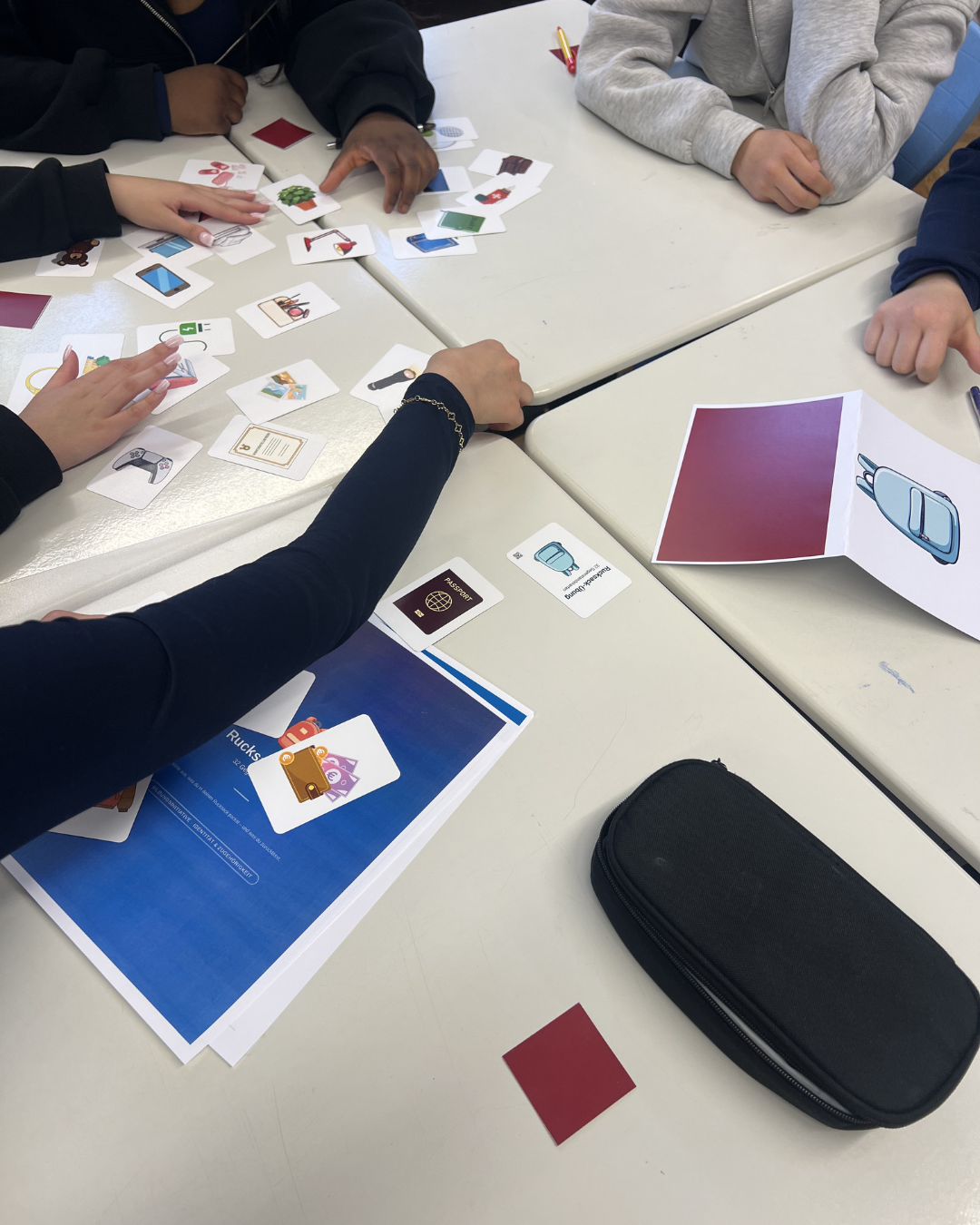
First: choices for everyone. «Draw a tree that shows who matters to you. You can also draw a family tree or the tree of an invented family.» Nobody has to request an exception or justify why their own history does not fit on the sheet. Presenting personal details should also be voluntary.
Second: inform in advance. Children and their guardians learn in good time which questions an assignment asks and which alternatives exist. The child's decision still matters: what may be discussed at home does not therefore belong in front of the class.
Third: support teachers. Training can help to recognise sensitive assignments and to handle them with restraint. Not every silence has to be resolved. Sometimes it is enough to offer another option and to make clear: you don't have to explain that.
The objection is obvious: it is only a craft task. For some children that is true. Others connect it with questions that reach far beyond the paper. An open assignment takes nothing away from the one child and gives the other more freedom.
Children do not need roots to show off. They need ground to stand on.
Source on the voluntariness of personal accounts: rescue.org/uk/article/how-teachers-are-making-school-safe-p…