Section
Politics
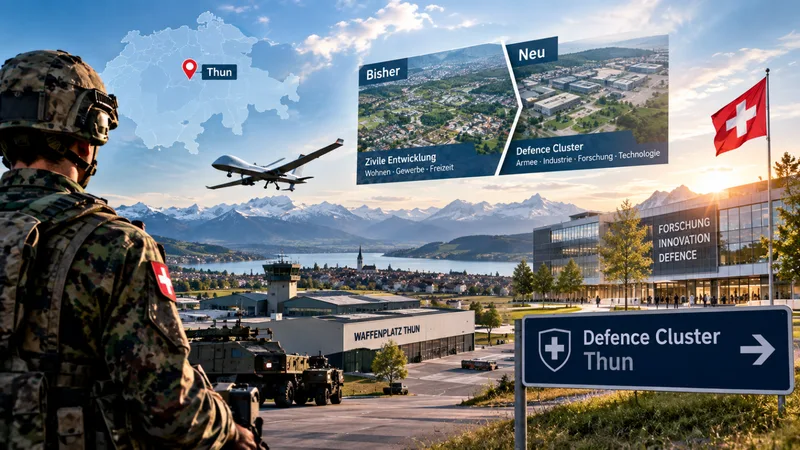
Thun Military Base Becomes Defence Cluster – Civilian Plans Under Pressure
The Federal Government reserves land in ESP Thun Nord for defence and innovation. A multi-year dialogue with the city of Thun has now commenced.
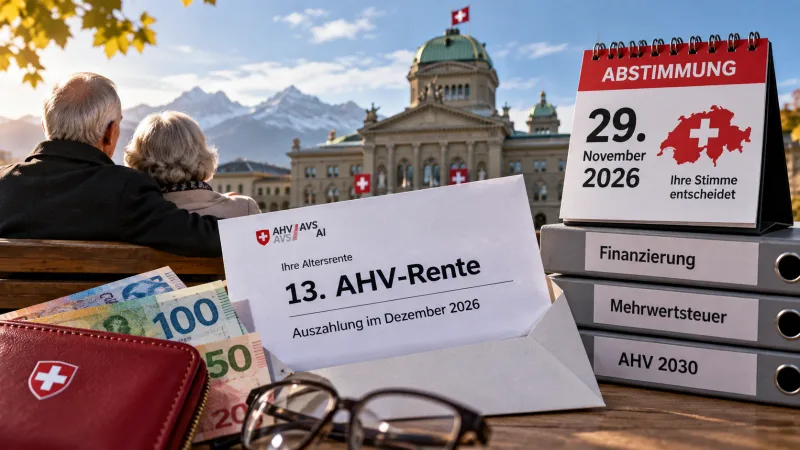
13th AHV Pension Arrives in December – Switzerland Votes on Funding
The first payment is decided. Voters will decide on November 29, 2026, whether the planned VAT increase will take effect from 2028.
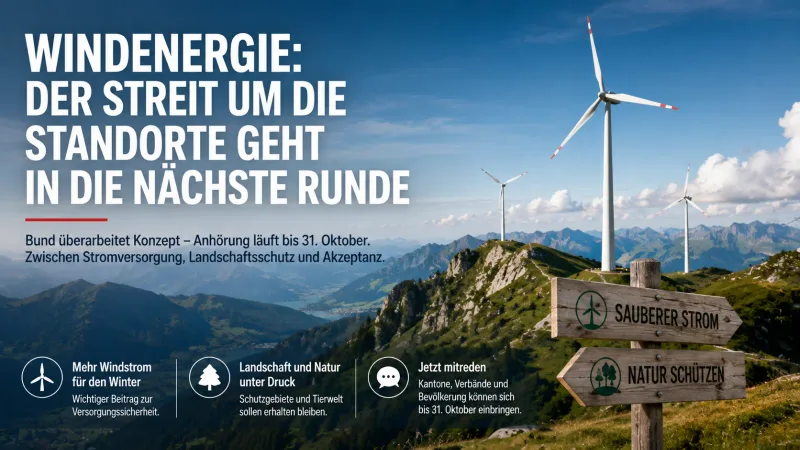
Wind Power in Switzerland: Site Disputes Enter Next Round
Switzerland aims for more renewable electricity, but the placement of wind turbines remains contentious. The Federal Government sets new guidelines with a revised wind energy concept. The consultation period has now begun. For the public, a question arises that will become more concrete in the coming years: How much landscape is Switzerland willing to alter for more domestic power?
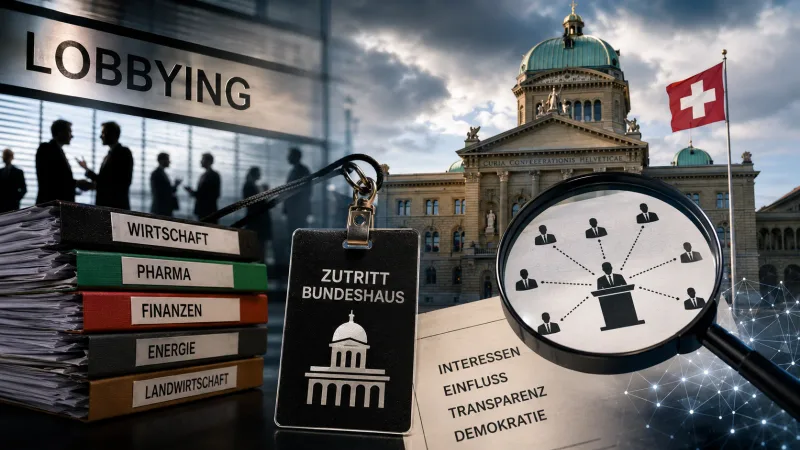
Lobbying in the Federal Palace: How Transparent is Swiss Politics?
The Federal Palace is not just about party politics. Businesses, associations, unions, and other organizations strive to introduce their concerns into policy-making. This is generally legitimate. But when parliamentarians are both lawmakers and paid lobbyists, a critical question arises: Does the public know enough about who exerts influence – and for whom?
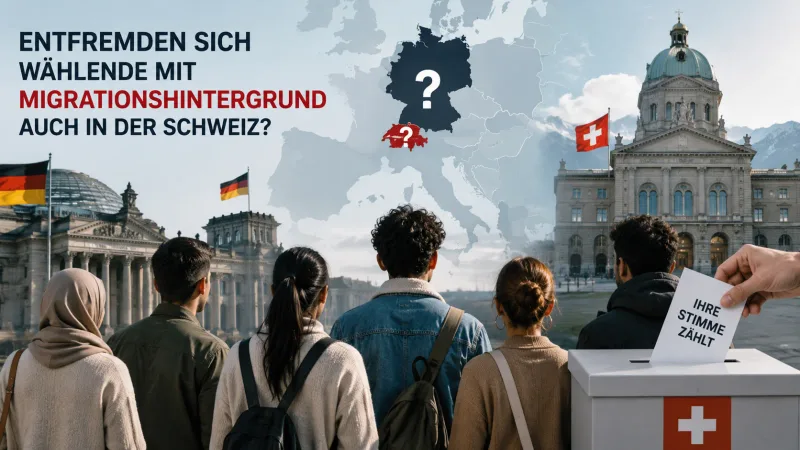
Are immigrant background voters becoming alienated in Switzerland too?
A new DeZIM study reveals increasing detachment from German parties. While Switzerland has its own research, a directly comparable current data series is missing to show if voters with a migration background are also becoming alienated from Swiss parties.
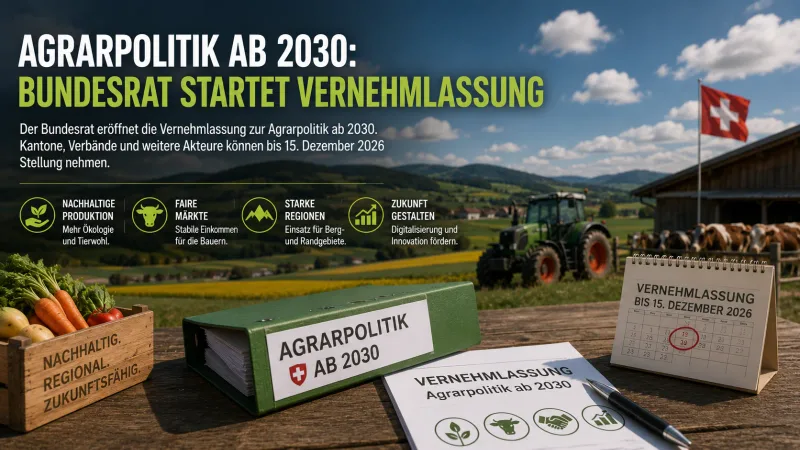
Agricultural Policy 2030: Federal Council Launches Consultation
The Federal Council has launched the consultation on agricultural policy from 2030. The draft is now public. Cantons and associations can submit their input before Parliament makes a decision.
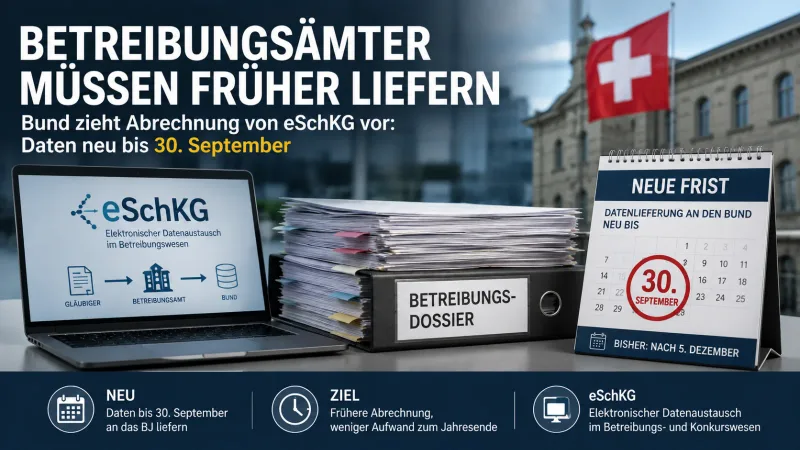
Debt Collection Offices to Submit Data Earlier – Easing Year-End Burden
This seemingly minor statistical adjustment tackles a common administrative challenge: year-end workload. Previously, debt collection offices submitted electronic debt collection system data in December. Moving forward, this submission will occur in September.
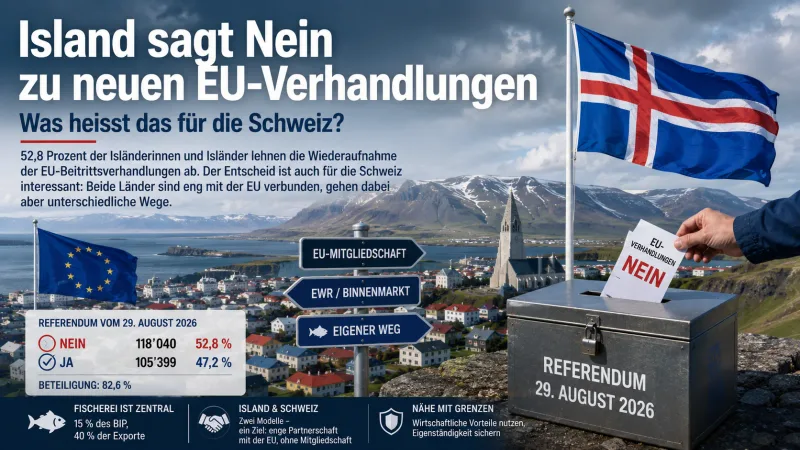
Iceland Says No to New EU Talks – What Does This Mean for Switzerland?
52.8 percent rejected the resumption of EU accession talks. The decision is relevant for Switzerland because Iceland, like Switzerland, maintains close ties with the EU but is not a member.
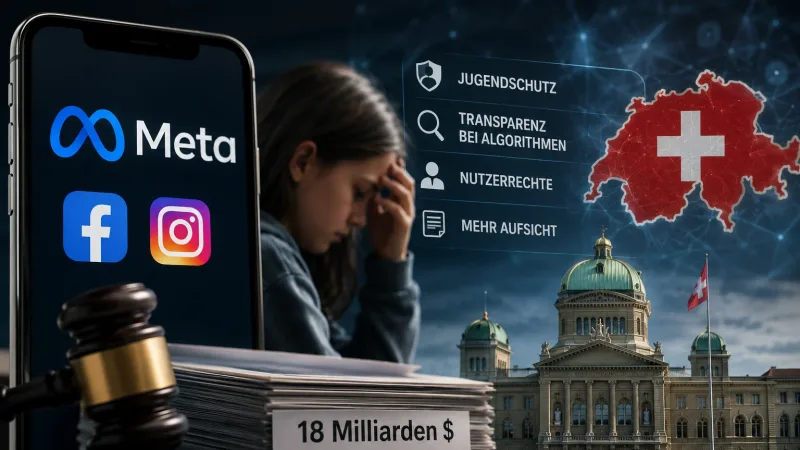
Meta Under Pressure: $18 Billion US Settlement – What's Switzerland Planning?
Switzerland is planning the Communication Platforms and Search Engines Act (KomPG) for large social media platforms. While the US secures multi-billion dollar settlements, key details of the Swiss legislation remain open.
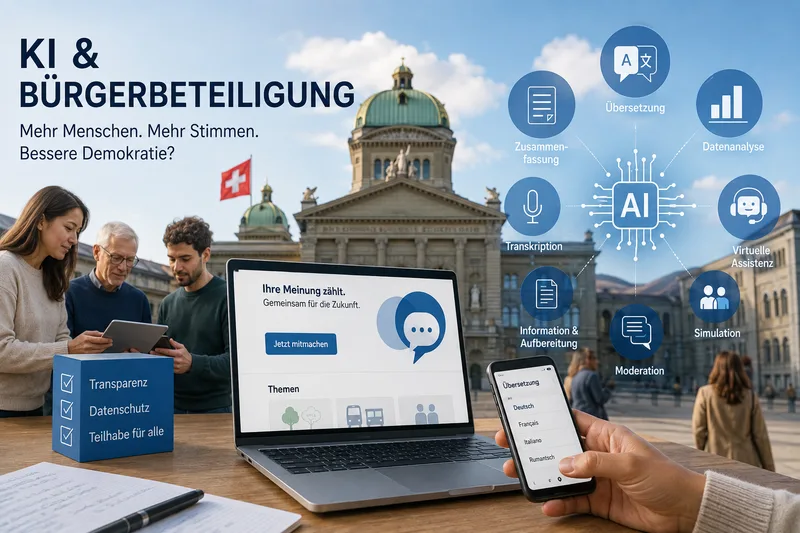
AI for Citizen Participation: What Switzerland Can Learn
A new study by the Bertelsmann Stiftung and OECD shows how Artificial Intelligence can support citizen participation. For Switzerland, this presents opportunities but also raises questions regarding transparency and inclusion.
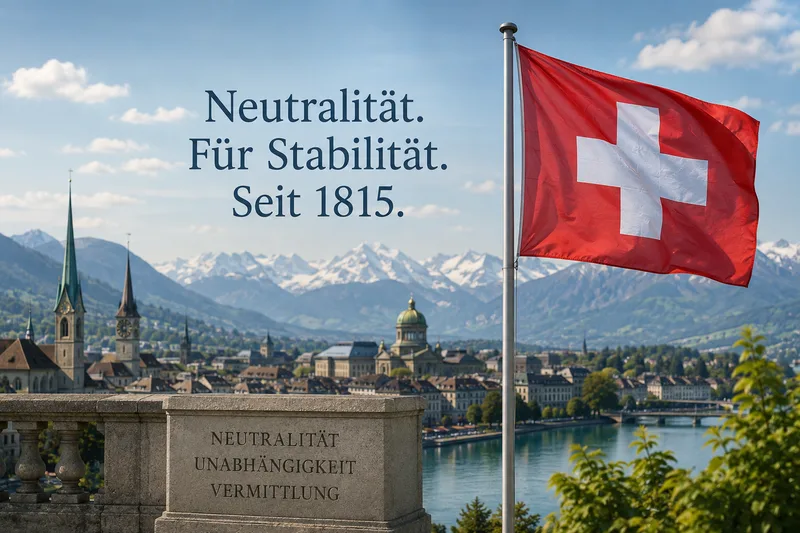
Neutrality Initiative: What a 'Yes' Would Mean
On September 27, 2026, Switzerland votes on the Neutrality Initiative. The Federal Council and Parliament recommend a 'No'. An overview of the arguments.

Federal Council Launches Digital Platform ZiviConnect
The Federal Council decided to introduce ZiviConnect. The new digital platform aims to simplify civilian service administration and improve communication between authorities and service providers.
Neutrality Initiative: Blocher's Potentially Last Major Battle
The SVP's Neutrality Initiative marks a turning point: for the first time, the party disregards the position of its long-standing ideologue, Christoph Blocher, on a central foreign policy issue. What does this signify for the party's future direction?