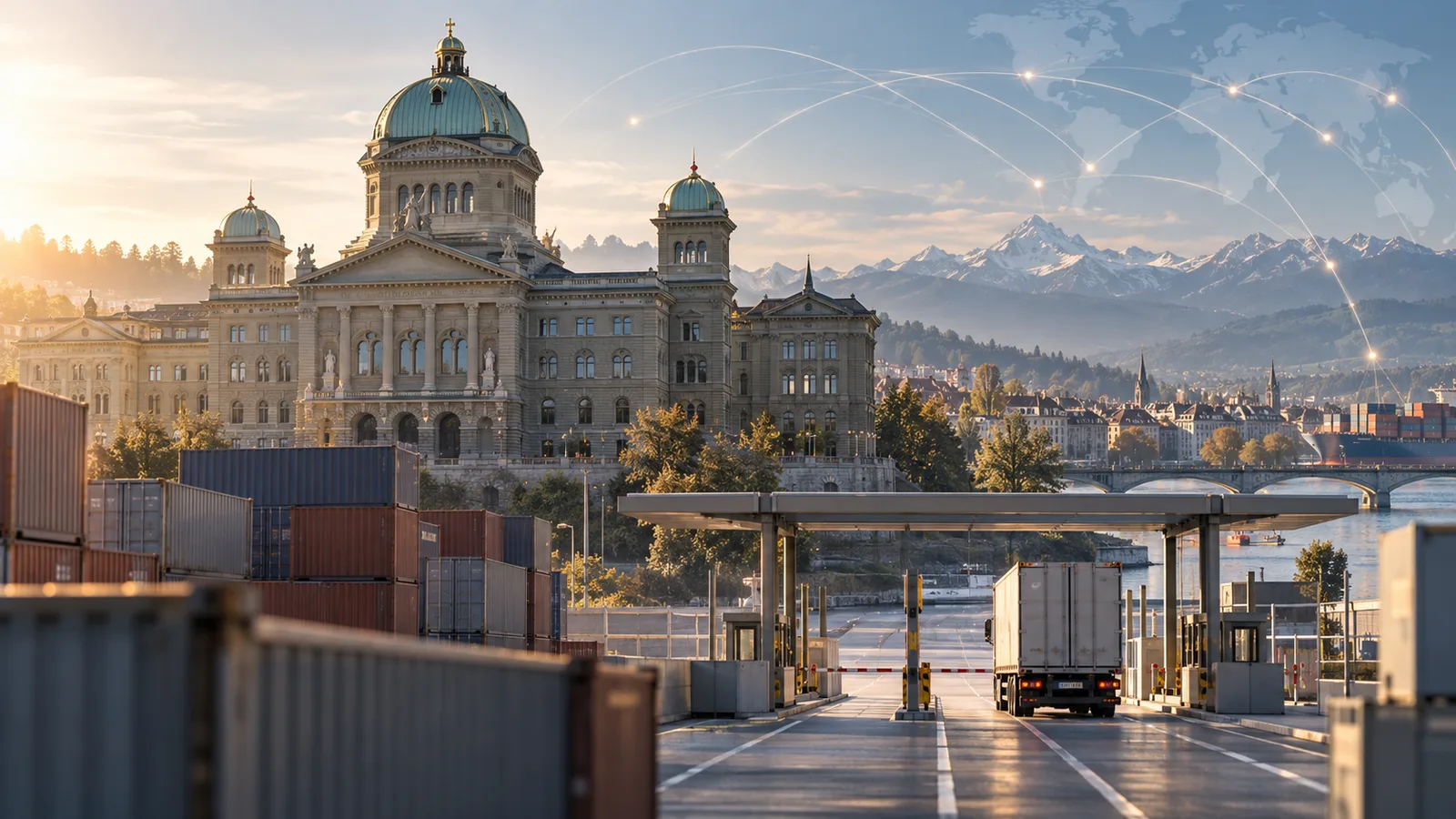
Parmelin touts free trade – where Switzerland stays open and where not
The president defends open markets in New York. A look at tariffs and agreements shows that Switzerland is widely open on industrial goods and considerably less so in agriculture.
Guy Parmelin used the UN General Assembly to warn against new barriers. The president combined his plea for free trade with the demand that states should “cultivate open exchange and erect no new obstacles”. The message of 22 September in New York suits a small country that depends heavily on exports. But it also raises an obvious question: how open is Switzerland in its own trade policy?
A speech against the backdrop of new trade conflicts
Parmelin's appearance was broader than a fundamental speech on trade policy. He spoke about dialogue, technological upheaval and the weakening of international institutions. Free trade was part of a larger argument: rules and exchange should limit power politics and isolation.
For Switzerland, this is not merely diplomacy. Pharmaceuticals, machinery, precision instruments and watches are produced and sold in global value chains. New tariffs make inputs more expensive, weaken competitiveness and can trigger countermeasures. Smaller states in particular therefore benefit from predictable rules more than major powers that can use market access as leverage.
Industrial goods: Switzerland has opened widely
On industrial goods, Swiss practice is indeed liberal. Since the start of 2024 the federal government has no longer levied import duties on industrial products. According to the World Trade Organization, around 90 percent of Swiss tariff lines were duty-free in 2026. The simple average of applied most-favoured-nation tariffs across all goods was 3.0 percent; trade-weighted, it was 1.0 percent for 2024.
On top of that comes a dense network of free trade agreements that Switzerland has concluded bilaterally or jointly with its EFTA partners. The agreement with India has been in force since 1 October 2025. The agreement with the Mercosur states was signed on 16 September 2025; signing does not yet mean that it is in force. Such treaties lower tariffs, regulate proof of origin and create procedures for technical barriers to trade.
A current example is China. In August 2026 Switzerland concluded negotiations on optimising the existing free trade agreement. According to SECO, 99.8 percent of current Swiss exports should thereby be able to enter the Chinese market duty-free. The new provisions do not yet apply, however: after legal scrubbing, signature and then domestic approval procedures are planned.
The effect of such agreements is not automatically symmetrical. Companies use preferences only if they meet the rules of origin and the administrative burden is smaller than the tariff saving. For small firms, precisely that burden can remain a hurdle.
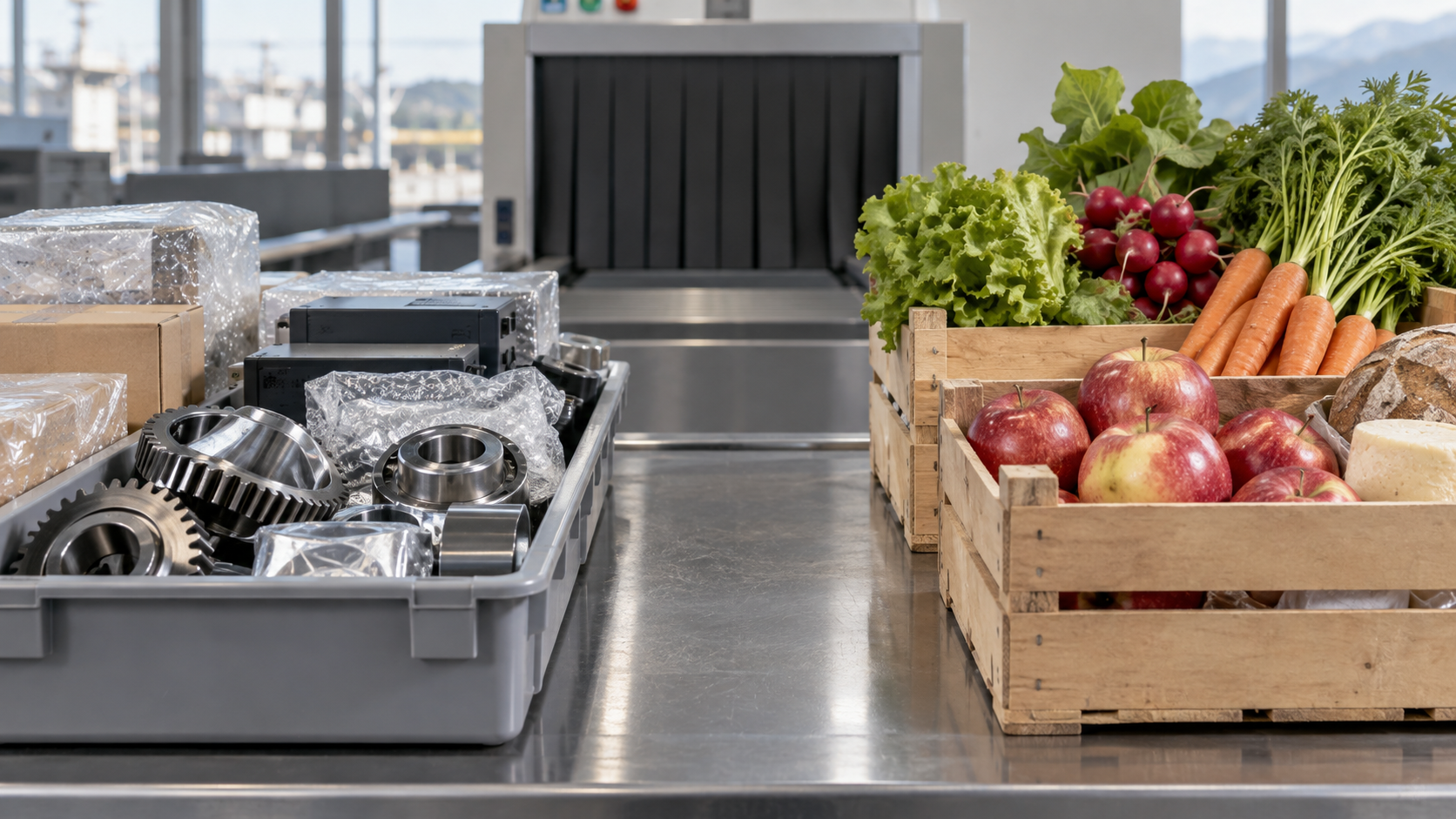
Agriculture remains considerably more heavily protected
In agriculture, Switzerland relies much more heavily on protective instruments. It shields numerous agricultural products with tariffs, tariff quotas and domestic support. In its country reviews, the WTO has repeatedly pointed to high agricultural tariffs and state support. The abolition of industrial tariffs has changed nothing about that.
Switzerland thus pursues different goals depending on the sector: on industrial goods it relies strongly on open market access, while in agriculture it gives greater weight to supply security, farm incomes and other agricultural policy goals.
Free trade agreements do not replace the WTO
Switzerland responds to blocked multilateral negotiations with regional treaties. That gives exporters access to individual markets, but also creates a patchwork of differing rules. In its World Trade Report 2026, the WTO notes that regional and targeted agreements can test new rules but at the same time can increase the fragmentation of world trade.
Parmelin's speech therefore touches a central Swiss interest: for the country, a functioning multilateral system is more valuable than a world in which every market access is negotiated individually. Bilateral treaties are a safeguard, but not a complete substitute for generally applicable rules and an effective dispute settlement.
Openness remains a political choice
Switzerland largely implements Parmelin's free trade message for industrial goods. It has removed its own industrial tariffs and secures market access through numerous agreements. At the same time, it protects agriculture considerably more heavily. This is not a conceptual contradiction but the result of differing political priorities.
Parmelin's speech thus describes a strategic interest of Switzerland: as a small economy that is heavily integrated internationally, it depends on predictable market access. Its own trade policy also shows that this openness does not extend equally far in all areas.
Sources
- Federal Council: Parmelin makes the case at the UN for dialogue and free trade
- EAER: Speech by President Guy Parmelin at the UN General Assembly
- WTO: Tariff and trade profile of Switzerland
- SECO: Free trade agreement Switzerland/EFTA–India
- SECO: Free trade agreement Switzerland/EFTA–Mercosur
- SECO: Conclusion of negotiations on optimising the free trade agreement with China
- WTO: World Trade Report 2026 – summary


