What the new federal report on Schengen/Dublin actually quantifies
In a scenario for 2035, the Federal Council warns of the costs of dropping the Schengen/Dublin association. The figures describe possible consequences, not a forecast.
At the end there is no vote, no decision to withdraw and no concrete timetable. Nevertheless, on 18 September the Federal Council adopted a report that warned unusually clearly about the costs of abandoning the Schengen/Dublin association. The paper answers a postulate from the National Council and asks: what if Switzerland were no longer part of this cooperation in 2035?
The answer consists of ranges. According to the report, gross domestic product in 2035 could be up to 3.9 percent lower than in a scenario with Schengen/Dublin. The annual loss of income could reach up to 1,300 francs per capita. Neither figure should be read as a forecast for today's economy. They depend on how the EU and the neighbouring states would react to such a step and on how costly border controls, databases and substitute solutions would turn out to be.
Why traffic at the border is central
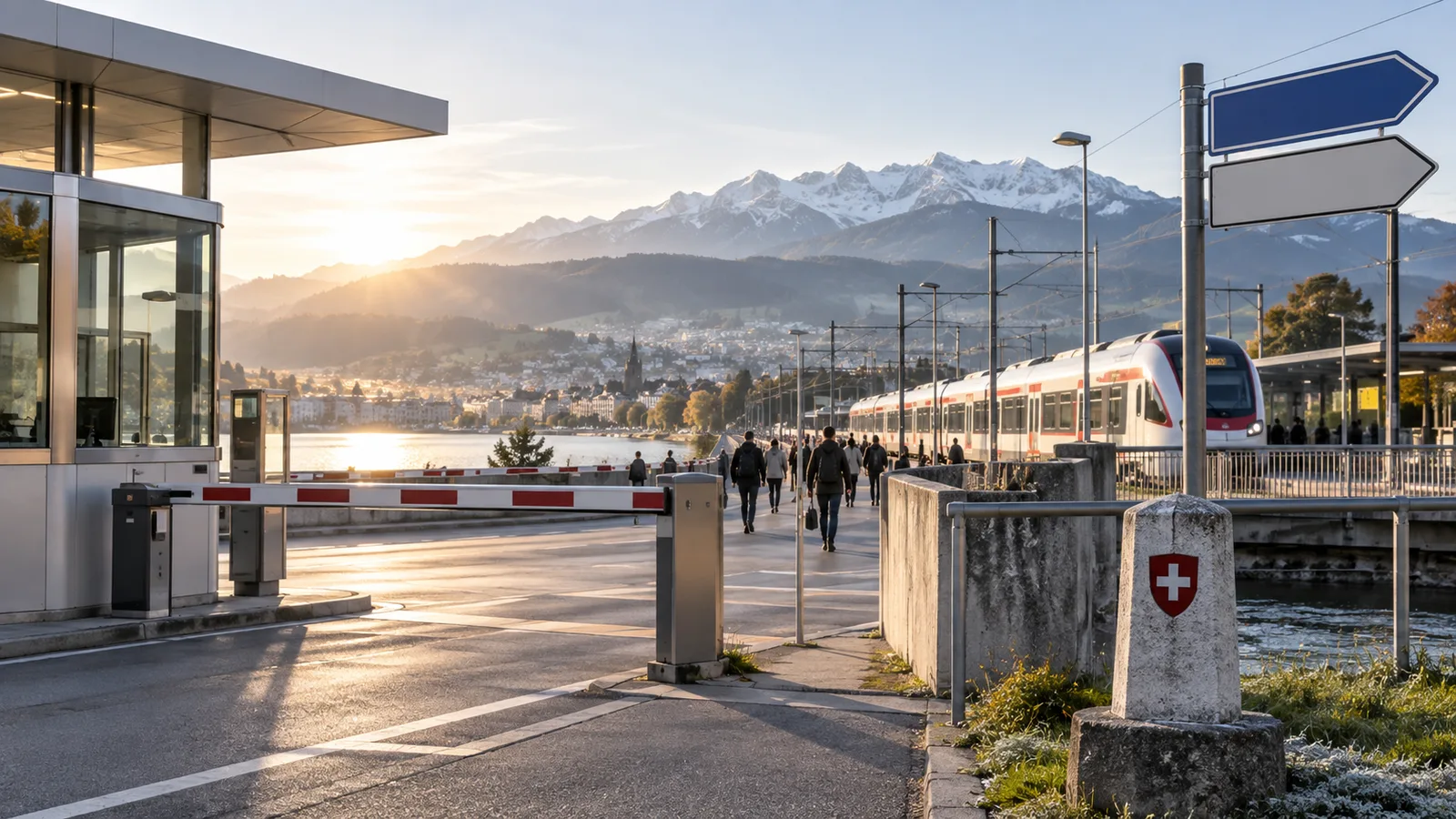
For the economic consequences, the report relies on an updated external study. Without the association, the Swiss border would become the Schengen external border under EU law. Neighbouring states would have to control entries and exits; Switzerland too would have to build up infrastructure and staff.
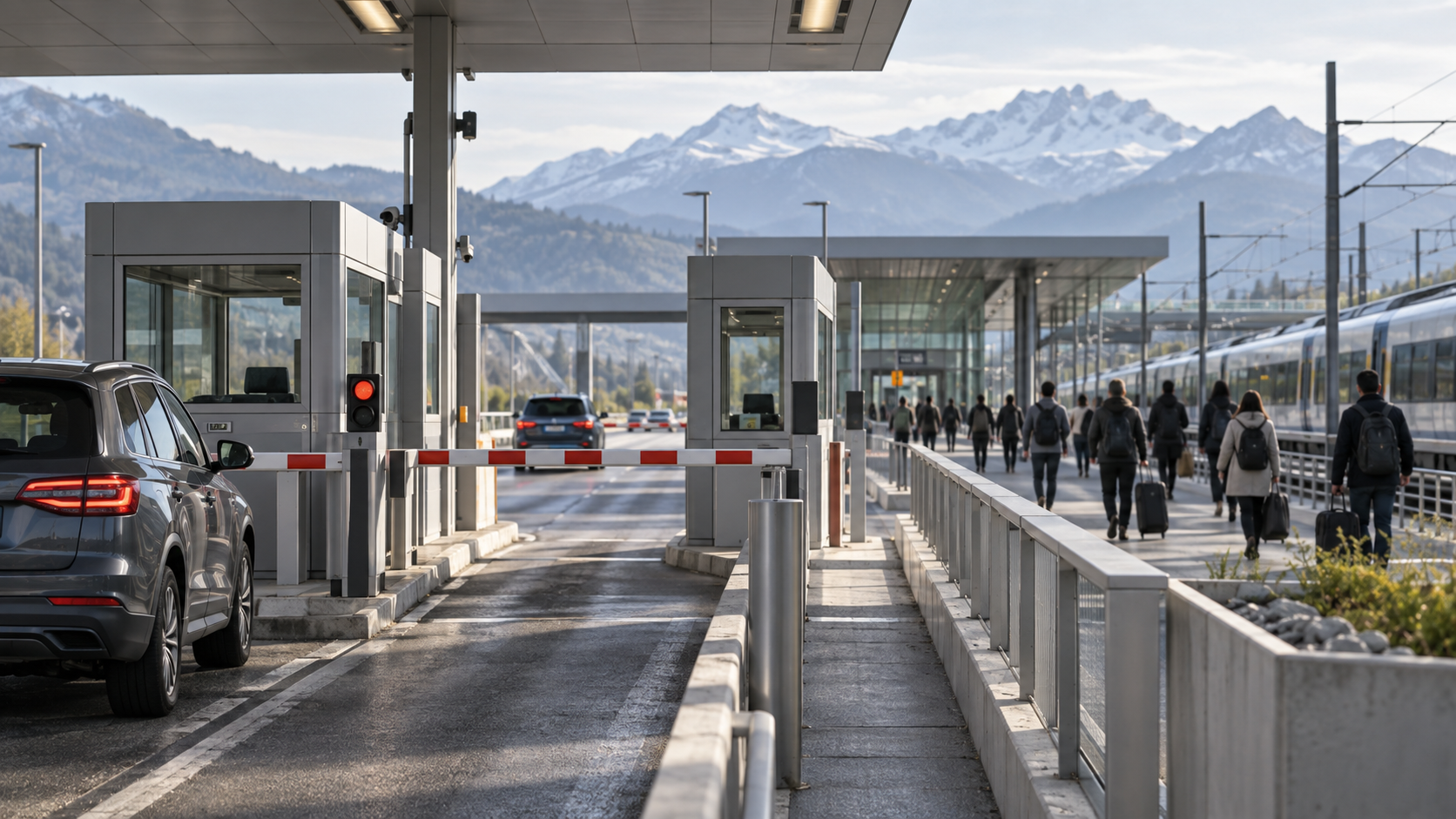
The consequences would be most visible in commuter traffic. For 2035, the study calculates up to 422,000 hours that cross-border commuters could lose each working day in traffic jams. It puts the resulting congestion-time costs at 1.08 to 2.27 billion francs. In the same scenario, the number of cross-border commuters could fall by up to 60 percent. The Federal Council names hospitality and care as particularly affected sectors.
The phrase 'up to' is decisive here. According to the report, how much waiting time would actually arise depends, among other things, on how much staff the neighbouring states deployed for controls. The figures therefore show a possible burden in a modelled scenario. They do not prove that today's cross-border traffic is already threatened in this form.
Tourism and asylum as further cost blocks
Visa-obliged travellers would also be affected. Today they can travel to several states with a Schengen visa. For a Switzerland outside Schengen, a separate Swiss visa would involve additional effort. For 2035 the study assumes lost revenue in tourism of between 320 and 810 million francs a year.
In the asylum area, the report points to the Dublin system. This allows transfers to another Dublin state where an application has already been filed there. Without this option, Swiss authorities would, according to the study, have to expect additional costs of between 166 and 824 million francs. Here too it is a range that depends on future migration movements and on cooperation with other states.
Security cannot be expressed in francs
For the security benefit, the Federal Council refrains from giving a total. The Schengen Information System, SIS for short, provides Swiss authorities with information on wanted persons, entry bans or stolen objects. In 2025 there were just under 40,000 hits relevant to Switzerland, according to the report.
The report does not conclude that every hit prevented a concrete danger. It does state, however, that its own databases and national substitute instruments could not fully replace European cooperation. This distinction matters: the economic part works with models, the security benefit remains partly qualitative.
A report, not a decision
The publication is therefore above all a classification of the existing agreements. The Federal Council argues that their benefits go beyond open borders. For readers, the figures are most telling when they are understood as scenarios: they show which areas would be particularly vulnerable in a change of system – border traffic, the labour market, tourism, asylum and police cooperation.
Whether the assumed effects would actually occur is something the report naturally cannot prove. Instead it states openly what the calculations are based on and where the uncertainty lies. That is precisely what makes it politically relevant: not because it predicts the future, but because it makes the costs of an alternative visible.