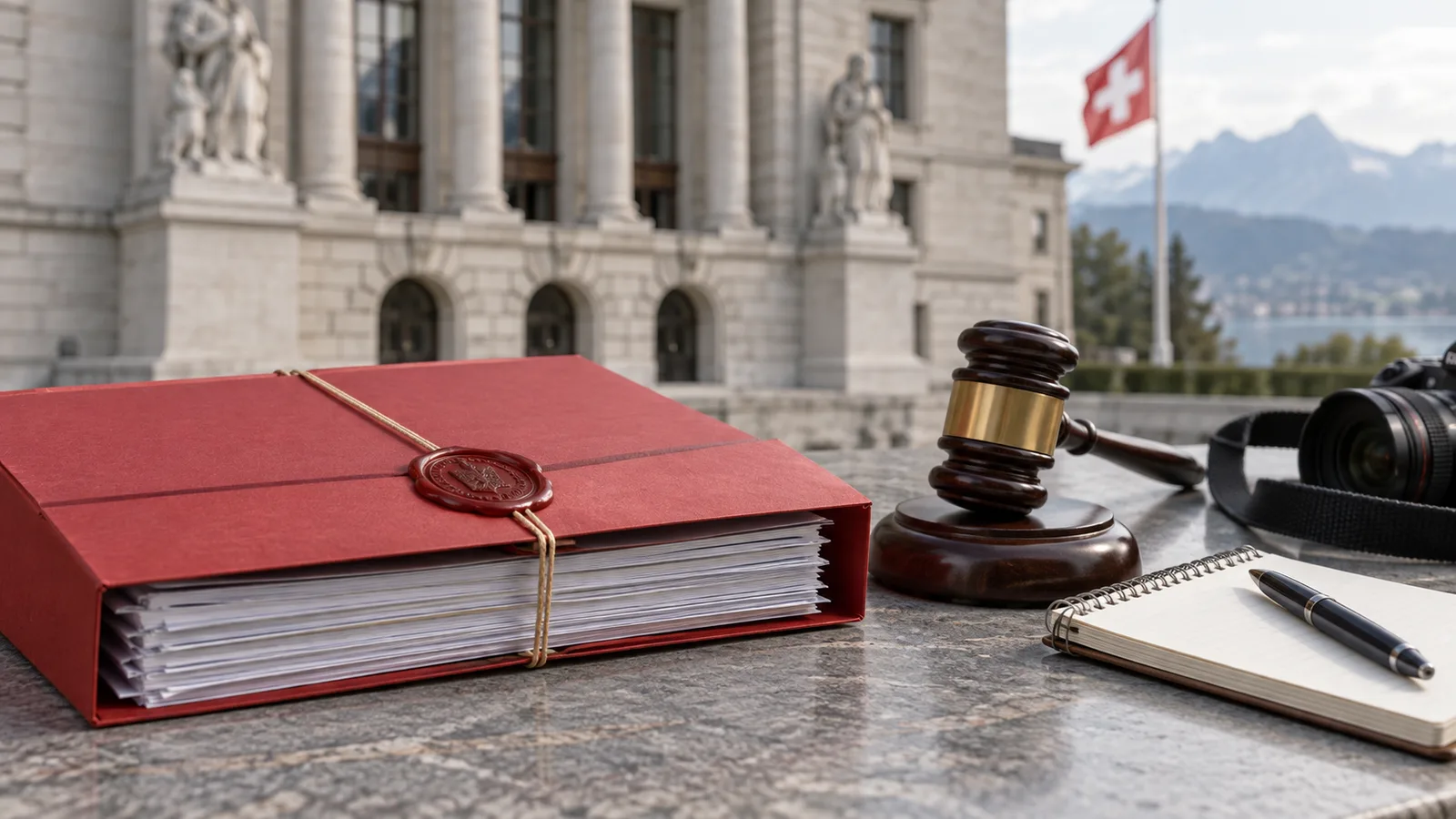
Leaked court minutes – Federal Court files complaint against unknown
A confidential protocol from Lausanne has become public. The complaint is directed against unknown persons – and opens a fundamental conflict between official secrecy and source protection.
The Swiss Federal Supreme Court has filed a criminal complaint against unknown persons over the passing on of a confidential session protocol. Tamedia had reported on an internal discussion at the highest court on the basis of that document. The case touches on two protected interests that regularly collide in a democracy: the confidentiality of official deliberations and the media's task of making matters of public interest visible.
The complaint is not directed against Tamedia
The most important clarification comes first: according to the available information, the criminal complaint is directed against unknown persons. It is not a finding that Tamedia or individual journalists committed a criminal offence. The competent prosecution authorities must now establish whether official secrecy was breached, who had access to the protocol and how it reached the outside world.
The trigger was a report that quoted from the confidential minutes of a plenary session of the court. Its subject was reportedly the relationship between the federal judges Beatrice van de Graaf and Yves Donzallaz. Beyond the content of that internal dispute, the case raises the fundamental question of how a court handles information that originates from its non-public deliberations.
What official secrecy protects
Article 320 of the Swiss Criminal Code protects secrets that have been entrusted to, or made accessible to, a public official in that capacity. Disclosing such a secret without authorisation can be punishable. The duty can persist even after a person leaves office. Whether all passages of a session protocol actually constitute a criminally protected secret depends, however, on the specific content, on the circle of persons entitled to know and on the public interest.
A criminal complaint opens an examination; it proves neither who did it nor guilt. For the public, that distinction is crucial, because the wording «Federal Supreme Court files complaint against Tamedia» would distort the facts. The court is reacting to the leak. Who leaked remains open as things stand.
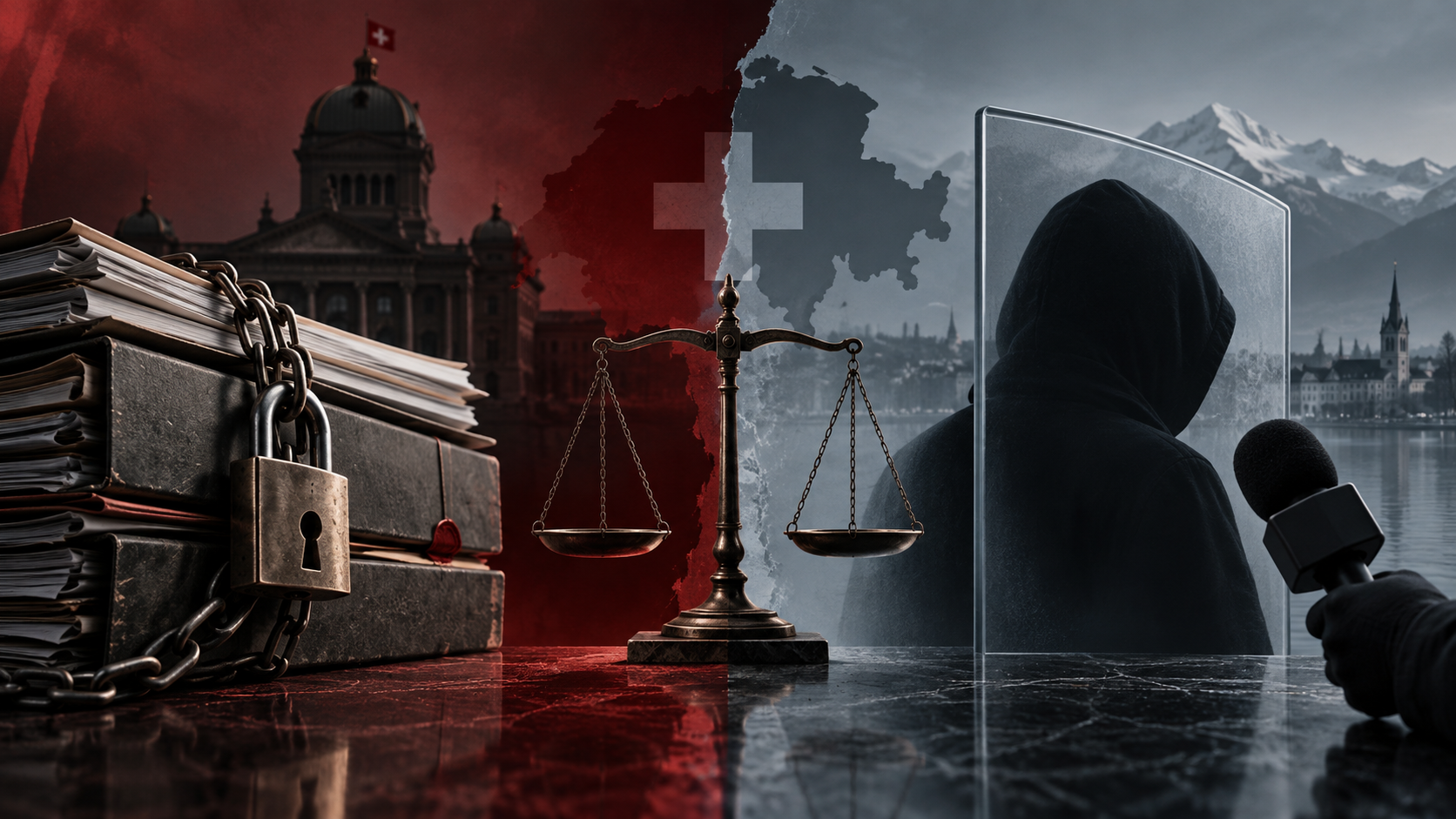
Media law sets its own limits
Journalists in Switzerland enjoy statutory source protection. Under certain conditions they may refuse to testify about their informants. That protection is not unlimited, but it is meant to make it possible to investigate abuses without automatically exposing sources. At the same time, criminal law protects internal information held by state bodies.
The balancing of interests is delicate. Courts must be able to deliberate internally and openly, without every unfinished argument becoming immediately public. Confidentiality therefore protects decision-making and also the people concerned. Conversely, a publication can be justified when it brings institutional problems, power conflicts or questions of judicial independence into view.
The fact that a media outlet quotes from a document does not yet answer whether every published passage was journalistically necessary. Nor does the confidentiality of a document mean that its content can never be of public interest. What counts is context, relevance and proportionality.
The Federal Supreme Court is itself under pressure to be transparent
The highest court does not only rule on transparency disputes involving other authorities; it must justify its own openness. In an access dispute concerning the relevant environment, the Federal Supreme Court dealt with the release of documents and with the limits of the principle of public access. Such proceedings show that institutional transparency and protected deliberation are not opposites with a simple solution.
For trust in the judiciary, what counts now is a clean procedure. The investigating authorities must independently establish who was bound to secrecy. At the same time, the Federal Supreme Court should explain which information is protected, and why. And media outlets must make it comprehensible where the public interest in their publication lies, without exposing their sources.
The case is therefore more than a search for a leak. It becomes a test of whether the judiciary, the prosecution and the media can fulfil their different roles without prejudging guilt and without using confidentiality as a blanket protection against public scrutiny.


