Federal Supreme Court Election Postponed Due to Judges' Relationship
The Judicial Commission adjourns the general re-election until the 2026 winter session. Twelve revision requests have been received.
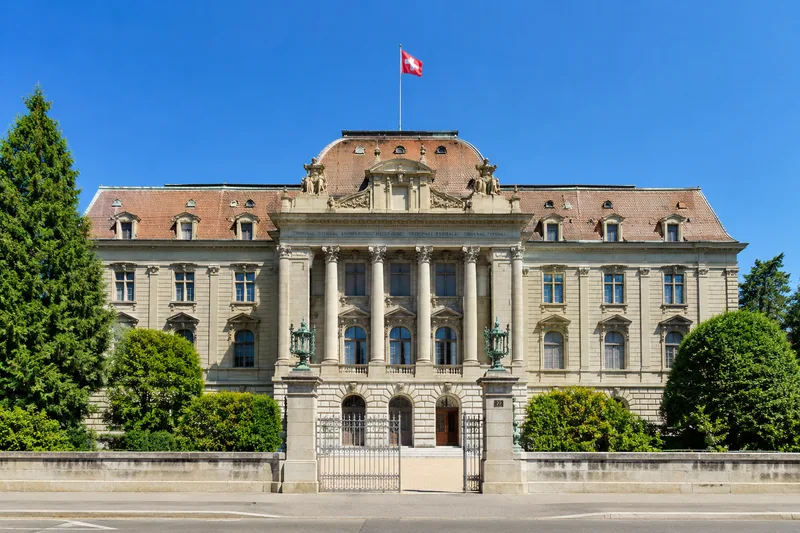
Federal Supreme Court Elections Postponed Due to Judge Relationship Investigation
The general re-election of the Swiss Federal Supreme Court is postponed from the autumn to the 2026 winter session. The reason is further investigations concerning a past relationship between Federal Supreme Court Judge Yves Donzallaz and Federal Supreme Court Judge Beatrice van de Graaf. The Judicial Commission also wants to await potential decisions on the twelve revision requests submitted so far.
The Judicial Commission of the Federal Assembly has decided to hold the general re-election of the Federal Supreme Court not in the autumn session as originally planned, but during the 2026 winter session. The term of office for the current Federal Supreme Court judges ends at the end of this year.
According to the Judicial Commission, the additional time will be used for further investigations. Concurrently, the commission intends to keep open the option of adopting its election proposal to the United Federal Assembly, taking into account any decisions by the Federal Supreme Court regarding the revision requests already submitted. SRF reported on the decision on August 26.
Relationship Between Two Federal Supreme Court Judges at the Center
The investigations focus on a relationship between Federal Supreme Court Judge Yves Donzallaz and Federal Supreme Court Judge Beatrice van de Graaf. The relationship became publicly known at the end of April 2026. According to the Judicial Commission, both judges intend to seek re-election.
The Administrative Commission of the Federal Supreme Court had previously appointed an independent panel of experts. This panel was tasked with clarifying, in particular, the duration and nature of the relationship. The expert report was confidentially submitted to the relevant parliamentary commissions in July 2026.
The content of the report is not public. Therefore, it is currently not possible to independently assess the experts' findings. It is also not publicly known whether they identified a "permanent cohabitation" (dauernde Lebensgemeinschaft).
Why the Question of Cohabitation is Crucial
Legally, the issue is not whether a romantic relationship is prohibited per se. Rather, the crucial factor is whether the relationship meets the criteria of a "permanent cohabitation".
The Federal Supreme Court Act contains special incompatibility rules for Federal Supreme Court judges. According to these rules, a permanent cohabitation can be incompatible with the office of a Federal Supreme Court judge. Whether this condition is met in the specific case is not currently publicly clarified.
It is therefore also important to distinguish between the general question of a romantic relationship and the legal qualification of this specific relationship. A definitive public finding that Donzallaz and van de Graaf violated the Federal Supreme Court Act is not currently available.
Federal Supreme Court Considers Romantic Relationships Problematic
The Federal Supreme Court itself addressed the fundamental question in May. In an extraordinary session, the full court concluded that romantic relationships between court members generally violate the prevailing "customs of the judges at the Federal Supreme Court".
The court justified this by referencing trust in the independence and impartiality, as well as the reputation of the Federal Supreme Court. However, this does not automatically mean that the specific relationship between Donzallaz and van de Graaf has been definitively legally assessed. The Federal Supreme Court had explicitly announced that it would undertake the specific classification after the independent expert report was available.
Twelve Revision Requests Submitted
The matter has also had an impact on concluded court proceedings. According to the Federal Supreme Court, twelve revision requests have been submitted since the relationship became public.
The applicants argue, among other things, that a permanent cohabitation existed between the two Federal Supreme Court judges. This raises the question of whether the participation of one of the two judges in previous proceedings could have been legally relevant.
Whether the revision requests are justified is currently unclear. The Federal Supreme Court must evaluate each request according to legal requirements. The confidential expert report serves as a basis for clarifying the relevant questions.
Judicial Commission Hears Involved Parties
The Judicial Commission has since heard both Yves Donzallaz and Beatrice van de Graaf. The President of the Federal Supreme Court was also questioned. Additionally, the commission held discussions with the authors of the expert report and conducted an initial internal discussion.
The commission now intends to undertake further investigations. Concurrently, it will await the Federal Supreme Court's decision on the submitted revision requests. Only then will the commission adopt its election proposal for the Federal Assembly.
Election Only in December
The general re-election of the Federal Supreme Court was originally scheduled to take place during the autumn session of 2026. Due to the Judicial Commission's decision, it is now postponed to the winter session.
The postponement affects the general re-election of the entire Federal Supreme Court, not just the two judges concerned. This provides parliamentary bodies with additional time to clarify outstanding questions before the election.
For Donzallaz and van de Graaf, the postponement also means that their re-election will be decided later. According to the Judicial Commission, both have declared their willingness to seek re-election.
Why the Case is Important for Trust in the Judiciary
The case extends beyond the private relationship of two judges. Federal Supreme Court judges decide on often far-reaching legal matters. Their independence and impartiality are therefore crucial prerequisites for public trust in the judiciary.
Precisely for this reason, the question of whether a personal relationship between two members of the court can create a conflict of interest or at least the appearance of a potential impairment of independence is relevant.
The Federal Supreme Court itself has emphasized that conduct that could jeopardize trust in its independence and impartiality or its reputation should be avoided. Simultaneously, for the two judges concerned, the specific legal situation can only be assessed after the corresponding investigations.
Transparency Remains a Central Question
The case thus also raises a fundamental question: How much transparency is necessary regarding personal relationships of members of a supreme court?
The expert report remains confidential. This protects the personal rights of those involved and allows for an independent investigation. On the other hand, the secrecy makes it difficult for the public to assess the basis on which the parliamentary Judicial Commission and later Parliament make their decisions.
The postponement of the election therefore also indicates that parliamentary bodies do not wish to rush a decision on the case. Further information and potential decisions from the Federal Supreme Court are expected before a decision is made on the re-election of the affected judges.
Decisions Still Pending
The outcome of the matter is currently uncertain. In particular, it is unclear what conclusions will be drawn from the expert report, how the Federal Supreme Court will handle the twelve revision requests, and whether the Judicial Commission will adapt its current election proposals.
However, it is clear that the general re-election of the Federal Supreme Court has been postponed to the 2026 winter session. This gives politicians time to clarify the open questions surrounding the relationship between the two Federal Supreme Court judges and its potential impact on jurisprudence.
Sources
- Swiss Radio and Television (SRF): "Love between Federal Judges – Commission Postpones Federal Supreme Court Elections Due to Romantic Relationship", August 26, 2026.
- Swiss Federal Supreme Court: Media release on the extraordinary session of the full court of May 15, 2026.
- Swiss Federal Supreme Court: Communication of July 17, 2026, on the submission of the expert report to the parliamentary commissions.
- Federal Act on the Federal Supreme Court (Federal Supreme Court Act, BGG), particularly the provisions on incompatibility of offices and permanent cohabitation.