Neutrality Initiative: What Switzerland Really Votes On Sept 27
The proposal aims to permanently enshrine armed neutrality in the constitution. At its core, it concerns sanctions, security cooperation, and Switzerland's foreign policy room for manoeuvre.
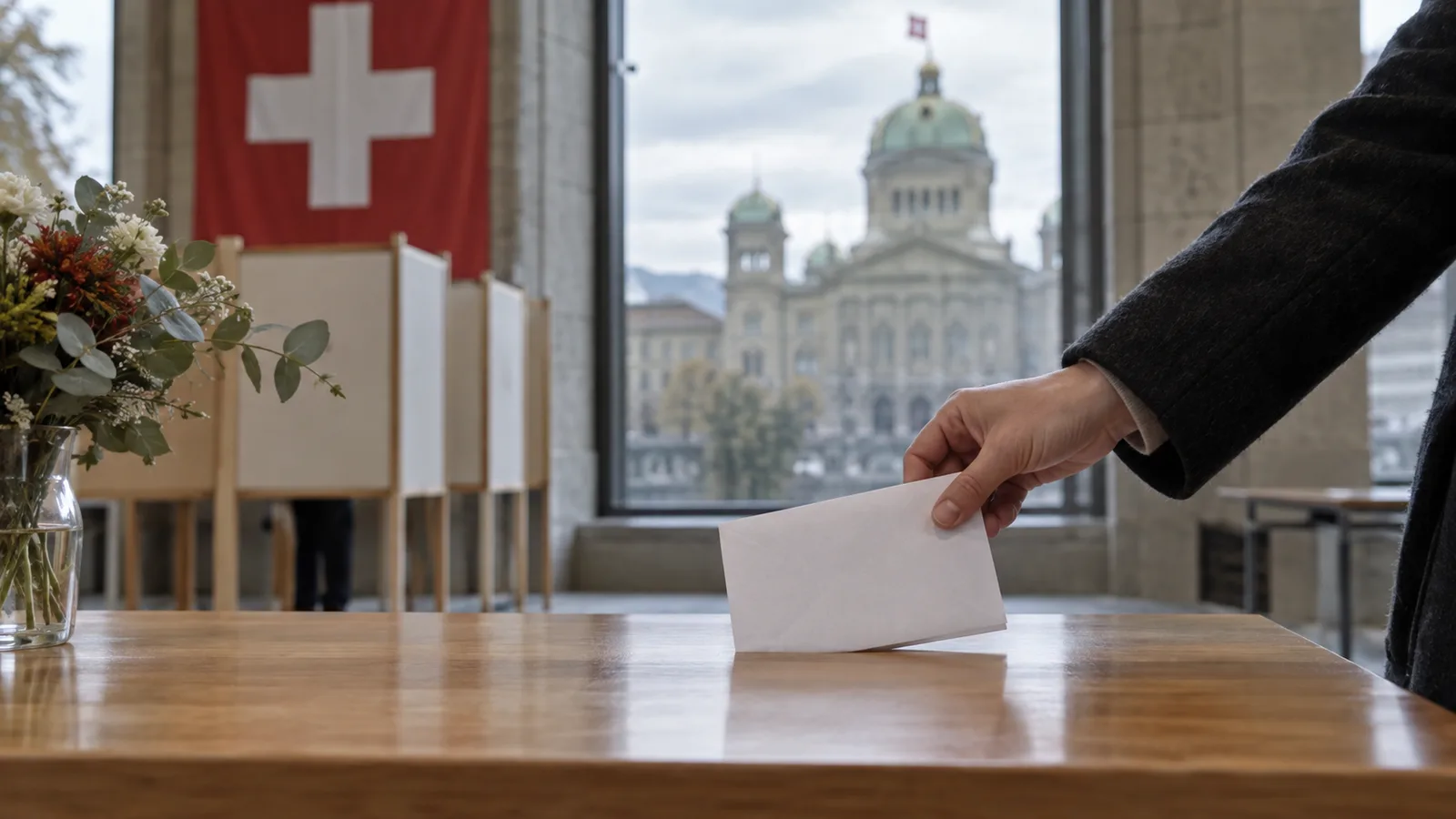
On September 27, 2026, Switzerland will vote on the so-called Neutrality Initiative. The title suggests a fundamental question: neutral or not neutral. In reality, the situation is less dramatic and more politically complex. Switzerland is currently neutral and, according to all major factions, should remain so. The debate centres on how rigidly this neutrality should be codified in the Federal Constitution.
What the Initiative Demands
The initiative explicitly seeks to enshrine "perpetual and armed neutrality" in the constitution. Switzerland would not be permitted to join any military or defence alliance. Cooperation with such alliances would only be allowed if Switzerland were directly attacked or an attack was immediately being prepared. Furthermore, it would not be allowed to participate in military conflicts between third countries.
The provisions on sanctions are the most far-reaching. Switzerland would generally no longer be allowed to impose non-military coercive measures against belligerent states. Sanctions decided by the UN Security Council would remain possible, as would measures to prevent Switzerland from being misused to circumvent foreign sanctions. Simultaneously, the federal government should strengthen traditional good offices and mediation in conflicts.
This would not reinvent neutrality, but rather make a specific interpretation binding. Today, Swiss neutrality policy is based on international law, the constitution, laws, and practices that can be adapted depending on the international situation.
Arguments of the Proponents
The initiative committee sees this flexibility as a problem. Neutrality interpreted on a case-by-case basis loses credibility. Clear constitutional rules aim to prevent Switzerland from adopting sanctions from other states under political pressure or gradually aligning with military alliances.
From the proponents' perspective, distance from conflict parties also strengthens Switzerland's role as a mediator. Those who do not take sides can keep communication channels open and facilitate humanitarian solutions. Therefore, the initiative sees neutrality not only as a security instrument but also as a foreign policy offering.
Why the Federal Council and Parliament Say No
The Federal Council and Parliament recommend rejecting the proposal. They argue that the current neutrality has proven effective because it combines a stable core with political flexibility. A rigid ban on sanctions could prevent Switzerland from responding appropriately to severe violations of international law.
This is not just about symbolism. Sanctions affect financial centres, raw material trade, export controls, and international cooperation against the circumvention of measures. As a highly interconnected economy, Switzerland can hardly fully escape economic conflicts. It is therefore crucial whether it actively shapes rules or merely reacts to the consequences of other decisions.
Opponents also see security policy risks. Modern threats – cyberattacks, sabotage, disinformation, or attacks on critical infrastructure – can rarely be fended off alone. A too-narrow constitutional provision could complicate cooperations, even if they do not imply alliance membership.
What the Proposal Does Not Decide
The initiative neither automatically means withdrawal from existing organizations nor an end to all sanctions. UN sanctions would remain possible. Likewise, a 'No' vote would not abolish neutrality. Existing neutrality law and Switzerland's armed self-defence would remain in place.
The actual choice is therefore: Should politics continue to be able to weigh neutrality, international law, security, and economic interests depending on the conflict? Or should key limits be set in advance and permanently in the constitution?
What This Means for the Population
In everyday life, the consequences would initially be indirect. However, they could quickly become apparent in crises. Sanctions and counter-sanctions affect energy prices, supply chains, jobs, and the financial sector. Security cooperation influences how well authorities detect cyberattacks and protect critical infrastructure. And Switzerland's credibility as a mediator plays a role in where it can exert diplomatic influence.
For voters, it is therefore worthwhile to look less at the label "neutrality" and more at the instruments behind it. Those who vote 'Yes' opt for clearer, tighter guidelines and accept a loss of situational freedom of action. Those who vote 'No' trust that the Federal Council and Parliament will interpret neutrality credibly and responsibly even in new conflicts.
The vote is thus a decision on the architecture of Swiss foreign policy: more constitutional binding or more political room for manoeuvre. Both sides claim to protect neutrality. They differ in their assessment of what makes it sustainable in a complex world.
Sources
- Swiss Federal Chancellery: "Neutrality Initiative," Voting Information of September 27, 2026 – https://www.admin.ch/de/neutralitaetsinitiative
- Federal Department of Foreign Affairs: Foundations of Swiss Neutrality – https://www.eda.admin.ch/de/neutralitaet
- Swiss Parliament: Information on Federal Popular Votes – https://www.parlament.ch/de/services/volksabstimmungen
As of: September 9, 2026.