
Data centres: grid connection can take up to ten years
Swissgrid is reviewing a growing number of connection applications. New capacity maps help with site selection but do not reserve supply for a construction project.
Anyone planning to build a large data centre in Switzerland may have to plan further ahead for the grid connection than for the building itself. Swissgrid estimates three to ten years from the receipt of a connection application to commissioning. A vacant industrial plot next to a high-voltage line therefore does not secure a quick start.
The transmission system operator is recording a growing number of connection applications; according to its own information, data centres and large batteries are among the main drivers. According to Swissgrid, however, no data centre has yet been connected directly to its extra-high-voltage grid. Existing facilities draw their power via downstream grids. There, the expansion has long been visible.
Six substations in Zurich mainly for data centres
In July 2025, EKZ reported that it had connected six data centres since 2009. Eleven more were under construction, planned or had been requested. More than 100 connection enquiries were received within five years. These enquiries were neither one hundred approved new buildings nor one hundred additional electricity customers: further decisions lie between an initial enquiry and a site actually in operation.
Of nine substations that EKZ planned for the period from 2014 to 2030, six were needed mainly because of the data centres. However, they also supply other customers. EKZ put the connection capacity for a project in Volketswil in the canton of Zurich at up to 100 megawatts. The comparison with a town describes the capacity required, not an amount of electricity already consumed over the course of a year.
Nils Beckhaus, Head of Asset Management at EKZ, points to the obligation to connect. The utility is therefore looking for solutions together with Axpo and Swissgrid. The local grid operator cannot simply leave the demand of such major customers out of its planning.
A connection is not sized on a free grid point alone
Swissgrid states that it assesses applications without discrimination. Technical feasibility involves more than the question of whether a substation still has room for another connection. The effects on grid stability and transmission capacity are also examined. An additional large consumer changes the requirements placed on the overall system.
For long-term planning, Swissgrid relies on the federal government's scenarios and the Strategic Grid 2040. New consumers must be integrated into this expansion. According to the company, connection requests are growing faster internationally than the grid infrastructure. While new facilities can be built within a few years, expanding transmission grids takes longer, particularly because of approval procedures.
For a developer, this creates a scheduling risk: a completed building and installed servers do not guarantee that the necessary supply will be available in time. Treating the building construction and the grid connection as a single project with one shared completion date would therefore be an unreliable calculation.
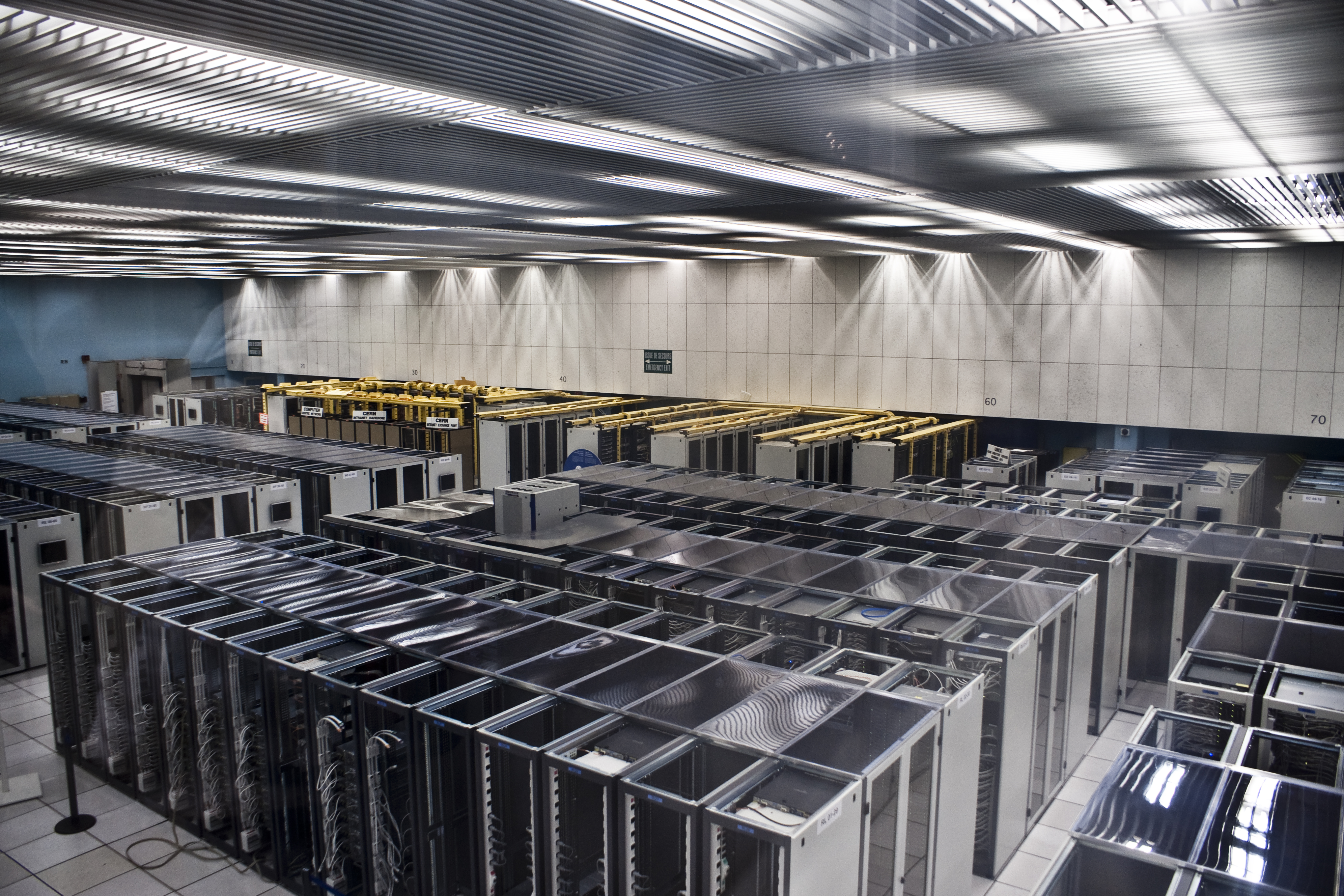
New maps provide orientation, not a commitment
Since June 2026, Swissgrid has been providing capacity maps with various time horizons. The information is expressly non-binding; it does not replace an examination of the specific project. Since 1 June, a non-refundable application fee has also applied to new applications from data centres, large batteries and power plants at the transmission grid.
The thresholds for a direct connection differ by voltage level: at least 150 megavolt-amperes at 220 kilovolts and 300 megavolt-amperes at 380 kilovolts. Megavolt-amperes denote apparent power; this connection size is not to be equated with annual consumption in terawatt-hours. Below 150 megavolt-amperes, Swissgrid refers interested parties to the local distribution grid operator.
In addition, Swissgrid requires confirmation that operation at the intended site is possible in accordance with the zoning. The grid assessment therefore does not replace spatial planning.
The grid connection also does not answer the question of where the electricity comes from or at what price an operator buys it. Swissgrid is not an energy supplier. That requires a separate agreement with a supplier. A technically possible connection therefore proves neither favourable electricity procurement nor a particular origin of the energy.
According to Swissgrid, the three to ten years of lead time are explained among other things by land acquisition, permits and delivery times for electrical components. For investors, the confirmed connection schedule is therefore just as important as the building permit. Anyone promising a site must also be able to show when its electricity supply is actually due to go into operation.
Sources
- Swissgrid: requirements, capacity maps and duration of a grid connection
- Swissgrid: data centres and interfaces of the transmission grid
- EKZ: data centres in the canton of Zurich, 4 July 2025
- Title image: Lantus, Wikimedia Commons
- Article image: Florian Hirzinger, Wikimedia Commons
- Image licences: CC BY-SA 3.0


