Anthropic grows strongly, slips back into operating loss
The Claude provider generated just under 17 billion dollars in revenue in the third quarter. The smaller net loss also reflects valuation effects from financings.
Anthropic raised its revenue to just under 17 billion dollars in the third quarter of 2026. The net loss fell from around 66.3 billion dollars in the previous quarter to 23.3 billion. At the same time, the developer of the Claude AI assistant slipped back into the red on an operating basis. That is according to the securities prospectus updated on 2 November, as reported by Reuters.
The two developments are not contradictory. The net result contains large valuation effects from financial instruments. The operating result, by contrast, describes the income and expenses of the ongoing business before such non-operating items. Anyone looking only at the smaller net loss overlooks the recent deterioration in operations.
Revenue grows by almost half
From April to June, Anthropic generated 11.56 billion dollars in revenue; from July to September it was 16.96 billion. That corresponds to growth of around 46.7 percent within a single quarter. The figure refers to two completed three-month periods, not to an annualised revenue total.
Reuters reports an operating loss of 567 million dollars for the third quarter. In the second quarter, Anthropic had still posted an operating profit of 974 million dollars. The revenue increase of around 5.4 billion dollars was therefore not enough to offset the higher operating expenses.
For the first nine months, the company reports revenue of 33.2 billion dollars and a net loss of around 104 billion, including a valuation item of roughly 94 billion, according to AP. This nine-month total must not be confused with the third quarter.
Compute weighs on the operating figures
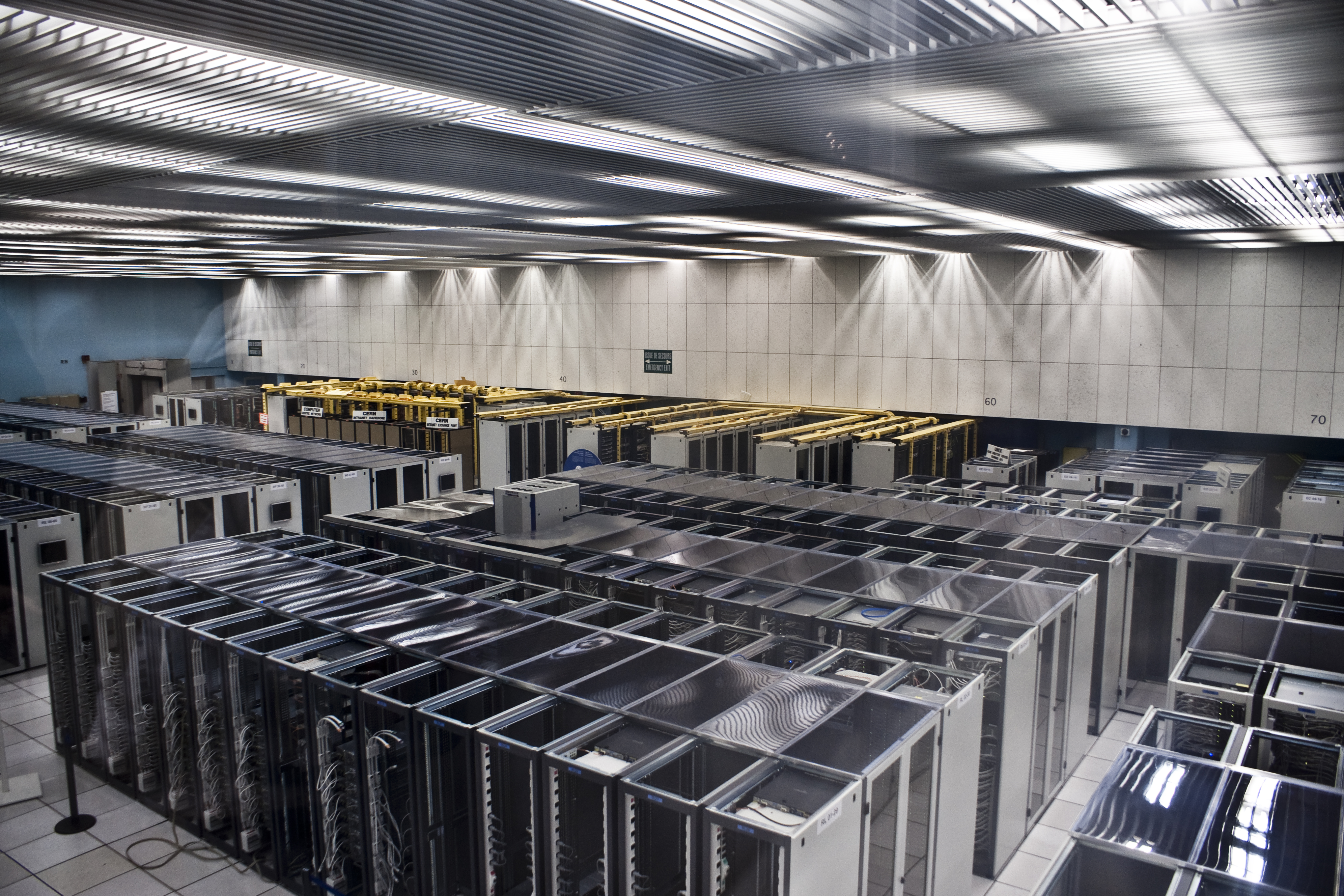
In the prospectus, Anthropic attributes the return to an operating loss, among other things, to five billion dollars for compute procured on short notice and two billion dollars in non-cash expenses from its donation matching programme. Short-term compute capacity is currently significantly more expensive than comparable capacity under multi-year agreements, the company explains.
The smaller net loss, in turn, is heavily shaped by lower valuation expenses. With financings that can later be converted into shares, the carrying value changes with the company's valuation. Such effects make the loss large without requiring a correspondingly large cash payment in the same period.
Conversely, a non-cash charge is not simply meaningless. It is part of the published accounts and can reflect claims on the company's value. For the financing of operations, what also matters is when money actually flows in and when obligations have to be paid.
Adjusted profit answers a different question
Alongside its results under US accounting rules, Anthropic also reports adjusted metrics. Such non-GAAP figures alter the standard calculation by excluding certain items or treating them differently. For corresponding presentations, the US Securities and Exchange Commission (SEC) requires, among other things, a comparison with the closest standard metric and a reconciliation.
An adjustment can explain what influence individual expenses have. But it does not make those expenses disappear. For a comparison, it must therefore remain visible what was excluded, whether this happens across several quarters and whether other companies calculate their metric in the same way. An adjusted operating profit equates neither to a net profit nor to freely available cash.
This matters especially for a capital-intensive AI provider: revenue, profit and liquidity can develop differently. A single positive figure does not replace a look at the other calculations.

Long-term commitments run to 2045
The prospectus lists purchase and lease obligations totalling around 895.4 billion dollars, almost entirely for compute and infrastructure. Around 69.8 billion are due within the twelve months after 30 September 2026. Significant further amounts are spread over later years, in part until 2045. These are therefore not quarterly expenses already incurred.
Moreover, not all commitments are equally binding. Around 213.8 billion dollars relate to agreements with exercisable termination rights or conditions before commencement, such as financing or approval on the part of the counterparty. The total should therefore be read neither as an immediately due debt nor as a fully unconditional payment promise.
For the planned IPO, the issue price remains open. According to AP, the new filing also does not yet name an amount that Anthropic ultimately intends to raise. A more detailed financial statement is thus available, but not yet a final offer from which the relationship between company valuation, capital needs and share price could be calculated.
Sources
- Anthropic: Updated securities prospectus S-1/A of 2 November 2026, SEC EDGAR
- SEC: Definition and classification of non-GAAP metrics
- SEC: Conditions for non-GAAP presentations
- Reuters via MarketScreener: Anthropic quarterly figures, 2 November 2026
- AP: New Anthropic prospectus, 2 November 2026
- Lead image: TechCrunch, Dario Amodei 2023, Wikimedia Commons
- Lead image licence: CC BY 2.0
- Article image: Derrick Coetzee, NERSC servers, Wikimedia Commons
- Article image licence: CC0 1.0