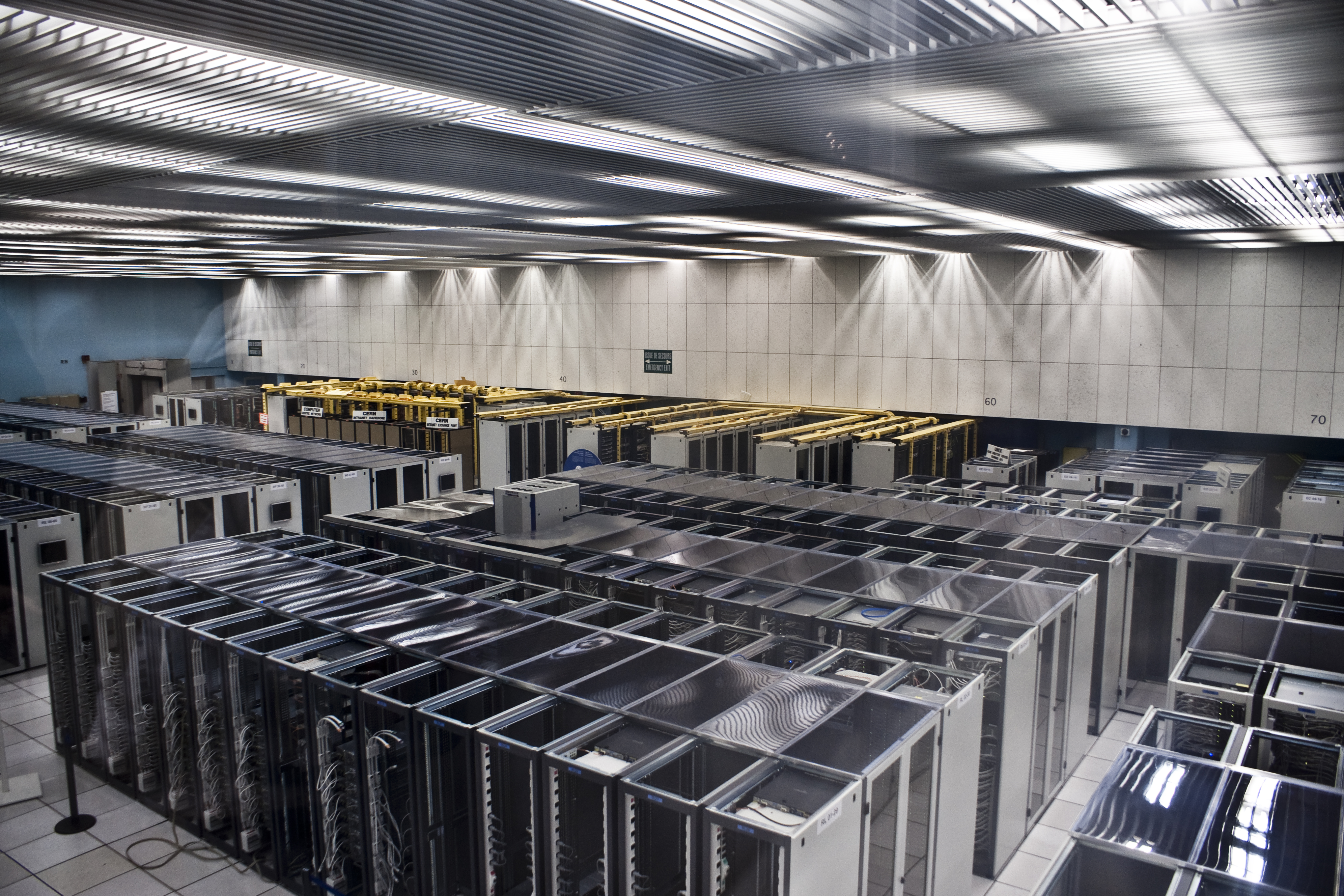
Data centres: Schaffhausen tightens water and climate rules
Additional efficiency requirements are to apply in Schaffhausen from December. The dispute over data centres shows that grid connection, building land and a promised heating network must be assessed together.
Schaffhausen is expanding its requirements for data centres. As the cantonal government announced on 22 October 2026, it is supplementing the Energy Ordinance as of 1 December with requirements on water and greenhouse gas efficiency. According to the release, the focus so far has been a limit value on energy efficiency. The new rule is intended to capture resource consumption more broadly and to create incentives for waste heat recovery.
A Guardian report on residents' resistance in Newport shows the international conflict. In Switzerland, too, the question is a concrete one about location: who provides electricity, land and infrastructure – and what verifiable benefit does the surrounding area get back?
An adopted ordinance is not the same as every political demand
The starting point in Schaffhausen is a motion on the responsible use of building land that the Cantonal Council declared valid in June. The cantonal government explicitly links the new efficiency requirements to the political debate and to concerns raised by the population. However, the release names no individual new limit values. Without the text of the ordinance, neither concrete consumption limits nor technical retrofit obligations can be derived from it.
In addition, the government supports a committee's proposal for a levy on electricity and water for companies with high resource consumption. This statement must be distinguished from the announced entry into force of the ordinance amendment. It does not prove that every levy described there is already law. For project decisions, the applicable legal position counts, not political approval alone.
Electricity demand: a national figure is no substitute for a grid plan
The survey published by the Federal Office of Energy puts Swiss data centre consumption for 2024 at around 2.1 terawatt hours, or 3.6 percent of total electricity consumption at the time. Compared with 2019, growth on the same definition is 18 percent. This qualification matters: the older study had also included server rooms.
For 2030, the BFE cites 2.5 to 3.2 terawatt hours, and up to 3.5 in a high scenario. These are expected developments, not energy already consumed and not automatically reserved grid capacity. The study also describes considerable remaining efficiency potential. Whether it is realised depends on investment and operating decisions.
The widespread equation of every new data centre with AI training also falls short. The BFE mainly assigns the large Swiss facilities built so far to cloud applications. A more efficient site can replace existing in-house infrastructure. The additional national consumption therefore cannot be reliably calculated from construction volume alone.

Waste heat needs a functioning environment
EnergieSchweiz recommends that municipalities seek contact with developers, energy suppliers and potential heat customers at a very early stage. A high-capacity grid connection may require additional network infrastructure. Water demand and cooling, in turn, depend on the technical concept. A blanket consumption figure for every data centre would therefore be of little help.
Almost all the electricity used ultimately becomes heat. But available waste heat is not the same as heating energy actually delivered. What is needed is a usable temperature level, pipelines and suitable customers. Timing also counts: a year-round heat supply does not automatically meet year-round demand of the same size.
For a host municipality this means a practical check: who builds and finances the heating network? Which buildings are connected on a binding basis? What happens if commissioning is delayed or heat production fails? Such questions are not a rejection of digitalisation. They separate a robust supply advantage from a non-binding project announcement.
Involvement also means informing the public about the project in an understandable way. EnergieSchweiz explicitly recommends involving the population. The perspectives differ: operators look at whether the site works, neighbours at the consequences for their surroundings. Early dialogue can make these questions visible, but it replaces neither the permit nor the technical review.
Acceptance is built before the building application
The industry association SDCA stresses the benefits of professional data centres for digital services and points to efficiency gains. That is a relevant counter-argument to blanket calls for bans, but it is also the position of the provider industry. Good technical metrics on their own do not answer the question of whether a particular site is suitable in planning terms.
At federal level, motion 26.4166, which has been submitted, calls among other things for more transparency on water and electricity consumption. A parliamentary initiative is not yet a new law. Local planning must therefore work with the competences that already exist. Swiss municipalities gain the most when they clarify measurable conditions early: not only once the building is standing and a promised heating network is still missing.
Sources
- Schaffhausen cantonal government: tighter rules, 22 October 2026
- BFE: electricity consumption and efficiency potential, 7 May 2026
- EnergieSchweiz: guide for cantons and municipalities
- Swiss Parliament: Motion 26.4166, resource consumption of data centres
- Swiss Datacenter Association: industry position on the BFE study
- The Guardian: residents' conflict in Newport, 24 October 2026
- Lead image: Florian Hirzinger, Wikimedia Commons
- Lead image licence: CC BY-SA 3.0
- Article image: Jemimus, Wikimedia Commons
- Article image licence: CC BY 2.0


