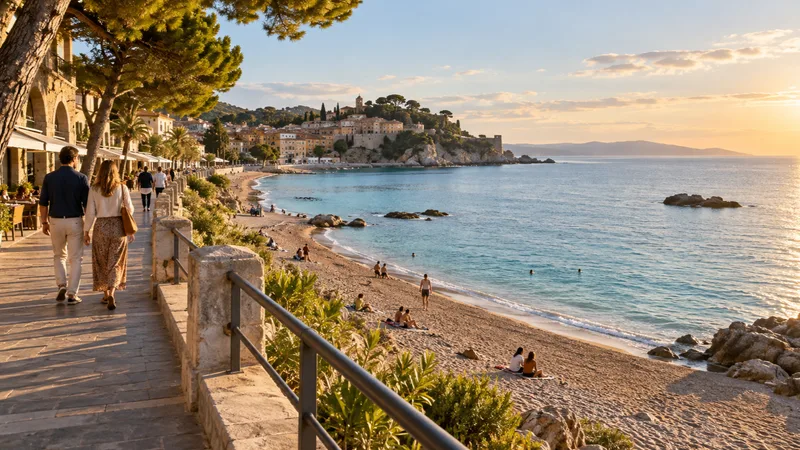
Beach holidays in October: sea still warm, weather can turn
Four destinations in a climate comparison: Cyprus and Antalya offer the highest daytime temperatures, Tenerife the most reliable dryness – but climate averages are no holiday guarantee.
Anyone who flies from Switzerland to the sea in October is not buying a guaranteed extension of summer. They are buying a probability. Especially around the Mediterranean, the water remains warm for a long time, but at the same time weather variability increases. The most sensible choice therefore starts not with a single weather app icon, but with long-term climate normals – and with the question of whether warmth, dryness or a short journey is more important.
Cyprus: the strongest classic beach holiday candidate
For warm beach days, Cyprus offers the most convincing combination of the European destinations compared. On the coast of Limassol, the average daily maximum temperature in October is 27.2 degrees, the average minimum temperature 17.4 degrees. According to official figures, the sea reaches an average of 23 degrees. In addition, there are almost nine hours of sunshine per day and an average of 3.3 rainy days.
This sounds like summer, but it is already a transitional period. A low-pressure system over the eastern Mediterranean can bring several unsettled days. In addition, the Swiss Federal Department of Foreign Affairs points out that the regional security situation can temporarily affect air traffic. Anyone booking Cyprus should check current travel advice and rebooking conditions again shortly before departure.
Antalya: warmest during the day, but not rain-free
Antalya also offers high daytime temperatures in October. The Turkish meteorological service reports an average maximum temperature of 27.3 degrees for the 1991–2020 climate normal period. At night, the average is 15.9 degrees, and daily sunshine duration is 7.5 hours. With 6.2 rainy days and around 77 millimetres of precipitation, however, the risk of a wet spell is greater than on Tenerife.
For families who mainly want to stay by the pool or on the beach, the Turkish Riviera is therefore attractive, but less consistent than glossy brochures suggest. The FDFA also reminds of domestic political tensions and the uncertain situation in the wider region. This is not a blanket warning against Antalya, but rather an argument for careful review immediately before the trip.
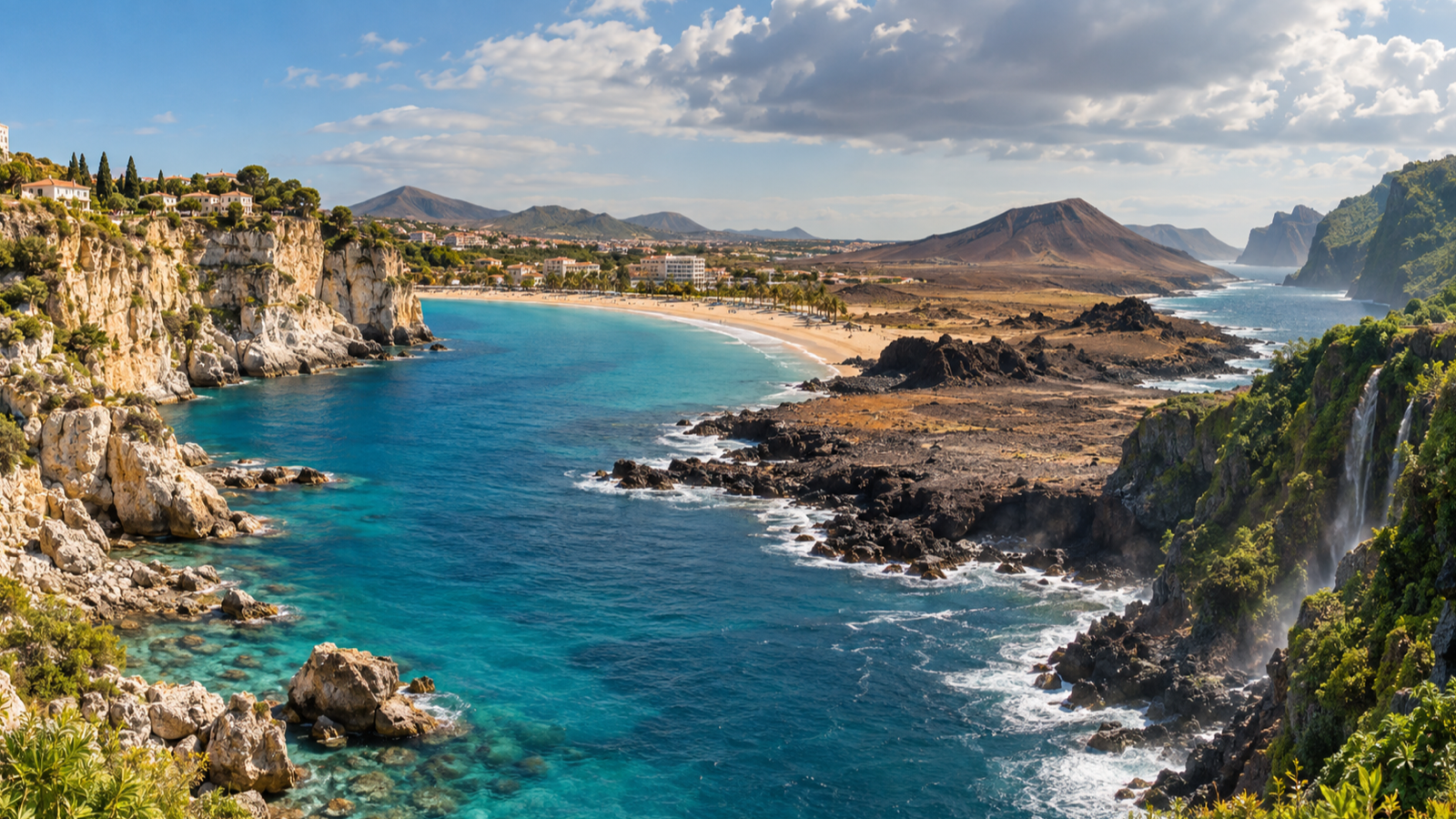
Tenerife South: the most reliable dry option
Those who want to risk as little rain as possible will find the most robust weather bet in the south of Tenerife. At the airport station, the average maximum temperature in October is 26.8 degrees, the average night temperature 20 degrees. AEMET measures only 12 millimetres of precipitation and 214 hours of sunshine per month in the long-term average. The island is therefore also interesting for travellers who want to combine beach days with hiking or excursions.
The price for this stability is the longer journey. In addition, trade-wind clouds and local microclimates can cause the north and south to look completely different on the same day. For beach holidays, accommodation should therefore be chosen not only by island, but also by coastal section.
Madeira: mild and versatile, but not a pure beach destination
According to the latest Portuguese climate normals for 1991–2020, Funchal reaches an average of 25.2 degrees during the day in October and 22.2 degrees as a monthly average. This is pleasantly warm, but Madeira remains more variable topographically and meteorologically. The island is more suitable for a mix of sea, nature and hiking than for seven guaranteed days on a wide sandy beach.
What the numbers do not say
The reference periods differ: 1991–2020 for Antalya and Funchal, 1981–2010 for Tenerife South. These figures offer guidance, rather than a strictly comparable ranking of the current climate.
All values are monthly averages over decades. They say nothing about whether the specific holiday week will be sunny. Especially in autumn, individual heavy rainfall events can bring a large part of the monthly precipitation. A serious decision therefore takes into account three levels: climate statistics when choosing the destination, a reliable forecast only a few days before departure, and flexible conditions for flights and accommodation.
Even a more distant destination cannot guarantee good weather. A fallback plan for rainy days may matter more than a small difference in average temperature.
For families from Switzerland, it is also worth looking at the cantonal school holiday dates: depending on the departure day, demand and flight prices can fluctuate considerably. Those not tied to the first day of the holidays should ideally compare several departure airports and travel days. A package holiday offers more protection if flight and hotel are cancelled together; individually booked services can be more flexible, but legally separate. Travel insurance is only helpful if the specific reason for cancellation is covered – bad holiday weather alone is generally not enough.