Bedbugs and Air Travel: What Travellers Really Need to Know
Media reports about an incident at Qantas turn attention to a rare but unpleasant travel topic. Bedbugs are spread mainly through luggage and textiles – not through poor cleanliness.
A report about bedbugs on a Qantas flight raises an obvious worry: can you pick up an infestation on board a plane? The short answer: transmission via objects is possible, but a single case says little about the general risk of flying. Bedbugs are not a classic travel illness, and they are not caused by one person's poor hygiene. What matters is whether insects or their traces end up in luggage, clothing or living spaces.
Bedbugs are masters of concealment. They can sit in seams, folds and small crevices, and in that way be carried along as stowaways. This mainly affects places where many people spend the night or leave their luggage: hotels, hostels, trains, buses, cruise ships and, in theory, aircraft too. According to the US health authority CDC, bedbugs are not considered known carriers of disease. An infestation can still be a burden – because of itching, sleep problems, the worry of bringing them home and the effort of getting rid of them.
A single incident is not evidence of a trend
At Qantas, according to media reports, the airline took an aircraft out of service for a deep clean. That does not establish where a possible infestation came from, how it spread or whether it created an increased risk for other flights. Such details matter, because they separate a plausible-sounding story from a robust risk assessment.
For travellers, this is no reason for frantic protective measures. A few well-founded steps make more sense. They are not aimed at ruling out every encounter with an insect. They reduce the likelihood that an insect or eggs get home unnoticed.
When staying overnight: keep luggage off the bed
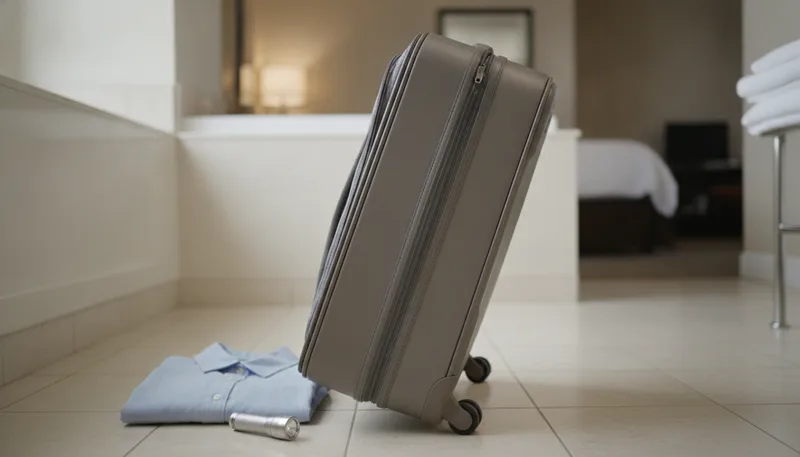
The Centre for Travel Medicine at the University of Zurich recommends keeping luggage outside the sleeping area during a stay, or for example in the bathtub. A luggage rack that is not right next to the bed is also better than the duvet or the floor directly beside the bed. On arrival, it is worth briefly checking the seams of the mattress, the headboard and the immediate surroundings for conspicuous traces.
Typical signs can be live insects, light-coloured shed skins or small dark spots. Individual skin reactions, by contrast, are not reliable evidence: bites can have many causes and may only become visible after a delay. Anyone who finds clear signs should inform the accommodation and ask for another room that is not directly next to or above the affected room. Changing rooms alone is no guarantee; it therefore makes sense to check the luggage before moving.
On board a plane, similar principles apply, with a sense of proportion. Personal items do not need to be treated with insect spray. Anyone who discovers an unusual sign should inform the cabin crew. The airline can then check the seating area concerned and the cleaning. For laypeople, however, identifying a visible beetle as a bedbug straight away is difficult.
After returning: check instead of spraying in panic
After the trip, it is advisable not to unpack luggage unchecked in the middle of the bedroom. The UZH centre recommends opening suitcases in the bathroom or on the balcony, for example, and holding them against a light-coloured surface. Clothing can be washed straight away if the material allows it. Suitcases and objects should be checked for conspicuous traces.
The UZH advises against spraying luggage preventively with any insect spray: it says this is not effective against bedbugs. The Federal Office of Public Health also warns against trying to fight a confirmed infestation with ordinary products on your own. Insects can then retreat into further hiding places or spread through the home. If there is reasonable suspicion, professional pest control is the more sensible route.
Stay level-headed, act early
Bedbugs are not a sign of personal negligence, and not every itchy bite is an infestation. That makes the right response doubly important: take signs seriously, but do not dramatise them. Anyone who stores luggage deliberately, raises the matter with the accommodation when there are clear traces and unpacks carefully after returning lowers the risk without excessive measures.
The most important line remains the one between prevention and assertion. A single incident at an airline does not justify a statement about a general flight risk. But it is a reminder that the most effective travel practice is often unspectacular: check luggage, inspect seams and, if there is concrete suspicion, call in expert help.