Bird migration in autumn: two hazards begin at your own window
Glass and artificial light can endanger birds. The solutions differ – a single bird of prey sticker is not enough.
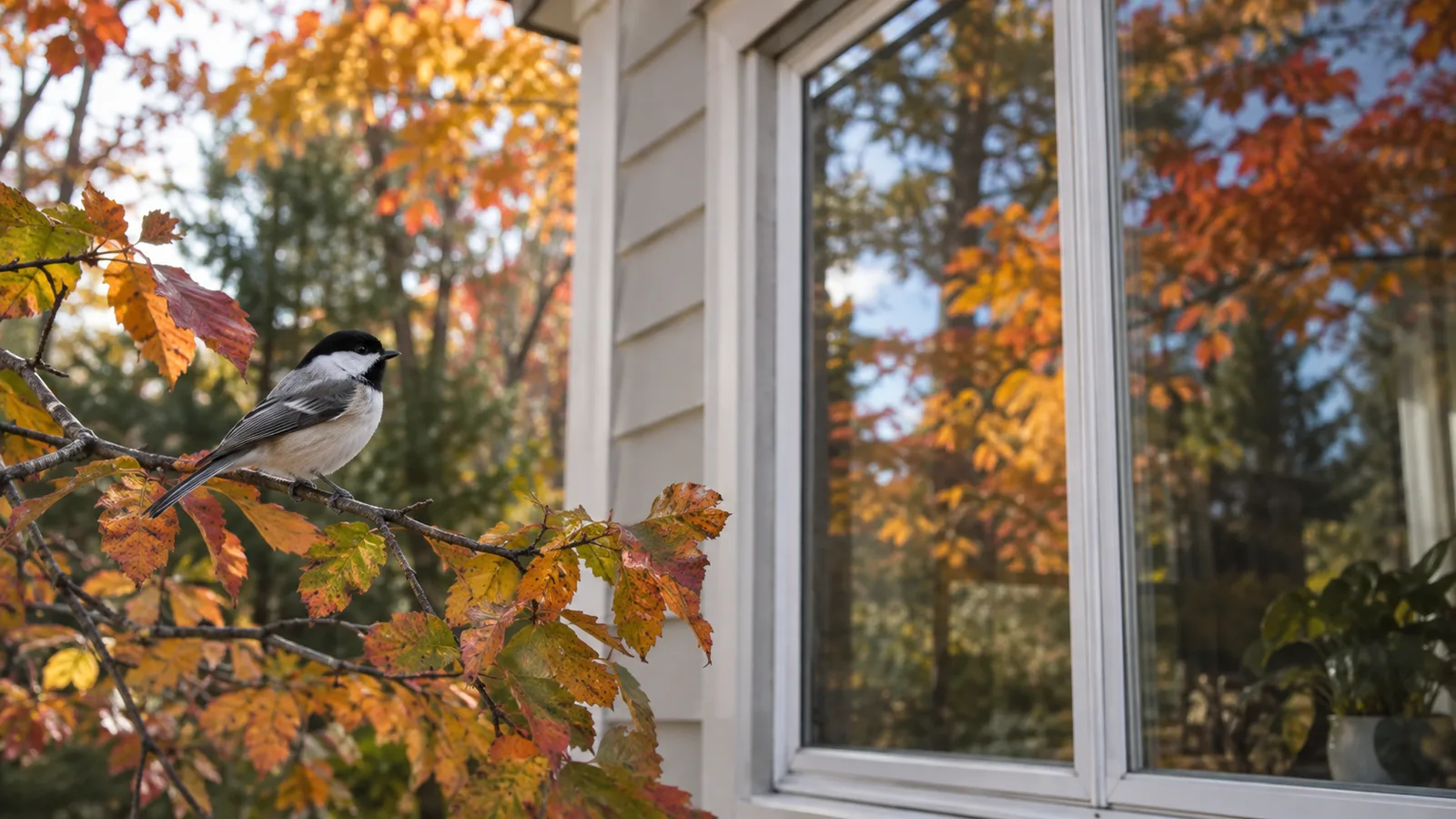
A tree is reflected in the window; behind it the room stays dark. For people the pane is a matter of course. For a bird it can look like the continuation of a habitat. In autumn it is therefore worth viewing house and garden once from the outside: not every danger to birds lies far away along their migration route.
The Swiss Ornithological Institute distinguishes several problems. Transparent glass lets sky or plants on the other side show through. Reflections can feign an attractive environment. Artificial light, in turn, can attract birds migrating at night and disrupt their orientation, especially in unfavourable weather or fog. These mechanisms are tied to buildings, but they do not call for the same solution.
The window seen from another perspective
A pane does not have to be spectacularly large to become a problem. The Ornithological Institute describes even ordinary windows as a possible hazard when the surroundings are mirrored in them. A dark interior can intensify the reflection. The decisive question is therefore not only how much glass was installed, but what a bird perceives in it or behind it.
A simple observation task can be derived from this for a Saturday walk: where do trees appear seemingly behind a closed surface? Where do panes facing each other create the impression of an unobstructed passage? Such spots deserve attention. The walk does not replace a professional assessment of a complex building, but it can show which questions are worth putting to an administration or an owner.
Particularly deceptive is the safety supposed to come from individual dark silhouettes of birds of prey. The Ornithological Institute cites examples in which such stickers hardly reduce the risk of collision. What matters is making the barrier effectively recognisable to birds. For that, tested markings and the specific application instructions should be used instead of simply attaching a decorative motif.
At night a different question arises
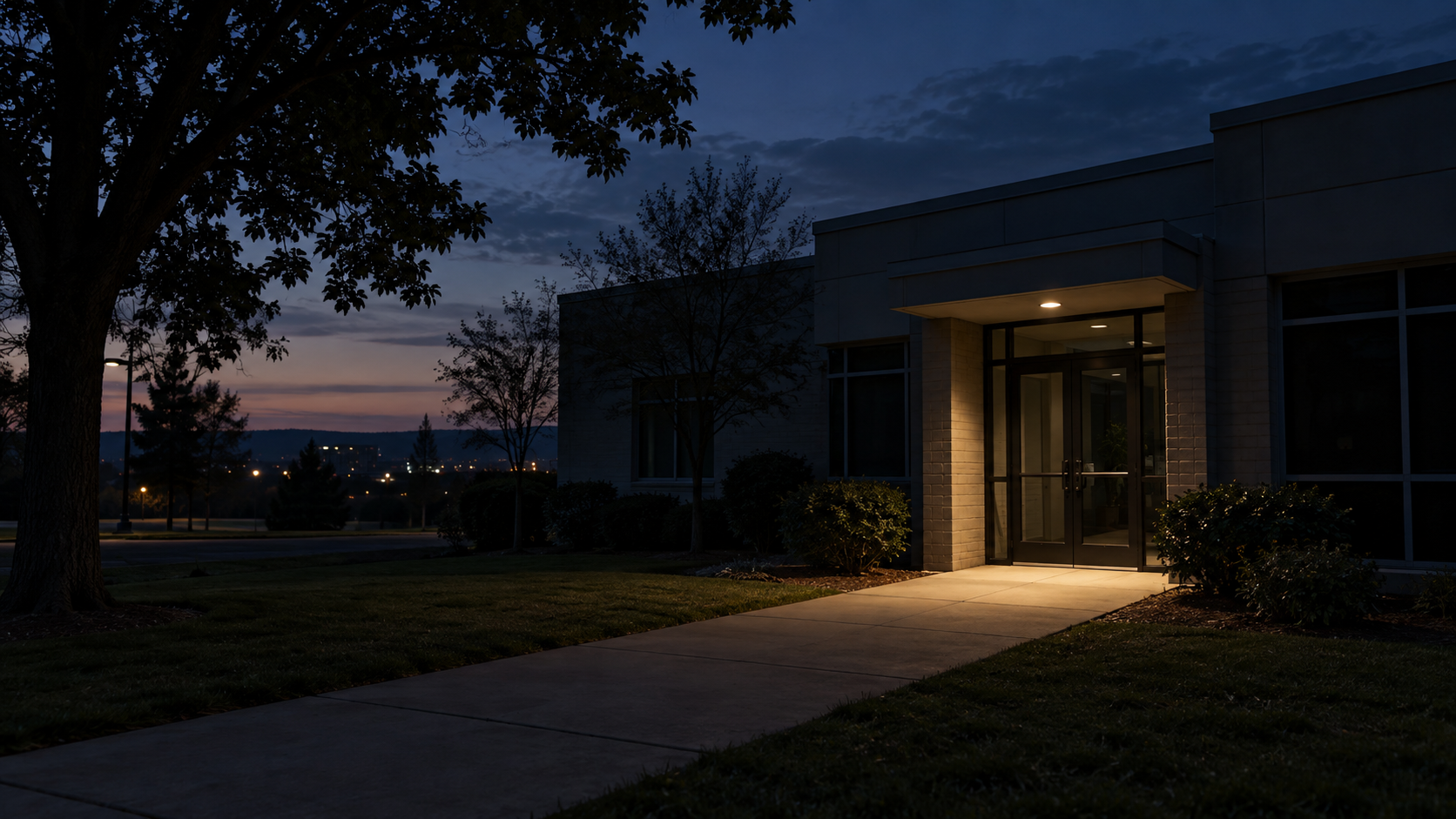
Once it gets dark, lighting becomes an additional issue. In its seven-point plan, the Federal Office for the Environment recommends first examining whether it is needed at all. Then come brightness, light colour, placement, direction, timing and, where necessary, shielding. Light should arrive where it is needed and not shine unnecessarily into the surroundings.
This is not a call to make important entrances or paths unusable. Entrance lighting aimed downwards and controlled appropriately serves a different purpose than a façade display glowing all night. Anyone who lumps both together under «safety» avoids the actual examination: which surface needs how much light, and when?
The federal government explicitly takes the sensitivity of the surroundings into account. The same lighting can be judged differently at a site close to nature than in the middle of a brightly lit inner city. A blanket statement about every lamp would therefore be just as imprecise as the assumption that a small private installation plays no role in principle.
Research instead of simple patent remedies
How birds react to artificial night light is also being studied by the Ornithological Institute in an ongoing European project. On the Croatian coast, bright and dark sites are compared using radar; acoustic recordings help with the classification. In Spain the project additionally examines the migratory movements of scops owls. The stated project period runs from 2022 to 2026.
Such research is meant to differentiate which characteristics of lighting accompany or trigger which behavioural changes. A finding from one particular area cannot readily be translated into an exact number of birds at risk at a Swiss residential building. For practical protection, however, the established recommendations can already be used. No one has to wait for a personal collision statistic in order to avoid unnecessary light emission.
Two problems, two suitable interventions
For owners, a clear separation emerges: hazardous glass surfaces need a suitable visible design. Superfluous or badly directed night light needs altered lighting. The one does not take care of the other. A dark night does not automatically make a reflecting pane safe the next morning.
In rented flats and shared properties, permanent changes should be agreed with those responsible. Pointing to a specific problematic spot is more helpful than a general accusation. Photos of reflections or of unnecessarily lit surfaces can make the question comprehensible.
The autumn walk therefore does not have to end at the garden gate. A brief look back at one's own façade can be just as informative as a look at the sky. Bird conservation sometimes begins with seeing an environment that people take for granted from a different perspective.
Sources
Swiss Ornithological Institute: Causes of collisions · Swiss Ornithological Institute: Hazards caused by reflections · FOEN: Measures against light pollution · Swiss Ornithological Institute: Research project on night light and bird migration


