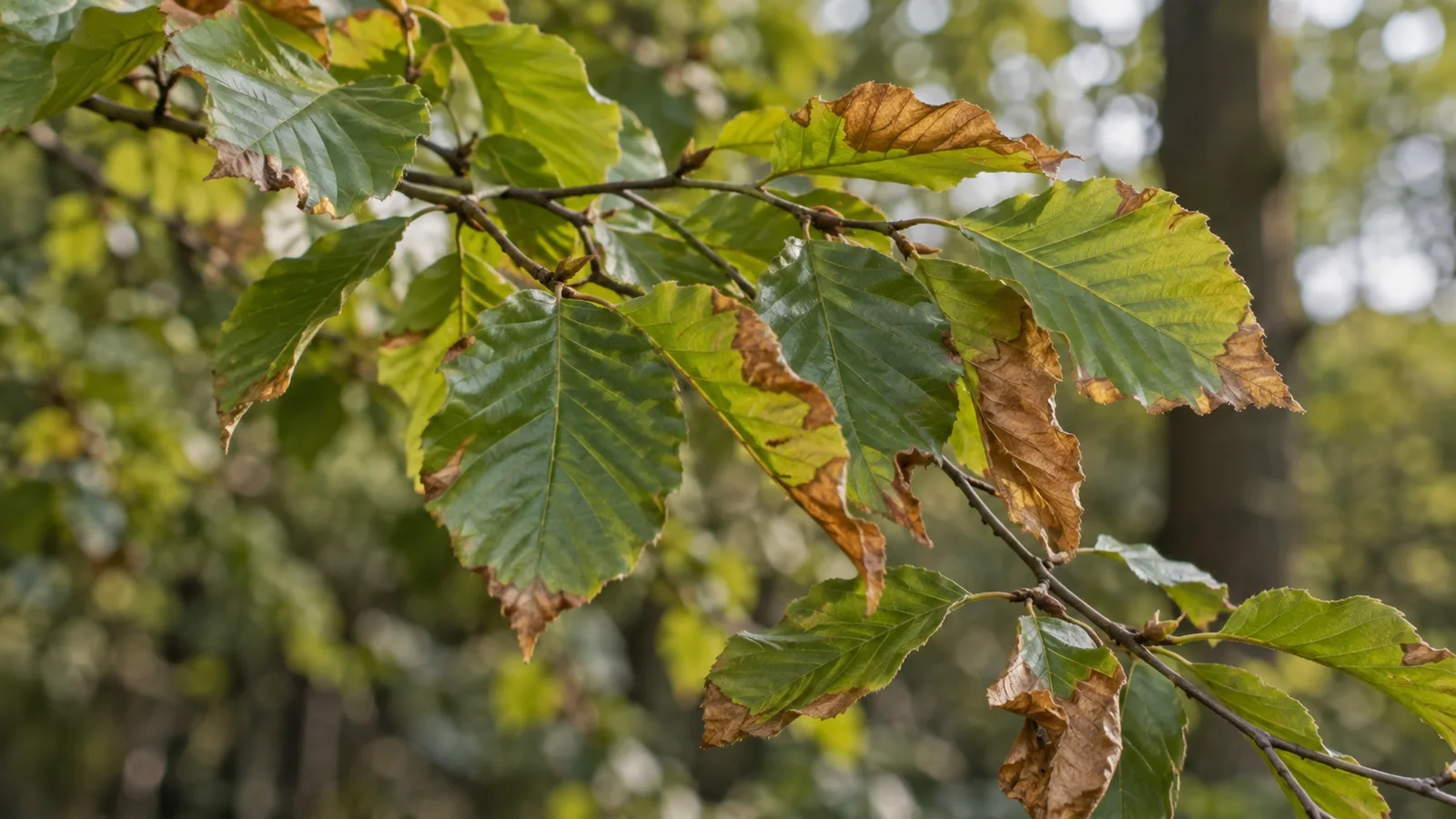
Brown leaves are not always a sign of autumn
On a forest walk, drought stress is easily mistaken for normal colour change. For research, that distinction is crucial.
A brown leaf on the forest path seems to carry a simple message: autumn is here. Yet the same colour can tell different stories. A tree can break down its foliage in the usual seasonal cycle. Or a leaf has been damaged by heat and a lack of water. Anyone who treats the two as the same thing confuses a regulated process with harm.
That distinction is more than a nuance for specialists. It changes how we judge the condition of a forest. An early change of colour is neither automatically an idyllic harbinger of autumn nor, on its own, proof that a tree is dying.
Two processes that look alike
The Swiss Federal Institute for Forest, Snow and Landscape Research WSL drew attention to the problem in July 2026. In a scientific commentary, researchers distinguish between controlled leaf ageing and irreversible damage to leaf tissue. During natural ageing, the tree can retrieve nutrients before the leaf falls. When tissue is damaged, that orderly sequence can be impaired.
The WSL explains why this also matters for satellite observation. A changed colour signal cannot readily reveal which process lies behind it. If damaged foliage is treated as normal ageing, the response of trees to drought may be misclassified. The piece is a technical classification of this distinction, not a nationwide survey of all Swiss forests in September.
For walkers, the main consequence is restraint. Colour alone is no reliable health report. Tree species, site, timing and how things develop over several weeks all belong to an assessment.
Not every tree reacts the same way
In its information on the 2026 drought, WSL describes different reactions to a lack of water and high temperatures. Tree species plays a role here. In beeches, the leaves are already laid down in the buds of the previous year. Other species, such as birches, can grow new leaves in the same year under suitable conditions. Visible recovery therefore cannot be assessed by a single pattern.
Read more: BAFU's forest fire warning amid the drought
Premature leaf loss alone also says nothing about how a tree will develop the following year. It first shows a reaction whose consequences need closer study. Conversely, it would be too reassuring to dismiss every leaf that dries out early as a harmless adaptation.
The WSL questions and answers help to tell these mechanisms apart. They do not, however, replace an assessment of a single tree. That applies above all where influences other than drought may come into play.
The calendar does not explain everything
As early as 2023, WSL pointed to several possible causes of early colour change, among them drought, temperature and other stresses. An observation from that year is not a diagnosis for 2026. But it shows why a plain rule such as «early brown equals dry summer» explains too little.
The phenological analyses of MeteoSwiss also treat autumnal leaf colour change as an interplay of several factors. Temperature matters, but is not decisive on its own; day length and water availability play a role as well. A warm year therefore does not necessarily bring the same shift of autumn at every site.
Phenology observes recurring developmental phases of plants. Its value lies in comparison over longer periods and according to defined criteria. A single photograph can document a striking condition. A time series can show whether an event repeats, shifts or stands out from the usual fluctuations.
Look closer, interpret less hastily
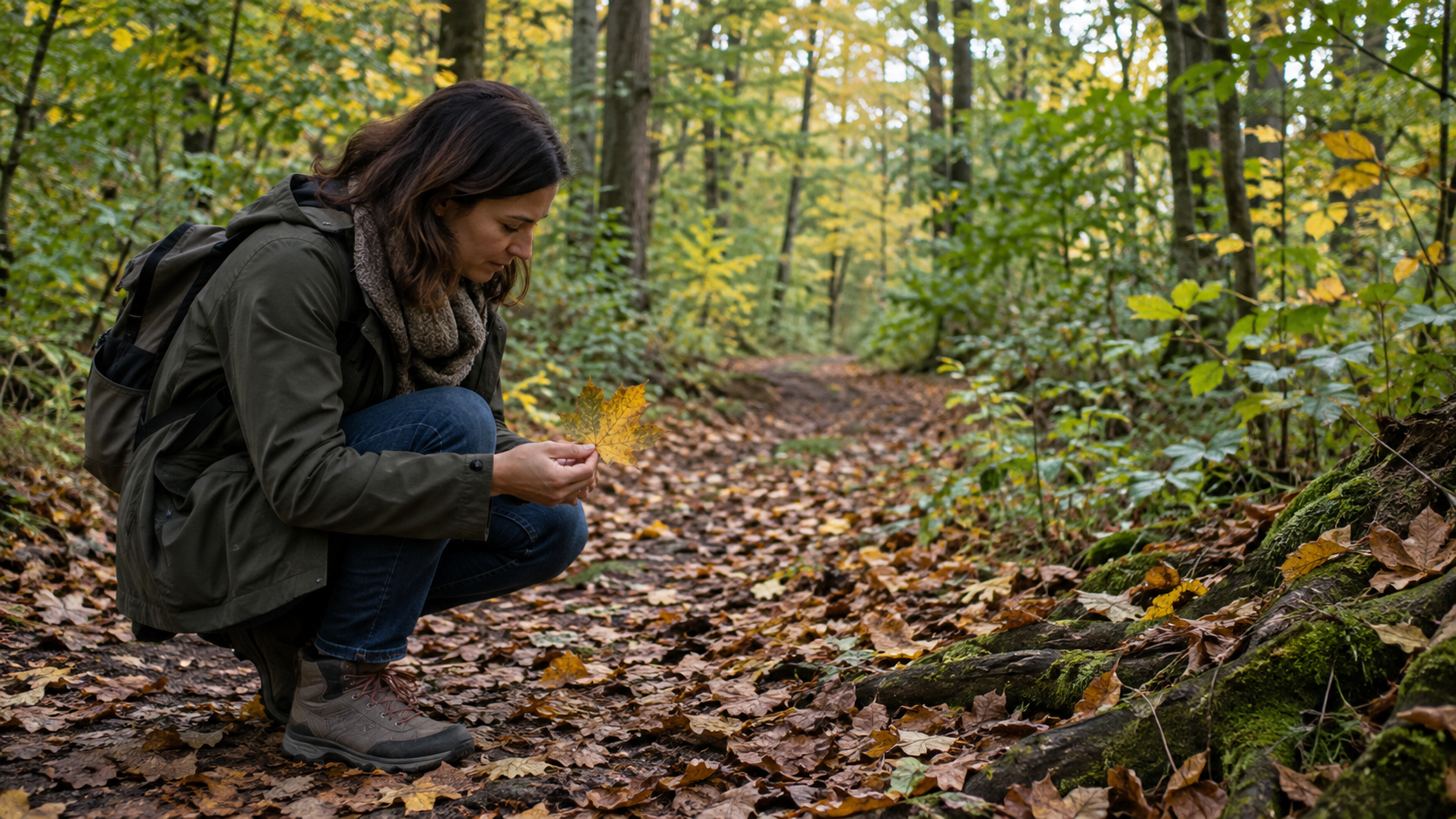
For a Sunday walk, a fairly simple option remains: look at the same tree several times. Are only individual leaves affected, or large parts of the crown? Do changes also appear on neighbouring trees of the same species? Such observations are first of all descriptions, not proof of causes.
It is precisely this separation that makes them useful. Anyone who first records what is visible and leaves the explanation open provides a better basis than a dramatic verdict after a brief glance. Watching a forest starts with attention and gains from comparison.
Autumn colours lose none of their beauty because of this. They simply become less unambiguous. Behind a brown leaf may lie the normal course of the year – or a stress that cannot be settled with the word autumn.


