EFTA-Kosovo Agreement: Market access is no trade boom
Since 1 October the EFTA-Kosovo agreement applies to all contracting parties. It creates legal clarity for companies, but it is no export guarantee.
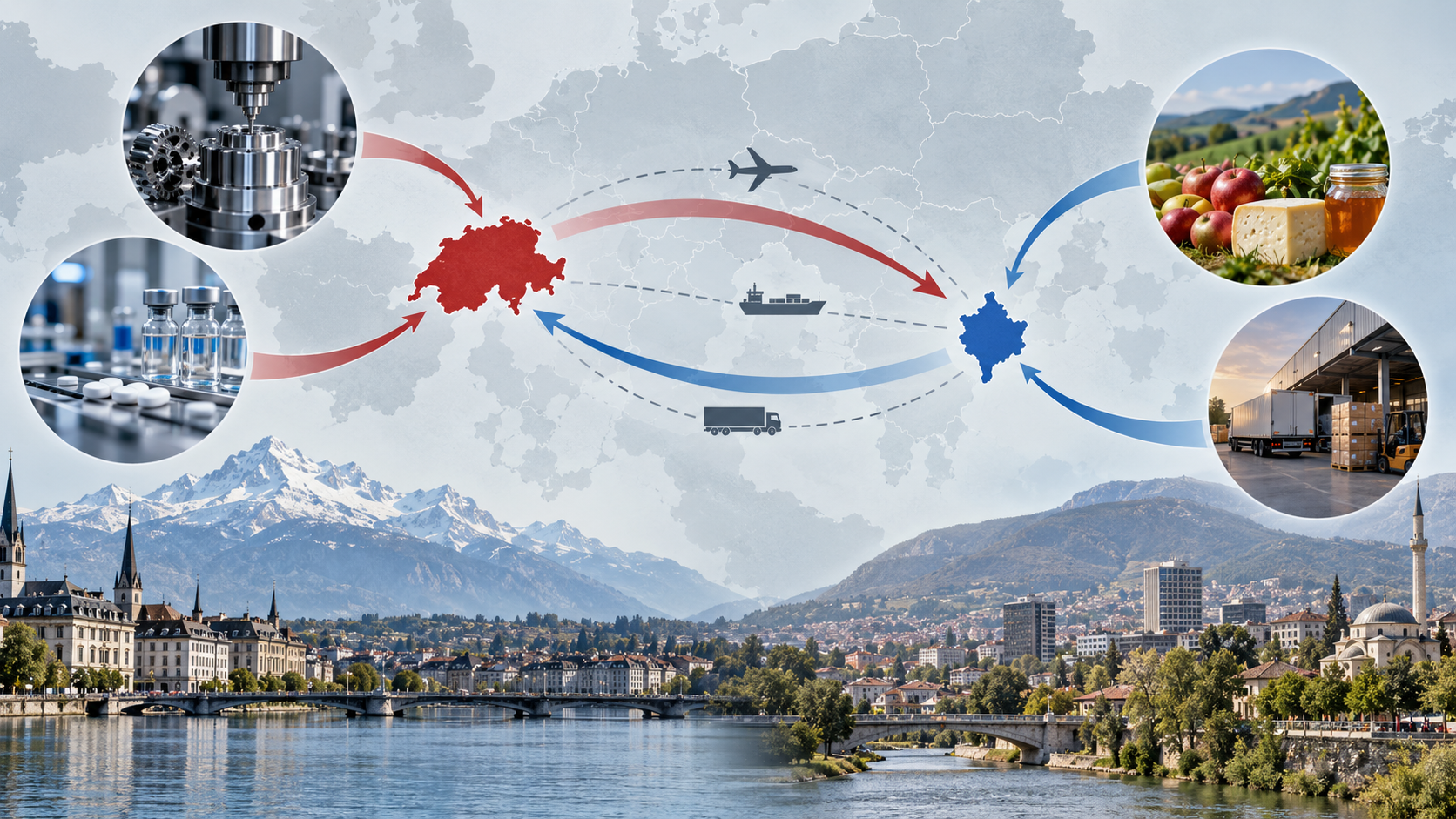
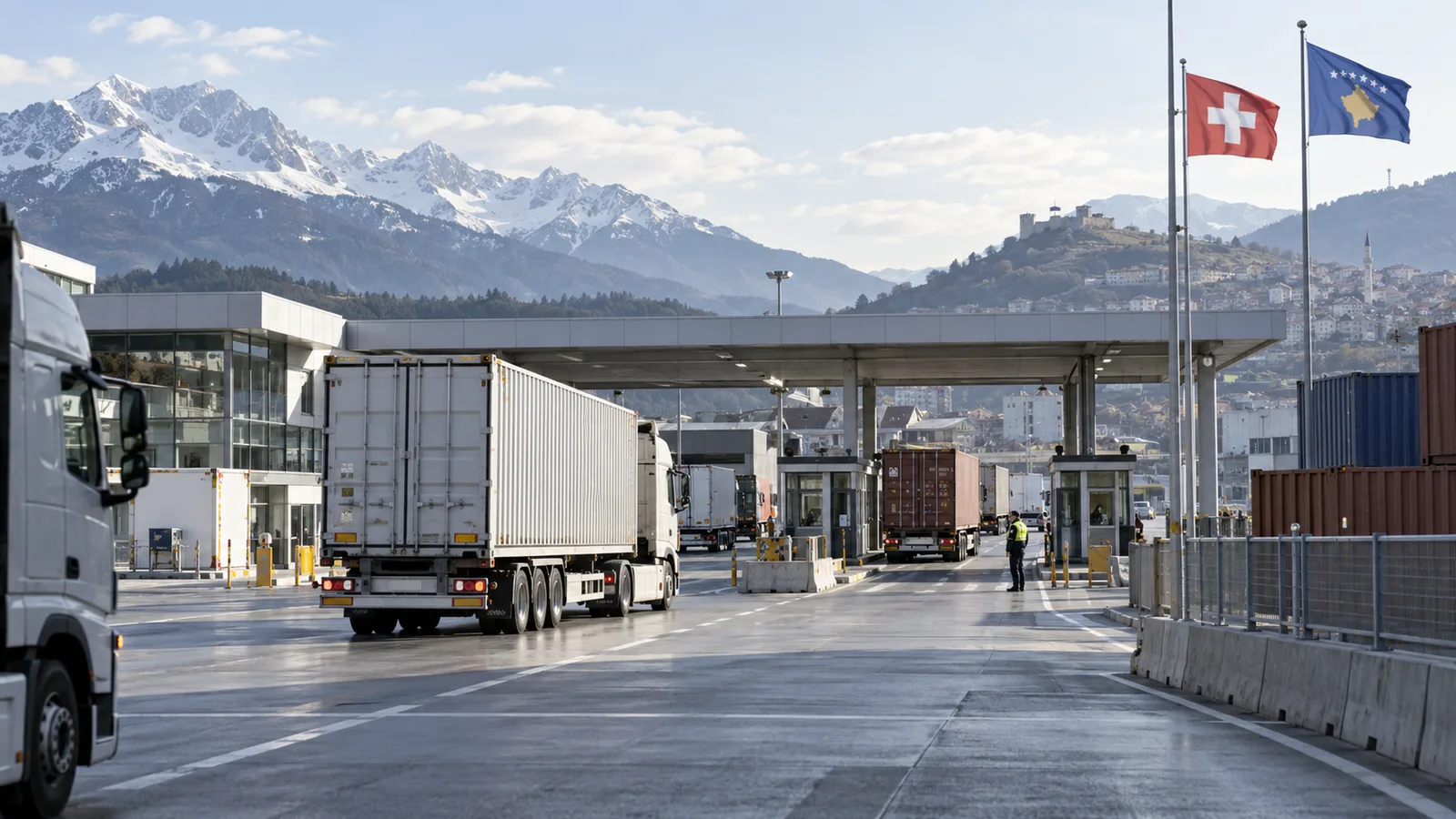
The free trade agreement between the EFTA states and Kosovo has applied to all contracting parties since 1 October 2026. A legal framework prepared over several years is now fully in force. For Swiss companies it can simplify access to a smaller but institutionally important market. A rapid trade boom does not follow automatically, however.
EFTA – Switzerland, Iceland, Liechtenstein and Norway – signed the agreement with Kosovo in January 2025. For Iceland, Norway and Kosovo it entered into force already on 1 September 2026. With its entry into force for Switzerland and Liechtenstein, the treaty now applies throughout the whole of EFTA.
A legal framework, not a trade promise
Free trade agreements lower or remove tariffs and set rules for the movement of goods. Depending on the chapter, they also cover services, investment, competition, intellectual property and sustainable development. Their immediate benefit often lies in predictability: companies have a better idea of which preferential tariffs apply, which rules of origin they must meet and which procedures market access involves.
That matters especially for small and medium-sized enterprises. They rarely have large legal and customs departments. A clear treaty can reduce transaction costs, but it does not replace the practical work: exporting firms still have to check origin, product requirements, logistics and their contractual partners.
Small volumes, strategic significance
Kosovo is not a large sales market for Switzerland. It would therefore be misleading to infer high short-term export growth from the agreement's entry into force. The value of the deal also lies in political ties. It creates a shared institutional framework between Kosovo and four European states whose economies are closely interlinked.
For Switzerland this fits the logic of EFTA policy: it does not replace access to the EU internal market, but opens additional markets with their own rules. The framework can be particularly interesting for companies already active in South-Eastern Europe or building regional supply chains.
What companies should check now
Entry into force marks the start of the implementation phase. What matters is whether companies actually use the preferential rules. The detailed origin provisions are central to that. Anyone who does not meet the requirements or keeps incorrect documentation gains no tariff advantage despite the agreement.
The effect on services and investment, too, will only become visible over time. A free trade agreement can reduce legal risks, but it does not create demand and resolves neither currency nor credit risks. For companies, market entry remains a business decision, not an automatic consequence of foreign policy.
The agreement is therefore above all a foundation. It makes economic relations legally simpler and more predictable. Whether more trade grows out of it will not be decided on 1 October, but in the coming years, by the companies that actually use the new framework.