Emergency Exercise in Beznau: What Really Matters in a Crisis
Authorities Test Measurement Flights, Material Transport, and Cooperation around Nuclear Plant
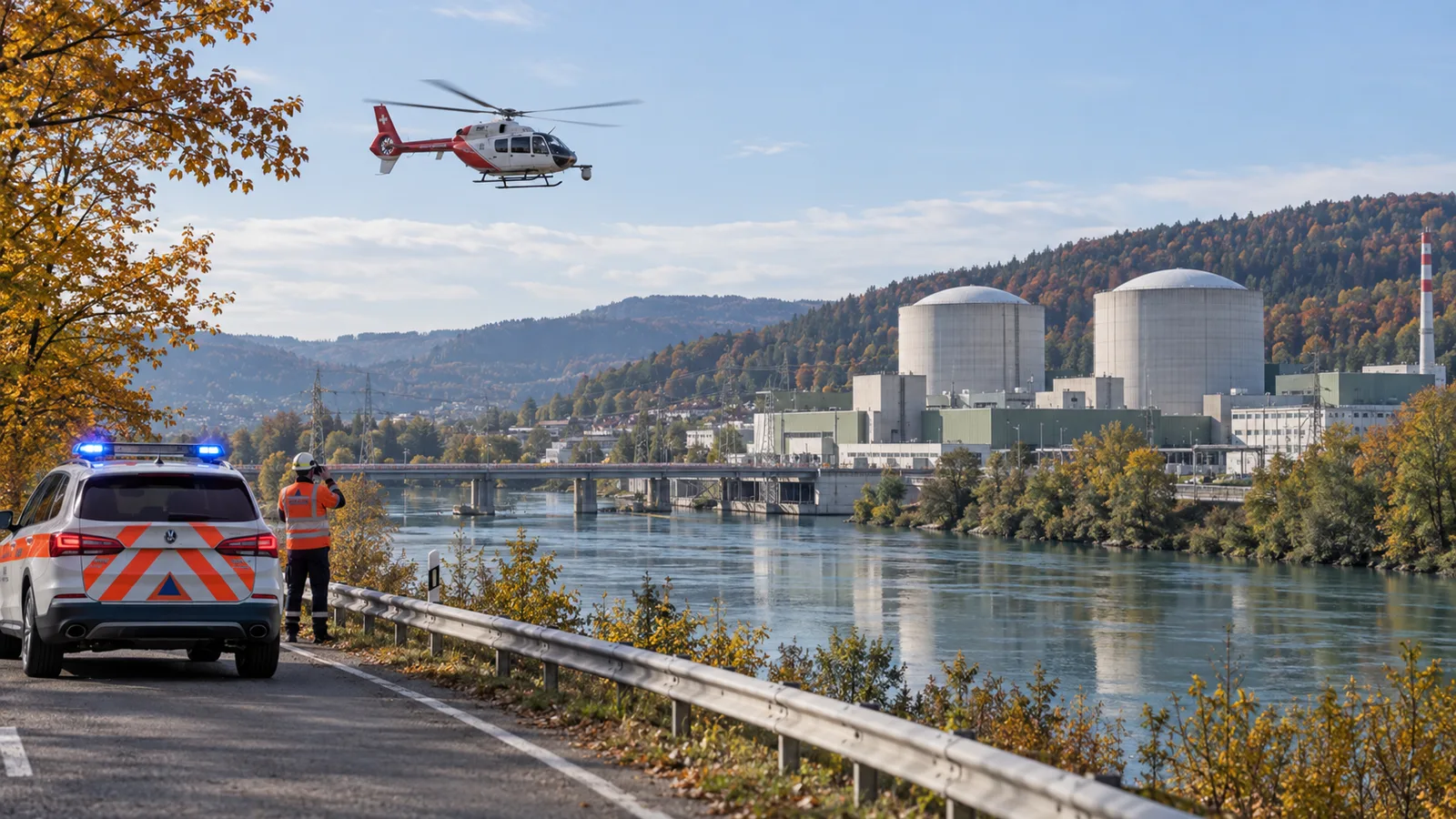
If helicopters fly at low altitude over the Beznau region next week, or army vehicles transport pumps and generators, this is not a nuclear accident. The Confederation, cantons, and emergency organizations will conduct an emergency exercise around the Beznau nuclear power plant from September 14 to 18. The goal is to test procedures before they are actually needed.
Planned activities include measurement flights to detect radioactivity, the transport of emergency materials, and the deployment of mobile measurement teams. Such exercises take place every two years, alternating between the operational Swiss nuclear power plants. The public does not need to take any action during the exercise. However, increased traffic and aircraft noise may be noticeable locally.
Why the Unlikely is Practiced
A serious nuclear incident is unlikely, but it would have significant spatial and organizational consequences. In the initial hours, operators, the supervisory authority, cantons, the Confederation, police, fire department, and army must establish a common situational picture. Measurement data determines which areas could be affected and whether protective measures are necessary.
Technology alone is not enough. Phone numbers, responsibilities, data interfaces, and command structures must function under time pressure. Exercises often reveal unspectacular but critical weaknesses: an incompatible radio, an unclear handover, or a road unsuitable for a heavy vehicle. This is precisely what the exercise is for.
Iodine Tablets Are Not a General Antidote
Many households within a 50-kilometer radius of a Swiss nuclear power plant have received iodine tablets. They protect the thyroid gland from absorbing radioactive iodine. They are not effective against other radioactive substances or external radiation. Therefore, they should only be taken if authorities explicitly instruct to do so.
Taking them too early or unnecessarily provides no additional protection and can cause side effects. Iodine tablets are particularly important for children, adolescents, pregnant women, and individuals under 45. In an emergency, they are combined with other measures – such as staying indoors, closing windows and ventilation, or an organized evacuation.
How Warnings Reach the Public
Official instructions are disseminated via sirens, radio, and the Alertswiss app. Anyone who installs the app and activates notifications receives messages for selected regions directly on their smartphone. At home, it should be known where iodine tablets and important documents are located. A battery-powered radio or a power bank can be useful during a prolonged power outage.
Such preparations are not only for nuclear power plants. They also help in cases of flooding, large fires, or a regional blackout. A small emergency supply, as recommended by the Confederation, is sensible, not panic-driven hoarding after a warning.
What This Means for the Region and Switzerland
Beznau is Switzerland's oldest operating nuclear power plant. Precisely for this reason, any visible deployment will raise questions. Transparent information is part of security: after the exercise, authorities should not only report that it took place but also what weaknesses were identified and how they will be resolved.
For residents, the sober conclusion is: there is no cause for concern during the exercise. However, the event is a good opportunity to check Alertswiss, store iodine tablets in an accessible place, and discuss official behavioral rules with the family. Emergency preparedness works best when quietly practiced before an event – and does not have to be improvised during the event.