Energy crisis as a US advantage? What the data actually show
Disruptions on key shipping routes strengthen US energy exports. But that finding implies neither a secret plan nor a risk-free gain for Washington.
The thesis sounds compelling: when energy from the Gulf drops out and key sea routes become unsafe, American producers sell more oil and liquefied natural gas. Europe pays higher prices while additional export facilities start up in the US. A political intent is sometimes inferred from this. The available data support the first part of that narrative. For the second, a robust proof is missing.
America's exports really are rising
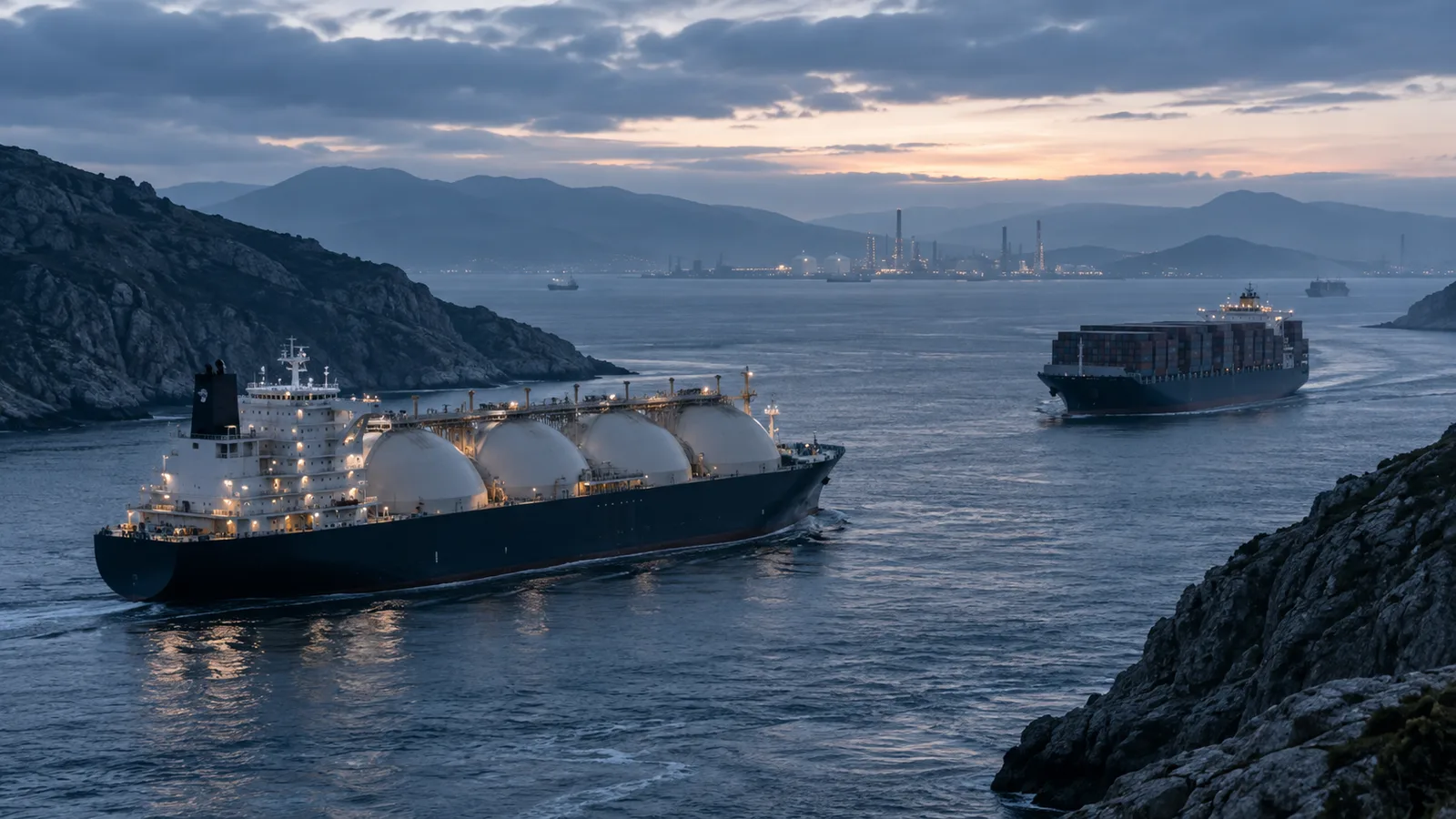
The US Energy Information Administration (EIA) puts the increase in American LNG exports in the first half of 2026 at 23 percent compared with the same period a year earlier. The main reason was additional liquefaction capacity. In April, Golden Pass LNG started first exports; other plants had already expanded their production before that.
At the same time, the average price at the European TTF trading hub rose from 13.10 dollars per million British thermal units in the first half of 2025 to 14.74 dollars in the same period of 2026, according to the EIA. The agency also cites the interruption of deliveries through the Strait of Hormuz. In March, around 20 percent of global LNG supply was temporarily lost as a result, above all deliveries from Qatar.
That establishes a distribution effect: whoever has spare export capacity and safe routes can sell more or earn higher margins in a shortage. US producers are among those beneficiaries. That, however, is first of all a market reaction, not proof that Washington caused or deliberately prolonged the disruptions.
Bottlenecks are not a one-way street for America
The commentary that triggered the debate links the situation at several straits into a single strategic picture: Hormuz, Bab al-Mandab, Panama and the Arctic routes would help the US push back competitors. Individual elements are real. Sea routes are vulnerable, insurance and transport costs react quickly, and energy exports give the US geopolitical leverage.
But the assumption that every disruption automatically benefits the United States is too simple. Higher world market prices also burden American households and companies. Detours make goods imports more expensive. Uncertainty hits financial markets, supply chains and allies. And additional LNG deliveries cannot be ramped up without limit: liquefaction plants, tanker fleets and import terminals set physical limits.
The role of the dollar is more complex too. The fact that many energy contracts are settled in dollars supports demand for the US currency. But the dollar's global standing also depends on the depth of American capital markets, the rule of law, liquidity and confidence in US government bonds. Energy trade alone does not explain it.
For Switzerland, the price path runs through Europe
Switzerland does not import LNG directly through a seaport of its own. It is affected nonetheless. Gas reaches the country via the European grid; price movements at European trading hubs therefore also affect Swiss utilities and large customers. More expensive gas can also influence electricity prices when gas-fired power plants in Europe set the marginal price.
There are indirect effects as well: higher freight and insurance costs, more expensive intermediate goods and risks for energy-intensive industries. The strong franc can dampen part of imported inflation, but it does not remove the real extra costs. For Switzerland, what matters less is who "wins" geopolitically, but how robust procurement, storage, grids and contracts are.
What can honestly be said
The data produce a sober picture. The US gains market share as an LNG supplier when deliveries from the Gulf drop out. Europe carries part of the cost. That adds up to a tangible economic and strategic advantage for Washington.
What is not supported is the broader claim that the American government orchestrates or prolongs the crises at the straits in order to dominate energy, the dollar and technology at the same time. Between benefiting from a crisis and deliberately bringing it about lies a gap in evidence. Especially with geopolitical narratives, that distinction is central.
Three warning signs instead of one big conspiracy
Three sober warning signs can be derived from this for policymakers and companies. First, a few straits remain systemic weak points of the world economy. Second, additional LNG capacity shifts power towards exporting states without guaranteeing security of supply. Third, short-term winners can themselves later suffer from slumps in demand, countermeasures or political risks. Anyone looking only for the winner of a single price movement overlooks these feedback loops. Robust preparedness therefore means diversified sources of supply, economical use and transparent crisis scenarios – not the certainty that one country controls every disruption.


