Flash Flood in Nepal: Helvetas Prepares Emergency Aid
CHF 100,000 for Affected People in Rasuwa District
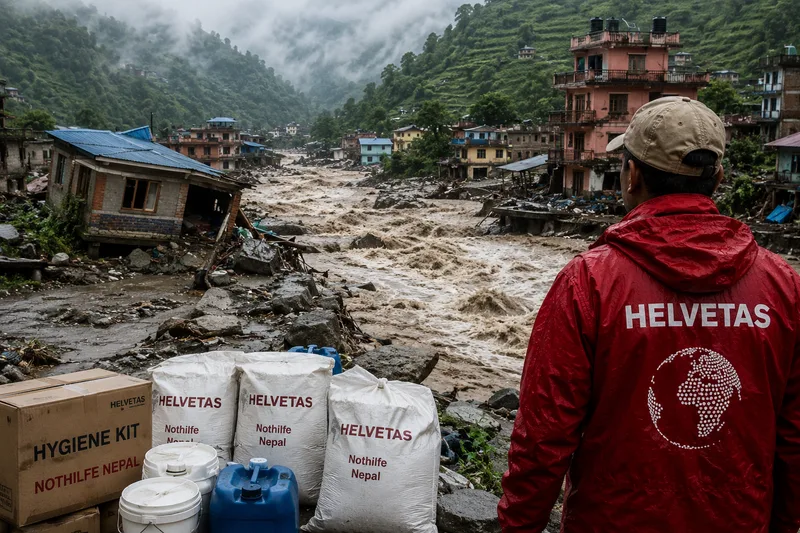
Flash Flood in Nepal: Swiss Aid Organizations Provide Emergency Relief
A massive flash flood has caused severe damage in northern Nepal. Rasuwa District and areas along the Bhotekoshi and Trishuli rivers are particularly affected. Houses, bridges, and roads were destroyed. Hydropower plants also sustained damage. Many people died. Hundreds, possibly over a thousand, remain missing.
The catastrophe occurred on August 26, 2026, according to consistent reports from Nepali authorities and media. Initial damage assessment proved difficult. Several affected mountain regions are hard to access. Rescue workers continue searching for missing persons and assessing the extent of the destruction.
Floodwaters Leave a Swath of Devastation
The towns of Timure and Syabrubesi in Rasuwa District were particularly hard hit. The flood then spread downstream along the Bhotekoshi and Trishuli rivers. Houses and bridges in Nuwakot were also damaged or swept away.
Nepali authorities mobilized the army, police, and other rescue forces. Several helicopters conduct search and rescue operations in the area. Air rescue is crucial for some remote regions due to interrupted road connections.
The Kathmandu Post reports the flood originated from the Tibetan side into the Bhotekoshi. It then spread downstream. Authorities therefore warned communities along the Trishuli and other rivers about rising water levels.
Cause Under Further Investigation
Initially, the cause of the unusually strong flood was unclear. Experts now believe a major ice and rock event in the Himalayas may have played a central role. Satellite images and further investigations indicate a collapse of glacial or rock masses.
The exact sequence of events is not yet definitively determined. The role of unusual weather conditions and rapid ice melt is also under further investigation. The catastrophe highlights the Himalayan region's particular vulnerability to sudden floods and mudslides.
Helvetas Allocates CHF 100,000
The Swiss aid organization Helvetas has allocated CHF 100,000 for emergency relief. A team of local staff departed for the disaster area. They will assess the damage and prepare initial aid measures.
Helvetas cooperates with local partner organizations. The focus is initially on particularly vulnerable households. Planned measures include emergency shelters, hygiene items, drinking water, and other essential goods.
Helvetas has worked in Nepal for over 70 years. It maintains a large network of local partners there. The organization emphasizes that this long-standing presence facilitates access to remote communities.
Swiss Red Cross Also Provides Aid
In addition to Helvetas, the Swiss Red Cross (SRC) is also active in Nepal. It initially provides CHF 50,000 for emergency relief. The SRC coordinates support with the Nepali Red Cross and other partners.
The SRC reports flood waves of sometimes eight to ten meters high. Villages were swept away. Roads, bridges, and hydropower plants sustained damage. Thousands of people require shelter and essential goods, according to the organization.
Swiss National Reported Missing
The disaster also affects foreign travelers. According to the Nepali Tourism Board, numerous foreign nationals are among the missing. On Thursday, it became known that a Swiss national was also reported missing.
The search for missing persons is challenging. Transport routes in the affected mountain regions are partly destroyed. Further dangers exist from unstable slopes and potential new flood waves.
Swiss Aid Efforts Underway
With Helvetas and the Swiss Red Cross, at least two major Swiss aid organizations are involved in the emergency response. Both initially focus on local structures and precise needs assessment. More extensive aid deliveries will follow.
The extent of long-term reconstruction needs is currently difficult to estimate. In addition to residential buildings and transport routes, vital energy infrastructures were damaged. Restoring transport and supply connections will be among the most important tasks for affected communities.
Full Extent Not Yet Known
Casualty and missing persons figures are constantly changing. Further damage becomes known as remote areas become more accessible. Therefore, early reports should be treated with caution.
It is already clear that the flood in northern Nepal has triggered a severe humanitarian crisis. Rescuing the missing and providing for survivors are the immediate priorities. Only then will the full extent of damage to settlements, infrastructure, and energy supply become apparent.
Sources
- Helvetas: Flash Flood in Nepal – Team Dispatched to Disaster Area
- Helvetas: Initial Situation Assessment from August 26, 2026
- Kathmandu Post: Course of the Flood in the Bhotekoshi Area
- Kathmandu Post: What is Known About the Flood
- Swiss Red Cross: Emergency Aid in Nepal
- Keystone-SDA / Nau.ch: Swiss National Also Among Missing