France's school protests: austerity meets exhausted classrooms
Reports of nationwide protests and numerous arrests point to a deeper conflict: how much more the state asks of its schools.
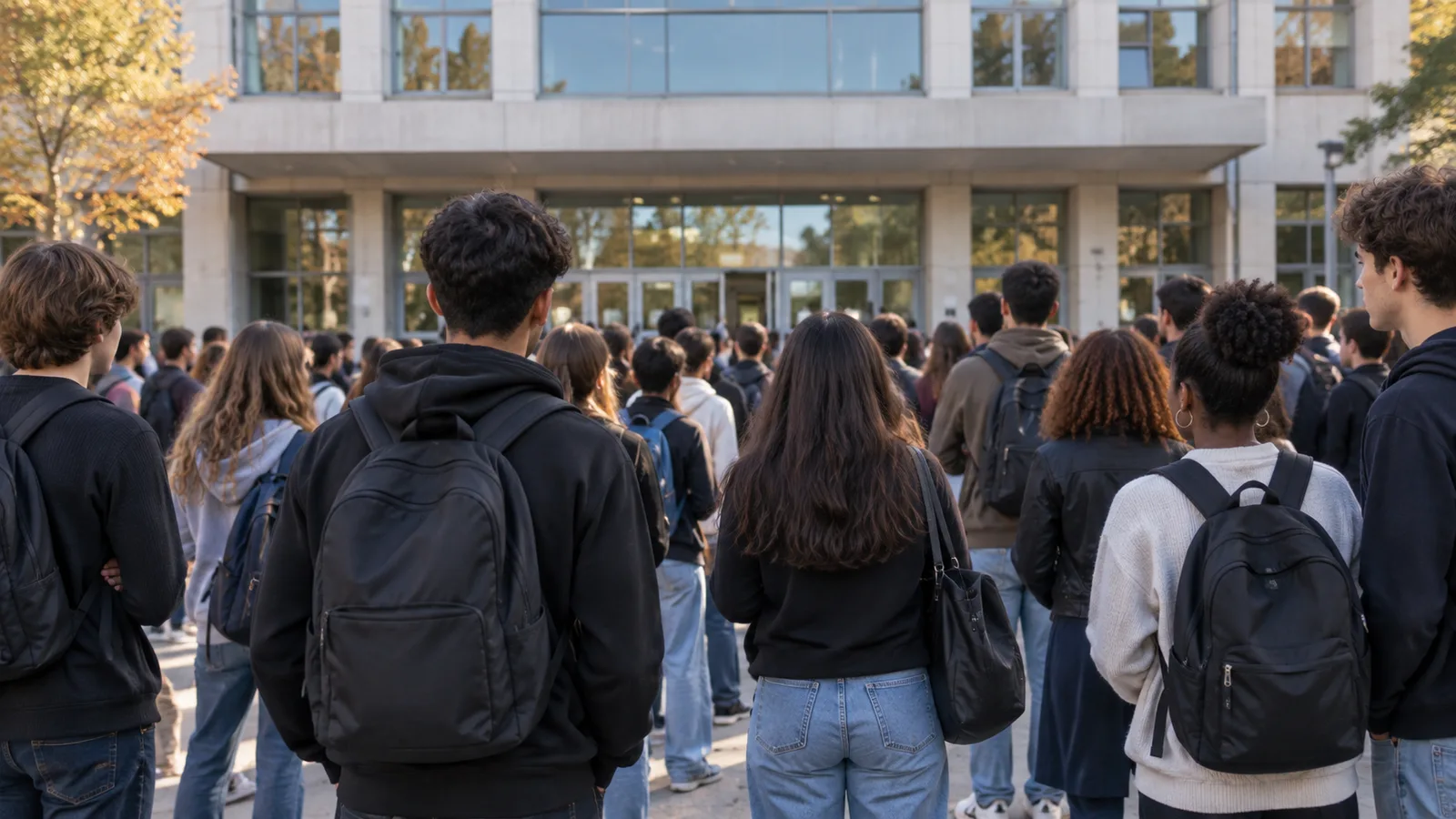
Images of blocked schools, police deployments and arrested teenagers give the impression of a suddenly escalating crisis. In France, according to media reports, student protests have spread nationwide; individual reports mention close to 2,000 arrests in a single day. Such a figure requires particular caution: without prompt, traceable figures from the Interior Ministry, it cannot be treated as a final tally.
The larger finding is clear even without that escalation. The protests meet an education system in which questions about teachers, class sizes, buildings and social mobility have been politically contested for years. When young people block their schools, the conflict is rarely aimed at a single measure alone. Concrete cuts often merge with experiences made long before.
School as a site of social inequality
France has a strongly centralised education system. Curricula, examinations and key governance questions are shaped nationally; yet the living conditions of pupils differ considerably between wealthy cities, suburbs and rural regions. That makes school especially political. It is not only a place of learning but a promise that social origin does not decide the rest of one's path.
In its international comparisons, the OECD regularly points out that educational success in many countries remains closely tied to social background. France is no exception. Where resources become scarce or staff are missing, that link becomes especially visible in everyday school life. Student protests can therefore also be read as a demand for reliability: for teaching, support and prospects that do not depend on where someone lives.
At the same time, it would be wrong to read every demonstration as a uniform social movement. Young people have different motives, local disputes follow their own dynamics, and not every blockade represents a majority at a given school. Nor can violence or property damage be excused by the legitimate demand for better education conditions.
The police do not resolve the political conflict
In acute unrest, the state has a duty to protect people and buildings. Arrests may be necessary when crimes are committed or people are at risk. But a security response does not answer the question of why a dispute over education policy can escalate so sharply.
High arrest figures in particular are politically double-edged. In the short term they can show the ability to act, but they can also deepen the distance between authorities and young people. What matters, then, is transparency and proportionality: who was arrested, and for what reason? How are minors treated? And what room remains for mediation and political participation?
A view from Switzerland
Switzerland should not draw simple conclusions from France. Its federal education system, its vocational training and the responsibility of the cantons differ markedly. Yet the underlying questions are familiar: what happens when schools are expected to handle integration, mental strain, digitalisation and rising expectations at the same time, without staff and premises growing at the same pace?
Debate in Switzerland is often less confrontational, but it knows similar tensions – for instance over support for children with special needs, the shortage of teachers or funding. France shows how quickly a dispute over education can become the symbol of a broader generational conflict when political decisions are experienced in young people's everyday lives as a devaluation.
The next step in France will therefore not be measured by the number of police vehicles. What matters is whether the government, schools and young people can talk again about the conditions of learning. Without that debate, every calmer day remains only an interruption – not a solution.
Sources
- OECD: Education in France: https://www.oecd.org/en/topics/sub-issues/education/france.html
- French Ministry of Education: https://www.education.gouv.fr/
- French Ministry of the Interior: https://www.interieur.gouv.fr/
- NZZ: report on the spread of the protests: https://www.nzz.ch/international/die-schuelerproteste-in-frankreich-weiten-sich-zum-flaechenbrand-aus-ld.10026482