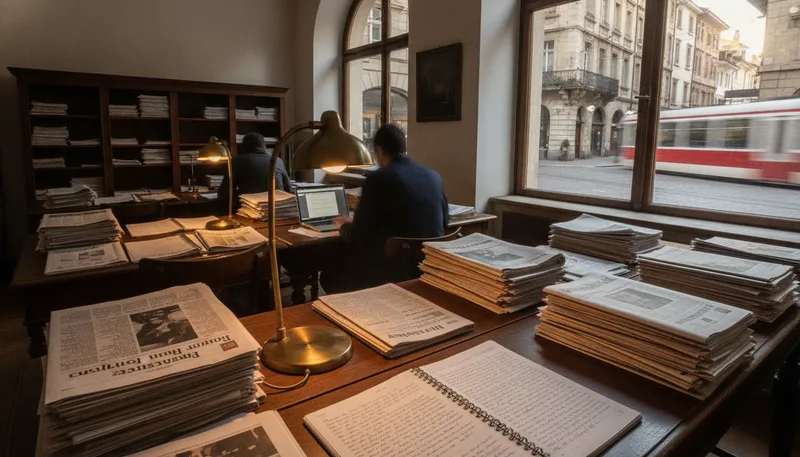
Free media: the democratic infrastructure behind the daily news
Independent newsrooms are not a decorative element of democracy. They create a verifiable public sphere – and need legal, economic and social conditions to do so.
Free media are not democratically valuable because they confirm or criticise governments. Their value lies in making power verifiable. They investigate decisions, explain consequences, correct errors and give different voices room. Without this infrastructure, public debate is more easily shaped by rumours, powerful actors or mere audience numbers.
Press freedom is more than the right to publish
Media freedom first needs protection from censorship and political interference. But it also needs access to information, legal protection for investigative work and sufficient economic foundations for newsrooms. When local titles disappear, jobs are cut or ownership is heavily concentrated, the formal right remains – yet the diversity of reporting can still shrink.
In its 2026 press freedom index, Reporters Without Borders ranks Switzerland eighth. That is a strong result, but no reason for complacency. The organisation points to economic pressure, concentration in the media market and legal instruments that can temporarily block publications. These observations are no substitute for a Swiss legal analysis, but they show that press freedom must be cultivated even in stable democracies.
Democracy needs reliable friction
Independent journalism creates friction: an investigation can be uncomfortable for an authority, a contextual analysis can qualify a popular narrative. It is precisely this friction that protects the public from the idea that communication from those in power is already information. But it only works if newsrooms make their standards visible: checking sources, separating facts from comment, correcting errors transparently and disclosing interests.
For the audience, a second side belongs to this. Media literacy does not mean reflexively doubting everything. It means paying attention to source, date, authorship and evidence – especially with emotional pieces that promise quick outrage. The wide spread of AI-generated content makes this skill more important, but it is not new.
The Swiss task is concrete
In Switzerland, the debate covers public media, private business models, local journalism and access to official documents. These fields differ, but share one question: can citizens obtain information that does not come solely from PR, platform logic or political camps?
The answer is not up to media companies alone. Legislators shape transparency and framework conditions, platforms influence reach and funding, and readers decide through subscriptions, attention and criticism which offerings remain viable.
Free media are therefore not a luxurious addition to democracy. They are its tools. Their quality shows not in confirming every viewpoint, but in making claims verifiable – even when the result suits no one.