APNs against the doctor shortage: relief only with clear rules
Advanced Practice Nurses should be able to take on more responsibility in primary care. But training, competences, funding and collaboration are not yet fully settled.
Primary care faces two opposing developments: the population is ageing, chronic illnesses are increasing, and with them the need for long-term medical support grows. At the same time, shortages of family doctors are emerging in several regions. Retirements and falling working hours are widening the gap. APNs are not a quick substitute here, but an additional building block whose usefulness depends on whether qualification, responsibility and collaboration are clearly regulated in everyday practice.
More demand, fewer available family doctors
The Federal Council notes that neither additional university places nor the recruitment of physicians trained abroad are likely to remedy the expected shortage on their own. That is why the question of which tasks other health professionals can take on is moving to the fore – without blurring quality, safety and accountability.
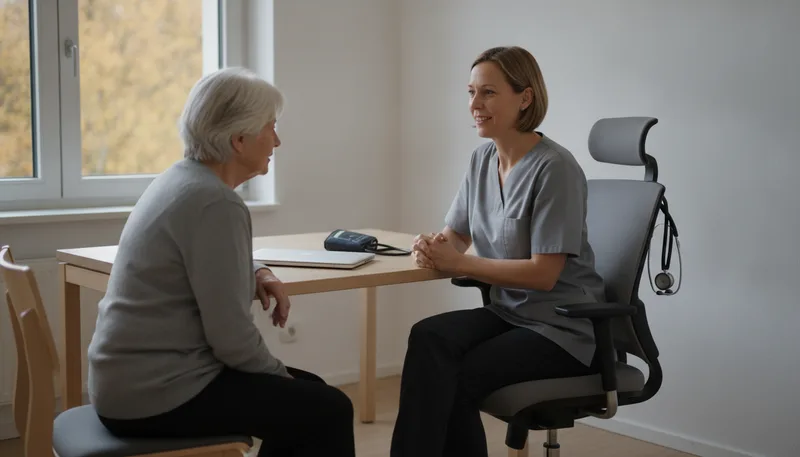
An important role is to be played by nurses with a qualification in Advanced Practice Nursing. APNs hold a master's degree in advanced nursing practice. They can, for example, accompany people with chronic illnesses, assess clinical situations in depth, coordinate treatment pathways and, within clear areas of responsibility, provide medical services.
APNs are not a substitute profession for physicians
The political debate is often conducted with the simple formula “more competences against the doctor shortage”. That falls short. APNs are not intended to replace physicians across the board. Under the model favoured by the Federal Council, they work in outpatient facilities with their own professional responsibility, but in close collaboration with a responsible physician.
This link is precisely what matters. Patients must know who is responsible for which decision, when a medical assessment becomes necessary and how handovers between professional groups work. In simple, standardised or long-term care situations, an APN can usefully complement primary medical care. In unclear diagnoses, acute deterioration or complex decisions, clear escalation pathways are needed.
The current Health Professions Act already obliges health professionals to work within the competences they have acquired. For APNs, however, a nationwide, uniformly regulated professional profile is still missing. The ongoing revision is intended to close precisely this gap: the profession, the training requirements and the conditions for practising the profession are to be defined more clearly at federal level.
Funding is more than a formality
A second open question concerns compulsory health insurance. Certain medical services provided by APNs cannot be billed through basic insurance simply because they appear professionally sensible. That requires a legal basis in the Health Insurance Act.
In May 2026 the Federal Council mandated the Federal Department of Home Affairs to draft a corresponding bill. The aim is not simply to create new billing items. The service catalogues, collaboration with medical practices, documentation and quality assurance also need clarifying.
Funding therefore helps determine whether a new professional profile actually closes gaps in care or merely creates additional interfaces. A model that works well professionally but is reimbursed unclearly remains difficult to implement in practice. Conversely, reimbursement without binding rules on competences would be a risk to transparency and patient safety.
The political process is still open
The revision is part of the second stage of implementing the Nursing Care Initiative. The National Council has deliberated on the bill; the responsible committee of the Council of States has begun its deliberations. A definitive legal framework therefore does not yet exist.
This is not a side issue but the core of the debate. Given the shortage of skilled workers, Switzerland needs new care models. But lasting relief only arises when the level of training, areas of responsibility, liability, collaboration and funding fit together.
APNs can strengthen primary care. Whether they actually ease the doctor shortage perceptibly will not be decided by the job title, however, but by the rules that turn that title into everyday practice in a surgery or a nursing home. Only when these rules are comprehensible to teams and patients can the new role deliver on its promise in care.