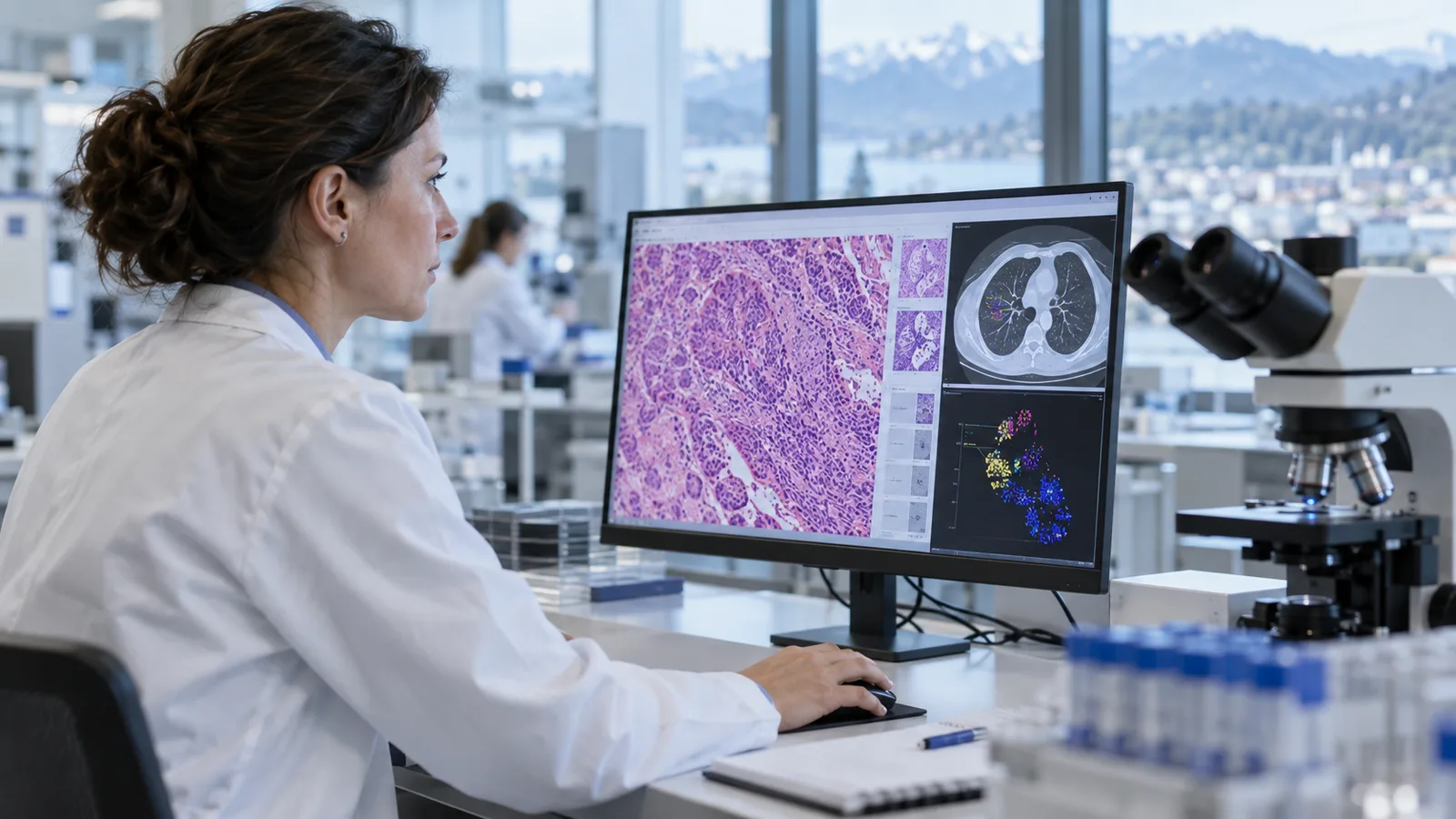
Lung cancer therapy: why first-line treatment keeps getting more precise
In non-small cell lung cancer, stage alone no longer decides the first treatment. Molecular tests and PD-L1 values can fundamentally change the choice of therapy — provided enough tumour material is available in time.
In lung cancer, the same diagnosis can now lead to very different first treatments. What matters is the type of tumour, the stage, the patient's general condition and, increasingly, biological features of the cancer cells. Especially in non-small cell lung cancer, which accounts for the majority of cases, first-line treatment is therefore no longer a standard package. It has become a sequence of diagnostic decisions.
That also changes the pressure of time after diagnosis. Anyone who wants to start treatment quickly often has to wait first for results from pathology and molecular diagnostics. This apparent detour can prevent an unsuitable therapy from being started and having to be corrected later.
Test first, then treat
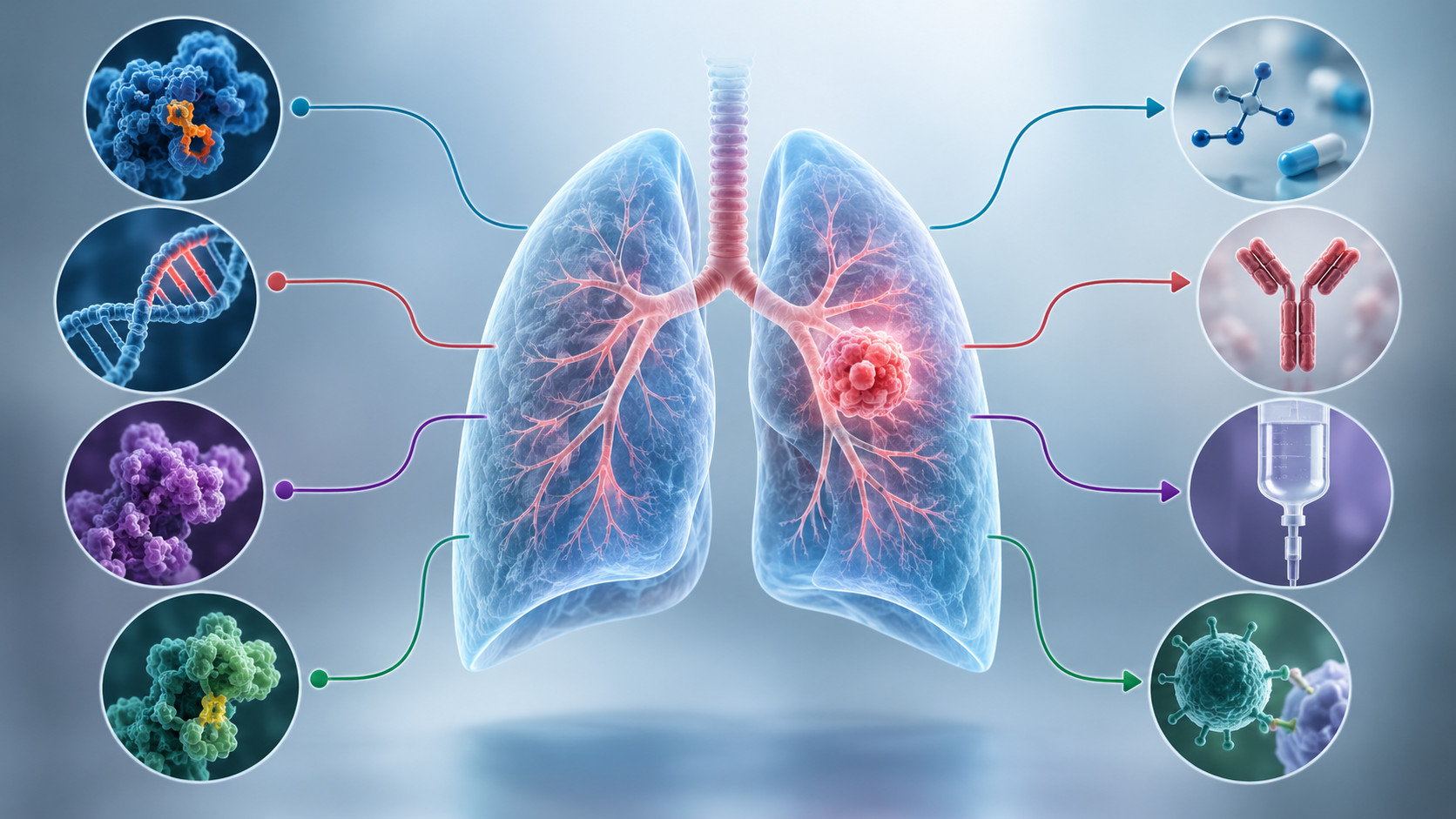
Targeted drugs attack specific alterations in tumour cells. The prerequisite is that the corresponding feature is actually present. Established examples include alterations in genes such as EGFR or ALK. European guidelines recommend early molecular testing for suitable forms of non-small cell lung cancer. The PD-L1 value can also influence the decision on immunotherapy.
The tests answer different questions. A gene alteration can provide a concrete target for a kinase inhibitor. PD-L1, by contrast, is a biomarker that helps — together with other clinical features — to put the possible benefit of immunotherapy into context. No single value replaces the overall assessment by an interdisciplinary tumour board.
Krebsliga Schweiz writes that targeted treatment is an option in roughly one quarter of lung cancer cases. Conversely, this means that for many patients a combination of chemotherapy, immunotherapy, radiotherapy, surgery or supportive care remains necessary. Precision medicine is not a guarantee of therapy, but a more accurate choice between the options that exist.
Early stages are also becoming more molecular
More precise diagnostics no longer concern metastatic disease alone. The ESMO guideline updated in 2026 for early and locally advanced non-small cell tumours, for example, recommends EGFR testing for certain stages so that adjuvant treatment with osimertinib can be assessed. For suitable operable tumours, ALK and PD-L1 testing is also recommended.
The logic of treatment thus shifts: surgery can remain the central curative step, but is combined more strongly with drug therapies before or after the procedure. Which sequence makes sense depends, among other things, on the extent of the disease, the histology, the molecular profile and the resilience of the person affected.
The bottleneck often lies before therapy
The more markers become relevant to decisions, the more important the quality of tissue sampling becomes. A small sample must suffice for diagnosis and several tests. If too little material is available, a repeat biopsy may be necessary. Liquid biopsies, which look for circulating tumour DNA in the blood, can complement a tissue sample but do not replace it in every situation.
In Switzerland, the question of access also arises. University and specialised centres have extensive molecular diagnostics at their disposal; smaller hospitals often work in networks with reference laboratories. What matters less is whether a test is technically available somewhere, but whether it is ordered in time, interpreted correctly and followed by a reimbursed therapy. The inclusion of a drug in the Spezialitätenliste can be just as important as its authorisation.
Progress with clear limits
Targeted and immunological therapies have improved the outlook for selected groups. But they can cause considerable side effects, and tumours can develop resistance. Statistical study results also do not predict how long an individual person will benefit.
The most important change in first-line treatment is therefore not a single new drug. It is the sequence: obtain enough tissue, characterise the tumour precisely, clarify the treatment goal and only then choose the appropriate combination. For those affected, the waiting can be a burden. Medically, however, this diagnostic precision is increasingly part of the treatment itself.


