
RIVASUR on the Specialities List: What the Listing Means for Patients
Since August 2026, compulsory health care insurance has reimbursed a rivastigmine patch applied twice a week. The listing eases access, but changes neither the limits of Alzheimer's therapy nor medical monitoring.
Since 1 August 2026, Rivasur has been on the Swiss Specialities List. This means compulsory health care insurance generally covers the cost of the prescription-only rivastigmine patch, provided the conditions of the published limitation are met. For patients and relatives, this is first of all a decision about access. The listing means neither that the product cures Alzheimer's nor that it suits every person affected by the disease.
Rivasur is a transdermal patch for the treatment of dementia of the Alzheimer type. It contains rivastigmine, a cholinesterase inhibitor. Swissmedic lists two strengths, releasing 4.6 and 9.5 milligrams per 24 hours respectively. The patch is changed twice a week, according to the risk management plan at the latest after four days. It is dispensed only on medical prescription.
What the Specialities List actually regulates
The Specialities List of the Federal Office of Public Health is not a ranking of particularly effective medicines. It designates medicines whose costs are covered by basic insurance, and it states prices as well as any restrictions. To do so, the FOPH assesses efficacy, appropriateness and cost-effectiveness.
Marketing authorisation and reimbursement are two separate decisions. Swissmedic examines the quality, safety and efficacy of a medicine. The FOPH then decides whether, and under which conditions, compulsory health care insurance pays for it. For insured persons, the annual deductible and the co-payment share remain. Nor does a medical prescription lead automatically to cost coverage if the conditions of a limitation are not met.
Fewer changes can simplify daily life
The practical difference compared with patches applied daily lies in the rhythm of changing them. Two fixed appointments a week can make the organisation of medication easier for relatives or professional carers. Whether less frequent application really leads to better adherence in everyday life cannot, however, be derived from inclusion in the Specialities List alone. That would require comparative data from care practice.
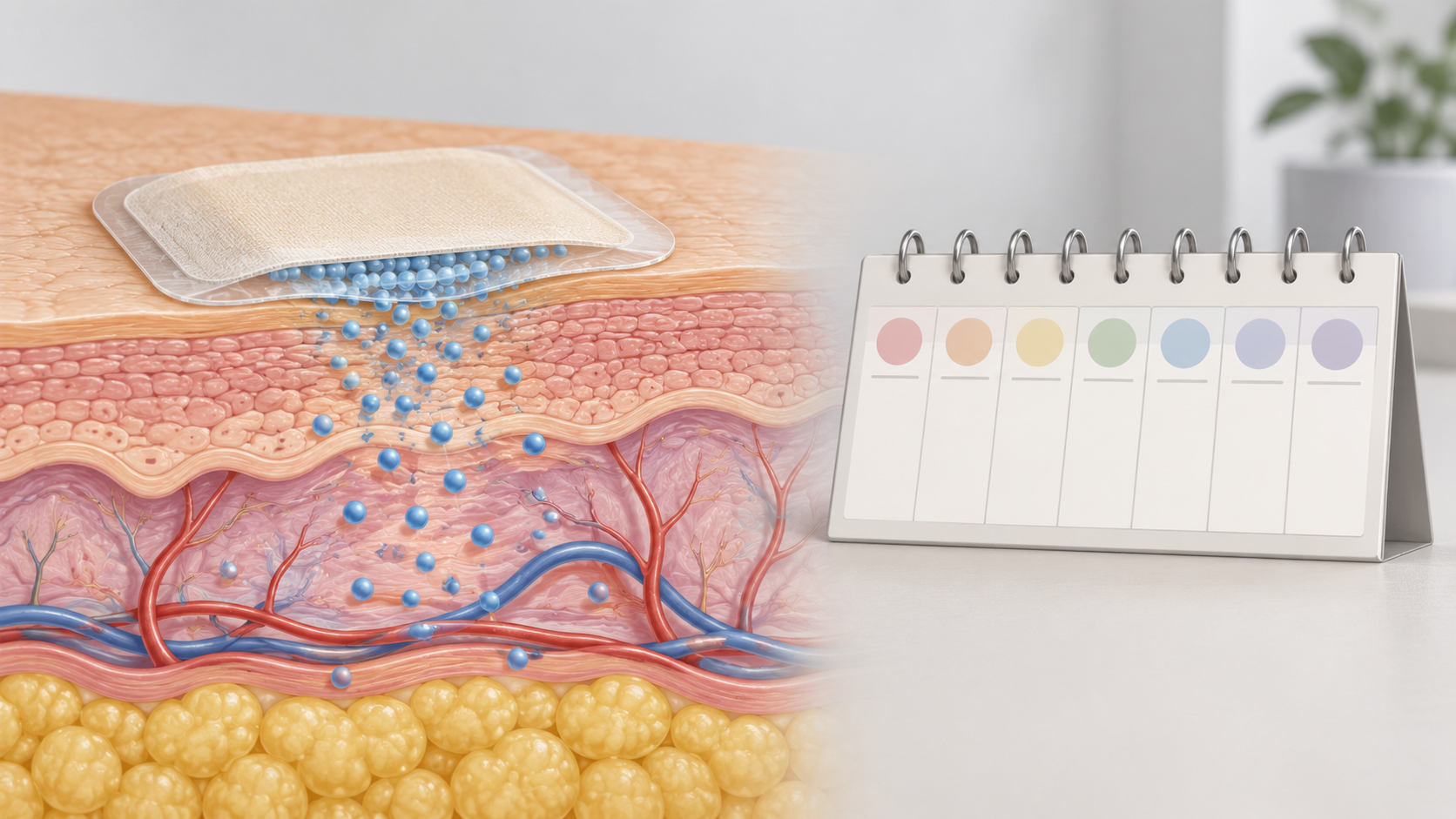
A patch, too, is not automatically straightforward. Change dates must be kept, old patches removed and new sites chosen correctly. Swissmedic lists misuse and medication errors as important identified risks. That is precisely why the packaging and the patient information carry the instruction to replace the patch twice a week and at the latest after four days.
Skin reactions are possible. Rivastigmine can also cause unwanted effects. Which risks are relevant in an individual case and whether interactions exist belongs in medical or pharmaceutical advice. This article does not replace a medical recommendation.
Treatment remains symptomatic
Rivastigmine is one of the established active substances in symptomatic Alzheimer's treatment. In some patients it can temporarily stabilise cognitive abilities or everyday functions. The substance does not remove the underlying neurodegenerative disease.
Whether continued treatment makes sense must therefore be assessed regularly on the basis of the clinical course. Individual test results are not the only thing that counts. Physicians consider cognition, everyday function, behaviour, side effects and the burden on carers, among other factors. Relatives may find it helpful to document changes. They should not adjust the dose or the rhythm of changing the patch on their own.
What patients should watch out for
Before a change, the physician or the pharmacy should check which form of rivastigmine has been used so far and how the new rhythm fits into daily life. A clearly visible weekly plan can prevent double applications or forgotten changes. Medical advice is indicated for pronounced skin reactions, severe dizziness, persistent vomiting or marked weight loss. The patch must not be stuck on more often or cut up on one's own initiative. It is also important, when changing the patch, to check that the old one has actually been removed.
An additional option, not a breakthrough
The new listing does not create a new class of active substances: rivastigmine has been in use for years. What is new in basic insurance is this dosage form, applied twice a week. Its possible added value therefore lies less in a medical breakthrough than in an additional option for treatment and care.
For patients, what ultimately counts is not only whether a product appears on a federal list. What matters is whether it brings a comprehensible benefit in the specific case, is applied correctly and remains tolerable. The Specialities List opens up financial access. The medical decision remains individual and must be reviewed regularly.


