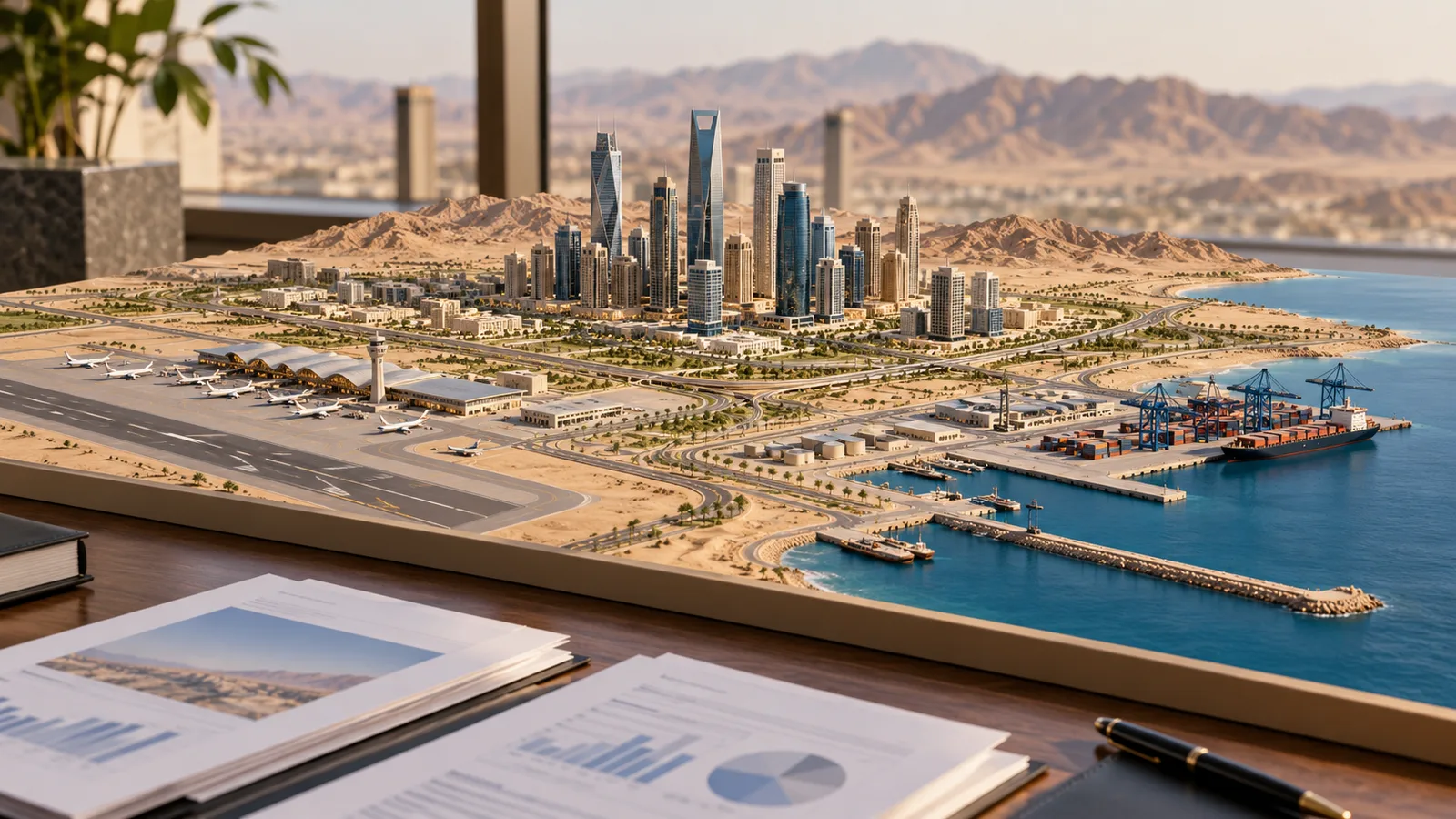
Saudi Arabia's economic overhaul under new security pressure
The Huthi attacks hit transport links that Vision 2030 needs. How much investment suffers is still open – and Saudi Arabia has substantial reserves.
The attacks on Saudi airports hit a country that wants to open its economy to more tourism, events and international companies. The news agency AFP reported on 20 October 2026 on the pressure this strategy faces. Statements from the Saudi aviation authority also confirm that civil aviation became a target of attacks. How much investment will be lost as a result cannot be quantified from the available sources.
The decisive economic question goes beyond damaged infrastructure. An airport can be repaired. Harder is to convey credibly to companies and travellers that transport links and business operations remain reliable. For Saudi Arabia's Vision 2030 development programme, this reliability is a precondition, because additional sectors are meant to attract capital and customers over the long term.
A different risk than the oil price
Vision 2030 was launched in 2016. The government aims to reduce dependence on oil and build up new economic activities. Its annual report for 2025 points to progress in investment and in the private sector. At the same time, it states that foreign direct investment stood at an estimated 2.8 percent of gross domestic product, below the target of 3.4 percent at the time.
This gap existed before the recent attacks. It must therefore not be attributed to them retroactively. The government report names international investment conditions and the development of economic output as influencing factors, among others. An attack does not explain a figure from the previous year.
The additional security risk, however, affects precisely the links that the overhaul needs: flights for visitors and skilled workers, plannable transport for companies and secure locations for multi-year projects. What consequences arise depends on the duration and scale of the disruptions and on how the companies involved react.
The IMF sees risks and reserves
In its country report of July 2026, the International Monetary Fund described how regional conflicts can weigh on trade routes, travel and investor confidence. Persistent tensions could delay investment decisions and make diversification more difficult. This assessment is a described risk, not a retrospective account of the October attacks.
The fund also highlighted financial and economic reserves. These include state assets, currency reserves and, by international comparison, limited public debt. Such buffers give the government room to cushion a temporary shock. But they do not automatically make private investors insensitive to security concerns.
In its response to the report, the Saudi Ministry of Finance stressed the resilience of the economy and earlier investments in alternative export routes. That is the government's position and at the same time an important counter-argument to the idea that a single setback brings the entire economic overhaul to a standstill. The development remains dependent on several factors.
Confirmed attacks, open economic balance sheet
The aviation authority GACA announced on 9 October that facilities at Riyadh's international airport and a Saudia aircraft had been attacked the previous day. After this first wave of attacks, operations were able to resume. Later attacks and renewed interruptions were also reported. An early reopening therefore does not describe a permanently secured state.
For companies, the current operability of a connection is therefore more important than an older all-clear. The AFP analysis of 20 October continues to describe Riyadh airport as closed. Binding travel decisions require, in addition, current information from the relevant airport and airline. An economic background article does not replace this operational check.
What Swiss companies can take from this
In its travel advice, the Swiss Federal Department of Foreign Affairs advises against tourist and non-urgent travel to Saudi Arabia and points to restrictions on regional travel. For Swiss companies with projects or staff on site, this is a concrete basis for their own planning.
Any further economic assessment should start from verifiable developments: are projects postponed, financing conditions changed or investments withdrawn? As long as the relevant data is missing, a quantified damage assessment would be speculative. What is documented is the new security pressure on a strategy that needs international connectivity. Whether this becomes a temporary setback or a longer-term brake depends on how quickly reliable conditions return.


