Swiss research builds a new network for spintronics
KOMQUEST links PSI with partners in Germany and South Korea. The cooperation is meant to advance the fundamentals of spintronics and quantum materials – market-ready applications are not part of the promise.
The Paul Scherrer Institute (PSI) in Villigen is now part of KOMQUEST, an international Max Planck Centre for Quantum Spintronics. The cooperation with research institutions from Germany and South Korea was announced this week. For Switzerland it is above all a strategic research alliance: it connects domestic large-scale research facilities with specialised knowledge of materials, measurement methods and nanostructures.
What spintronics is about
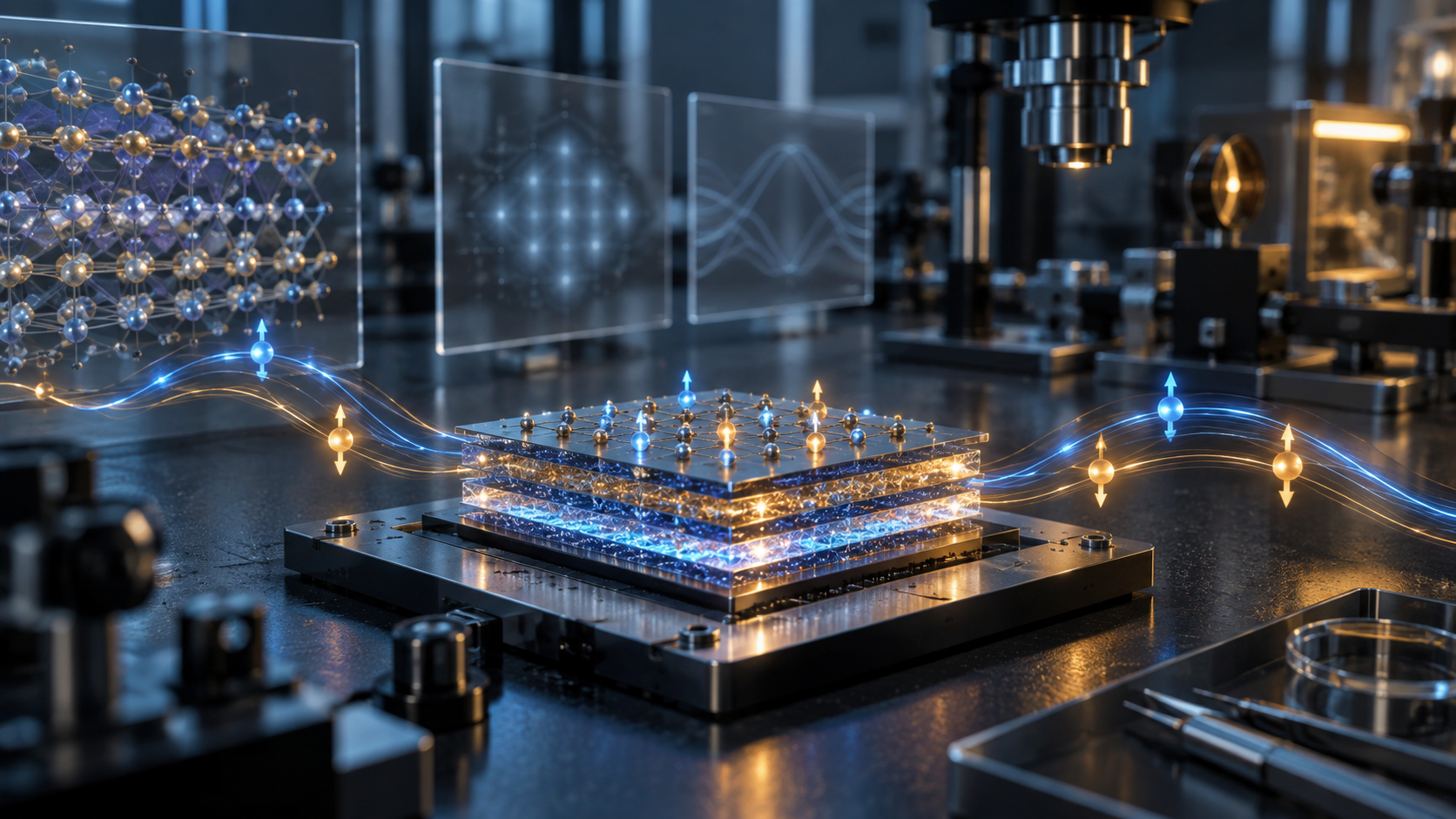
In conventional electronics, the electrical charge of electrons is what mainly counts. Spintronics additionally uses their quantum-mechanical property, spin. The field has already supplied the foundations for modern storage and sensor technologies. KOMQUEST now aims to develop four areas further: superconducting, chiral and topological spintronics, as well as the coherent control of spins.
That sounds abstract, but it describes a central question in materials research: how can the properties of electrons in very small structures be generated, measured and controlled in a targeted way? The answer could become relevant in the long term for information storage, sensor technology or other components. Whether concrete products will emerge later is open. PSI speaks of basic research, not of a short-term market launch.
Five partners, different strengths
Alongside PSI, the centre includes the Max Planck Institute of Microstructure Physics in Halle, Pohang University of Science and Technology, Seoul National University and the Center for Quantum Nanoscience at Ewha Womans University. According to the announcement, it is precisely this division of labour that is meant to make the difference: materials production, nanofabrication, atomic and X-ray measurements, and theoretical and experimental quantum research are brought together.
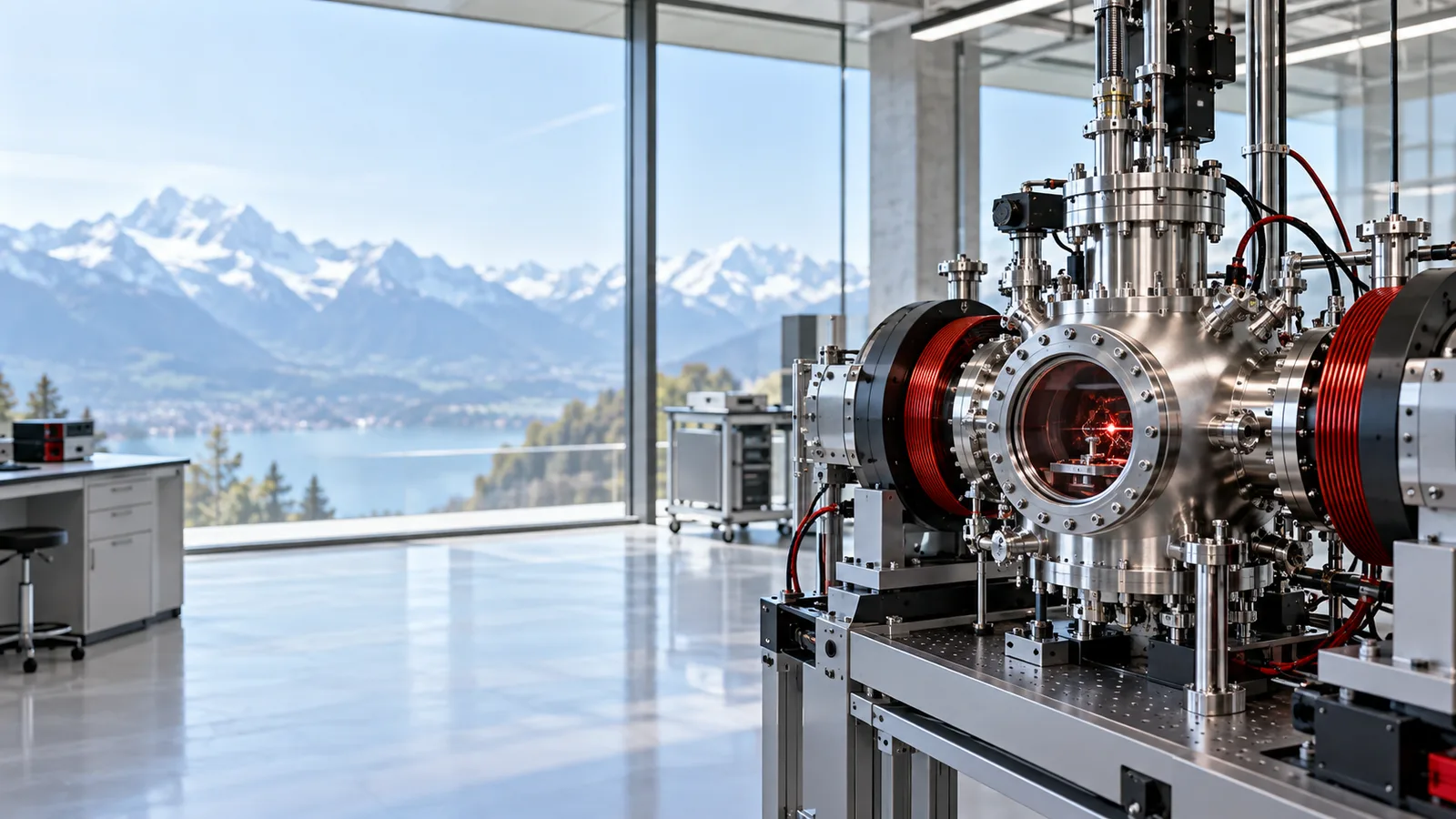
PSI contributes its infrastructure and its experience in quantum materials and superconductivity. Its Swiss Light Source SLS and the SwissFEL X-ray laser make it possible to study very small length and time scales. Such facilities do not replace laboratory expertise, but they widen the options: they help to observe the electronic and atomic structures of new materials more precisely.
The kick-off workshop took place in Germany from 13 to 16 September. The scientific programme is due to start in Seoul from 16 to 18 November. So what begins first is a research network, not a new Swiss institute.
What the financing says
According to PSI, KOMQUEST is initially set up for five years. Each partner institution intends to contribute 500,000 euros per year. The sum makes the centre financially visible, but it says nothing yet about later industrial applications or a return flow into the Swiss economy. Such statements would be speculation at this point.
The structure is interesting nonetheless: large research facilities are expensive, and their value rises when teams from different disciplines can use them in a targeted way. PSI supplies not only equipment but access to measurement methods and know-how. The Asian and German partners complement this with materials development, device fabrication and atomic quantum techniques.
Early-career researchers as part of the plan
The centre intends to involve doctoral and postdoctoral researchers in a targeted way. Joint groups, workshops, seminar series and funding formats for young project leaders are planned. For Switzerland as a research location, this part can be just as important as a single measurement campaign: international networks help decide where specialists are trained and which projects emerge later.
The scientific ambition is high, the timeline long. KOMQUEST is therefore not a promise of the next memory chip from Switzerland. It is an attempt to take part at a point where the conditions for future technologies are created. Whether a technical breakthrough will come of it is something the research results have to show first.
Sources
- Paul Scherrer Institute: Opening of the Max Planck-Korea-PSI Center for Quantum Emergent Spintronics
- PSI: Quantum Technologies Collaboration and research facilities
- PSI: Large-scale research facilities
Access is a locational advantage
For Switzerland, the immediate benefit lies less in a single patent than in access to ways of working and to data. Anyone working on new quantum materials needs not only a sample but comparative measurements, suitable nanostructures and specialists who can bring together results from different methods. An international centre can coordinate such steps and enable young researchers to spend time with the partners.
This is also a competition for attention and talent. Quantum and materials research is organised globally; large facilities and specialised teams are spread across a few locations. The fact that PSI is involved as a founding partner does not secure Switzerland a later market share. But it increases the chance that Swiss groups are in from the start when relevant research questions are defined and joint projects are set up.