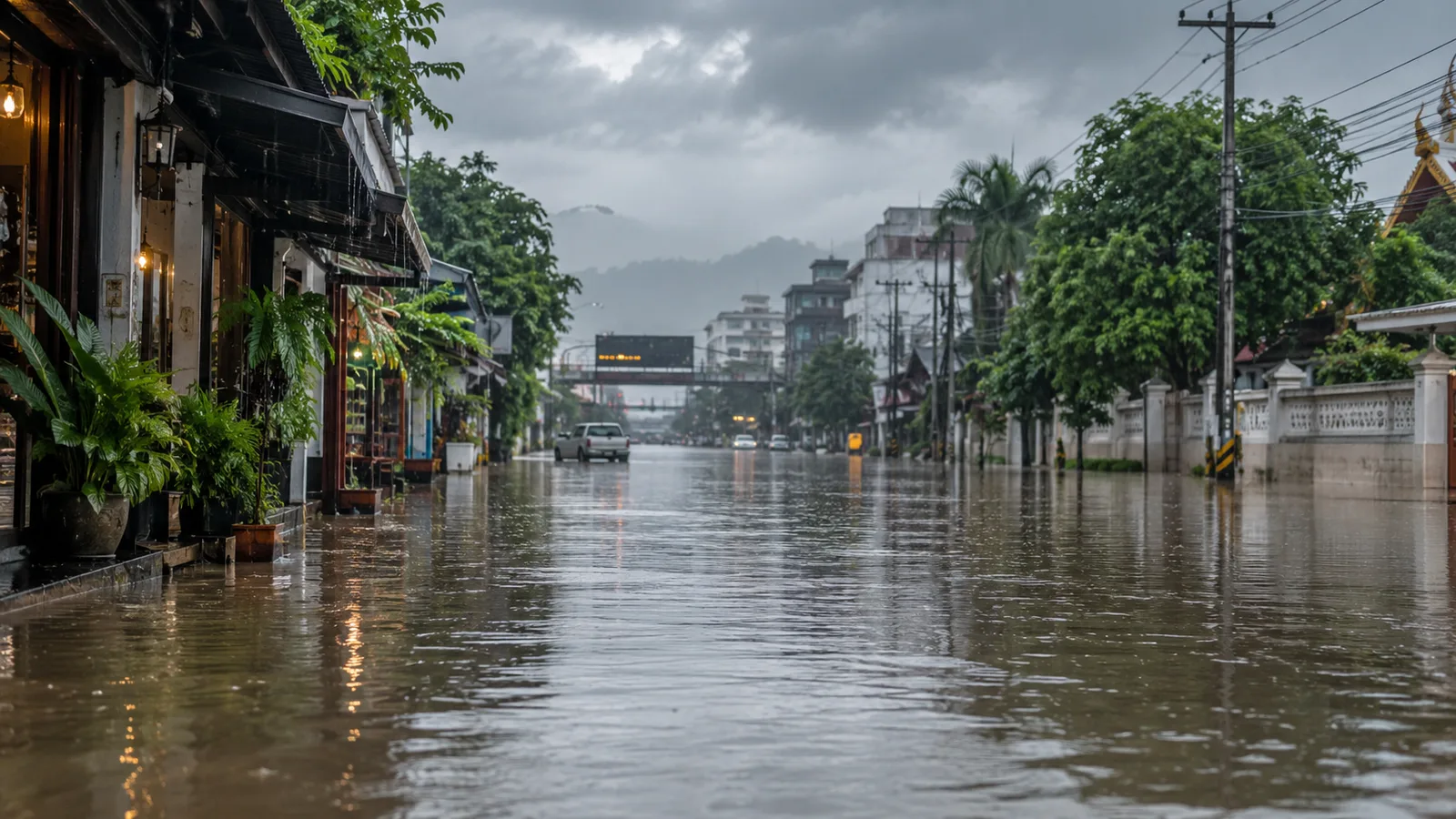
Thailand in relentless rain: the next warning is what counts
After severe flooding, more heavy rain threatens several regions. For authorities and travellers, the situation is a sequence of local risks, not a blanket nationwide alert.
In Thailand, the question of coming rainfall currently matters more than any single damage figure. For 9 to 13 October, the Thai meteorological service warns of thunderstorms, gusty winds and locally heavy to very heavy rain in several regions. Possible consequences include flash floods, inundations and landslides.
The warning does not affect every place equally. It names regions in the north, in the centre including Bangkok and its surroundings, in the east and in the south. Low-lying areas, places close to rivers and slopes are particularly at risk: there, rainfall amounts can quickly build into flash floods, inundations or landslides. It is precisely this local dynamic that makes the situation hard for residents, authorities and travellers to assess.
The next front matters more than a blanket map of the country
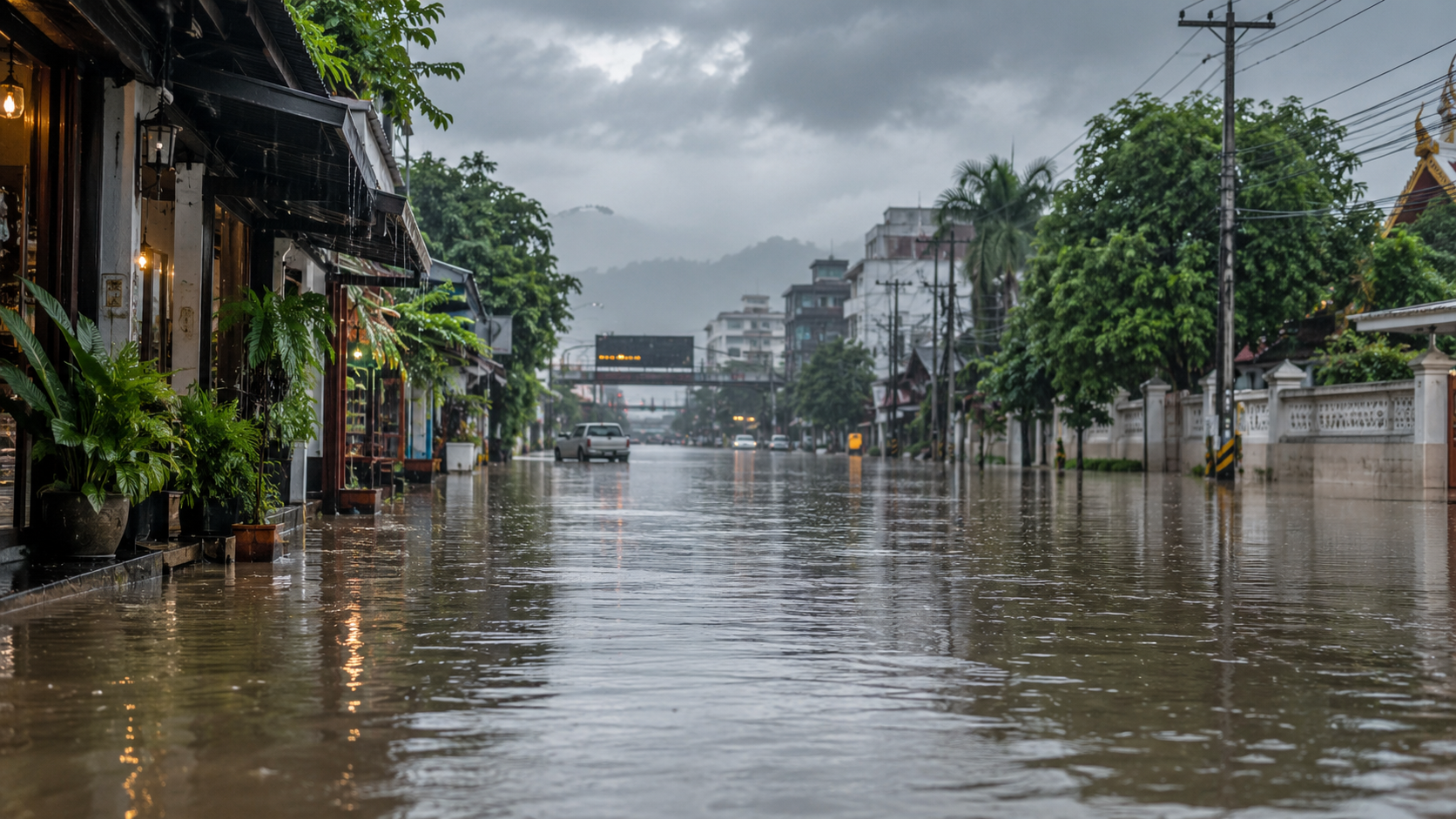
A flood is not a uniform event. While water levels may fall in one province, another heavy downpour in a different region can be enough to strain roads, rail links or neighbourhoods again. Even in large cities, rainfall alone does not decide the consequences; what counts is whether drains, pumps, traffic routes and local protective measures work.
The Thai meteorological service points to the combination of different weather systems. Its warning is therefore not a forecast that the whole country will be affected at the same time. It is a call to read warnings precisely in terms of place and time. For the coming days the rule is: anyone following only a nationwide headline can both underestimate a local risk and misjudge a trip to an unaffected region.
The damage toll is a snapshot, not yet the final result
The news agency Associated Press reported on 5 October, citing the responsible disaster protection authority, 31 deaths and more than 3.5 million people affected since mid-September. These figures show the scale of the crisis. They do not mean, however, that 3.5 million people have been evacuated or left homeless. "Affected" bundles different consequences and is a continuously updated category.
Especially in flood situations, information on deaths, damage and affected areas changes as soon as local authorities check new reports or water levels reach further regions. Serious reporting must therefore state the reference period and must not present a provisional figure as a final tally. The current warning situation justifies attention, not speculation about how it will develop.
The test for authorities lies in information on the ground
At the start of October, the Thai government instructed authorities to harmonise warnings, to inform vulnerable groups early and to keep shelters, staff and relief supplies ready. This includes the principle "One Area, One Information": within one area, information on water levels and danger should not come contradictorily from different sources.
Such directives are not yet proof that help arrives everywhere in time. But they name the decisive point. In a dynamic flood situation, it is not general knowledge that rain is falling that saves lives, but the question of whether a warning is understandable, timely and concrete for the neighbourhood concerned. That applies to people in a river basin as much as to those travelling on a side road in a rental car.
What travellers from Switzerland can take from this
For Swiss nationals in Thailand or with an upcoming trip, a nationwide conclusion is of little use. What matters is the local weather and traffic situation, instructions from the authorities at the place of stay, and information from the airline, hotel or tour operator. The FDFA's travel advice is adjusted as needed; the FDFA also recommends following local orders and registering stays abroad via Travel Admin.
The FDFA can advise and support in an emergency, but it does not organise alternative onward travel if connections are interrupted, for instance because of flooding. Anyone affected should therefore first check the local situation and, if routes are blocked, contact the tour operator or the responsible authorities. In immediate danger, local emergency instructions take priority.
The flood situation in Thailand is thus not a distant weather story. It shows how strongly safety depends on reliable, location-specific information. For the coming days, the question is not whether it has rained in Thailand. What matters is where the next heavy rain falls, who is warned – and whether people can still act in time.
Sources
Thai Meteorological Department: Weather warning for Thailand, No. 1 (7 October 2026) tmd.go.th/en/warning-and-events/warning-storm/heavy-to-very…
Thai Government Public Relations Department: Instructions for preparing for rainfall thailand.prd.go.th/en/content/category/detail/id/2078/iid/5…
Associated Press: Thailand braces for more rain as death toll from recent flooding hits 31 https://apnews.com/article/9e2008cc9f7fdd21f6a2e9e1bcf03be6
FDFA: Thailand – travel advice and representations eda.admin.ch/eda/de/home/laender-reise-information/thailand…
FDFA: Consular protection in emergencies abroad schweiz-thailand.eda.admin.ch/de/konsularischer-schutz-hilf…