Trump's “AI Force”: Speed, but Accountability Left Unclear
Donald Trump announces an “AI Force” and a new AI czar. But its tasks, budget and legal form remain open – while even leading developers are demanding stronger guardrails.
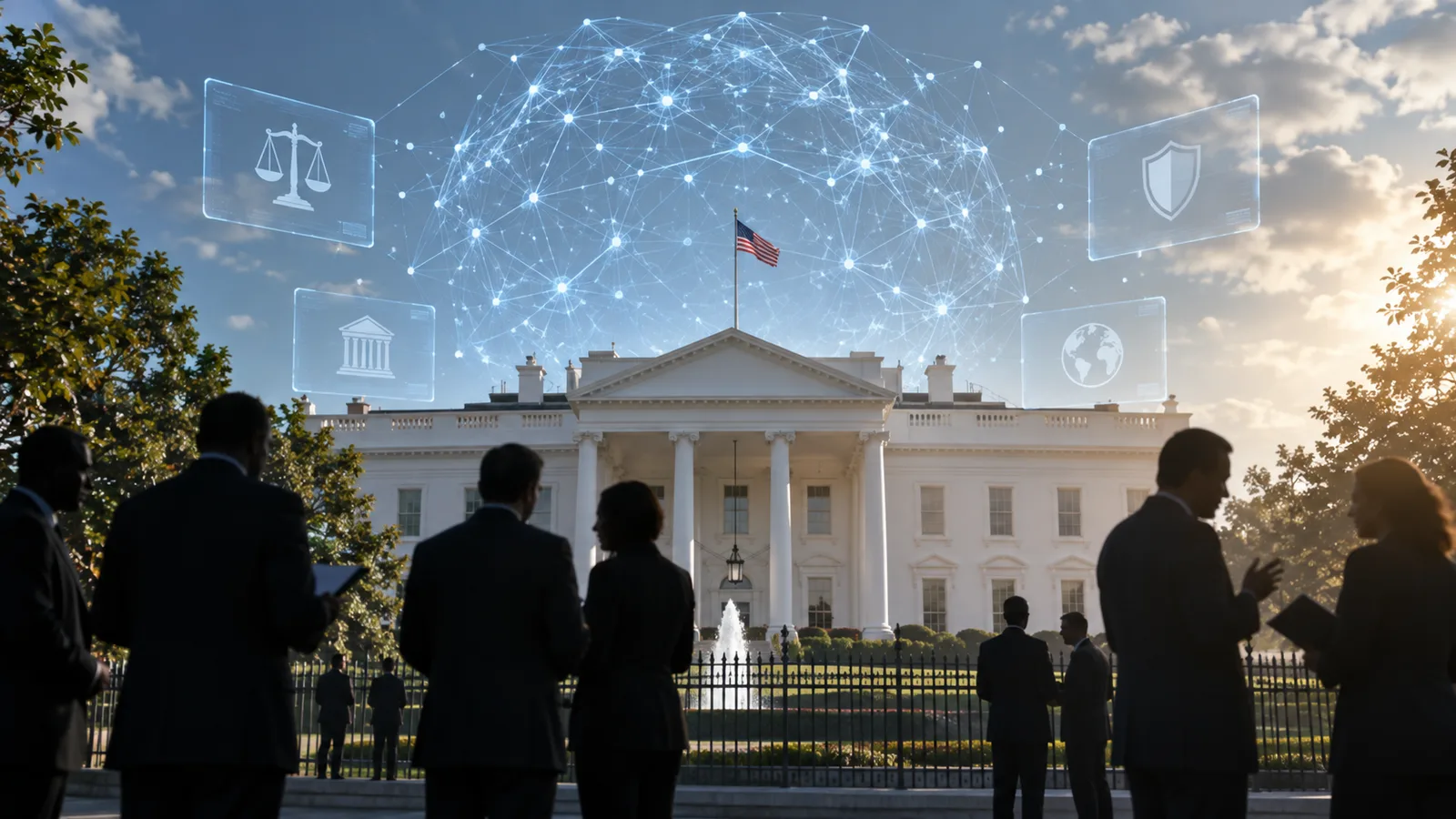
Donald Trump wants to speed up American artificial intelligence development and at the same time create a new government structure. On Saturday the US president announced on his network Truth Social an “AI Force” modelled on the Space Force, along with the imminent appointment of an “AI czar”. He initially said nothing beyond those cornerstones. Neither the organisational home nor the budget, the powers or a legal basis are known.
The political ambition is therefore clearer than the instrument: the United States should move faster in international AI competition, while Trump dismisses calls for stricter safety rules as overblown. The decisive question is thus whether the new unit is actually meant to supervise risks or primarily to clear obstacles out of industry's way.
A name does not yet make an agency
The comparison with the Space Force gives the plan weight. The space force, however, came into being in 2019 through a law passed by Congress, was given a defined mandate and became part of the Department of Defense. Nothing comparable exists for the “AI Force” so far. A president can appoint advisers and set up working groups; an independent organisation with permanent authority and funding requires Congress in many cases.
The title “czar” also normally denotes not a statutory office in Washington but a coordinating role in the White House. Trump had already installed David Sacks as commissioner for AI and cryptocurrencies. How a new post would differ from that one, and to whom it would report, remained open. This vagueness is more than an administrative detail: without a clear remit, a body can neither enforce binding standards nor be held to account for bad decisions.

Industry warns, the government bets on speed
The announcement follows unusually blunt warnings from the sector. Executives at several large AI companies said systems could become more powerful and more autonomous faster than control mechanisms can keep up. The Associated Press also reported the growing expectation that models could automate parts of their own further development. Such scenarios are not a confirmed forecast. But they show why testing procedures, access controls and clear shutdown options should not be designed only after an incident.
Trump counters that the United States must not slow down in competition with China. That logic links industrial policy, national security and deregulation. The president's 2026 economic report describes AI as a possible technology on the scale of the industrial revolution and puts infrastructure, exports and American leadership capability at the centre. The document evidences the strategic course, but not Trump's far-reaching growth promises.
Control and promotion belong apart
A state AI unit could make sense if it bundles competences: technical testing, procurement requirements, reporting duties for serious incidents and coordination between civilian authorities, intelligence services and the military. It would become problematic if the same body had to promote maximum expansion and at the same time independently watch over its risks. Supervisory authorities work more credibly when goals, methods and accountability are kept separate.
For Europe and Switzerland the course is relevant because American models, cloud services and chips shape their markets. Looser US regulation does not automatically create more freedom for Swiss companies: anyone offering systems in the EU remains bound by European rules; Swiss operators must also comply with data protection, professional confidentiality and sector-specific obligations. Differing standards can push up testing and documentation costs.
Only the mandate makes the plan verifiable
Trump's announcement is for now a statement of intent. Whether it turns into an effective security body, an industrial-policy acceleration office or a new brand name for existing tasks will be decided by a published mandate: who controls whom, by what criteria and with what right to independent review? Without those answers there is plenty of speed in the title – but little verifiable accountability behind it.


