Twelve Hours of Transparency: The OSCE Review and Its Limits
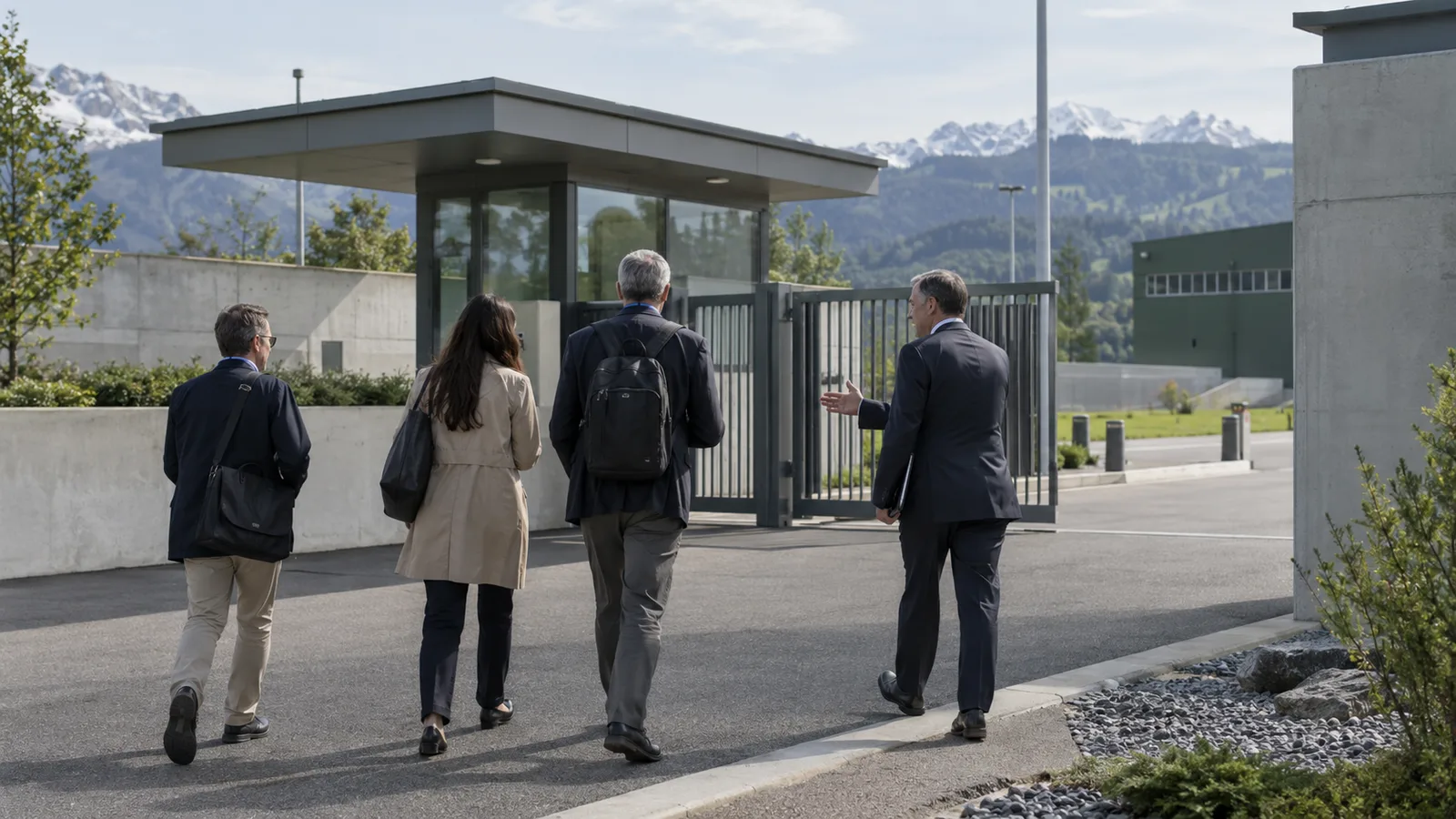
A delegation from Slovenia and North Macedonia is given an insight into the Swiss Military Police at several sites. The procedure creates military transparency – but it is not an overall review of Swiss security policy.
A military delegation from Slovenia and North Macedonia is visiting several sites of the Swiss Military Police in early October. That sounds like a special inspection of the Swiss security apparatus. In fact, the visit is part of a rules-based OSCE procedure: Switzerland provides an insight into a clearly delimited part of its armed forces for a maximum of twelve hours.
The classification matters. The delegation is not conducting an investigation into the work of individual military police officers. It does not decide on the quality of the Swiss Armed Forces, and it does not assess concrete operations either. Its visit serves transparency between states – a purpose that is anything but marginal given the tense security situation in Europe.
An Insight, Not a General Inspection
According to the Confederation, the visit takes place at Slovenia's request and with Switzerland's consent. The three inspectors gather information at various sites about the tasks of the Military Police. Members of the Swiss Armed Forces accompany them, and they may move freely within the agreed framework. Sensitive facilities are explicitly excluded.
This makes the limits of the review clear. It is neither an unannounced search nor a complete assessment of personnel, equipment or readiness. Its duration, its subject matter and the permitted locations are defined in advance by the procedure. Anyone speaking of an "external inspection" should therefore be precise: this is a reciprocal military verification measure, not an external audit of the Swiss security authorities.
That protects two legitimate interests at the same time. The guests gain a direct impression instead of only a written self-description; Switzerland, for its part, does not have to disclose security-relevant details or protected infrastructure. It is precisely this combination of insight and clear limits that distinguishes the measure from a public tour or a comprehensive parliamentary inquiry.
What the Vienna Document Regulates
The basis is the 2011 Vienna Document of the Organization for Security and Co-operation in Europe. It bundles confidence- and security-building measures: states exchange information every year about certain parts of their armed forces, enable visits and evaluations, and keep military contacts in place. The OSCE describes these instruments as a means of reducing misunderstandings and the risk of military miscalculation through verifiable openness.
The procedure lives on reciprocity. Switzerland can not only be a host state; it can also itself request an insight from other OSCE participating states when the conditions are met. Transparency is not a sign of weakness here. It is an attempt to make what states do militarily, and what they are capable of, more predictable – especially where trust is scarce.
Why the Military Police Is in the Spotlight
Within the armed forces, the Swiss Military Police performs several tasks. It carries out security, traffic and criminal police duties, protects militarily critical infrastructure and, when required, supports civilian authorities as well as operations abroad. The visit allows the guests to follow this function within the armed forces.
For the Swiss population, this is not merely formal diplomatic business. Military structures that can be presented comprehensibly to partner states reduce the risk that exercises, troop movements or protection tasks are misinterpreted. That is particularly relevant for a country that is militarily neutral but remains closely bound to European rules and dialogue formats in security policy.
Transparency, however, does not replace protection. It says little about how well a unit would perform in a concrete situation, how resilient its systems would be, or whether political decisions were taken correctly. That is exactly why it would be wrong to derive from the visit a seal of quality – or a vote of no confidence – for the Military Police.
What Switzerland Gets Out of It
The benefit lies in the principle of verifiability. When states do not only exchange information in writing but make it selectively visible on site, the threshold for unfounded suspicion rises. No conflict prevention instrument can achieve that on its own. But it creates a shared factual basis on which security dialogue remains possible at all.
For Swiss citizens, it is therefore less decisive which rooms the delegation sees during twelve hours. What matters more is that Switzerland takes part in rules that combine openness with legitimate interests in secrecy. The OSCE review shows both: Switzerland gives an account of its military structures – but no more than the security of personnel and infrastructure permits.
Sources
Swiss Armed Forces: Military Police – mandate and tasks
OSCE: Vienna Document 2011 on Confidence- and Security-Building Measures


