
UBS job cuts: what is officially documented – and what remains open
A media report about an allegedly exceptionally large wave of cuts at UBS cannot be confirmed by the official documents. What is documented is a declining total headcount and a far-advanced cost-saving programme – but not a new, precisely quantified round of layoffs.
When reports appear about an allegedly record wave of cuts at UBS, this affects many people directly: employees ask themselves whether their job is at risk; customers, whether their contact person or their branch will change; politicians watch the financial centre. That is precisely why a headline must be distinguished from a documented personnel decision.
UBS's publicly accessible documents show that the group has reduced its total headcount. They do not, however, confirm a new, precisely quantified round of layoffs, and certainly not the "largest wave of cuts" in the company's history. A single media report is not sufficient evidence for that.
What UBS has actually published
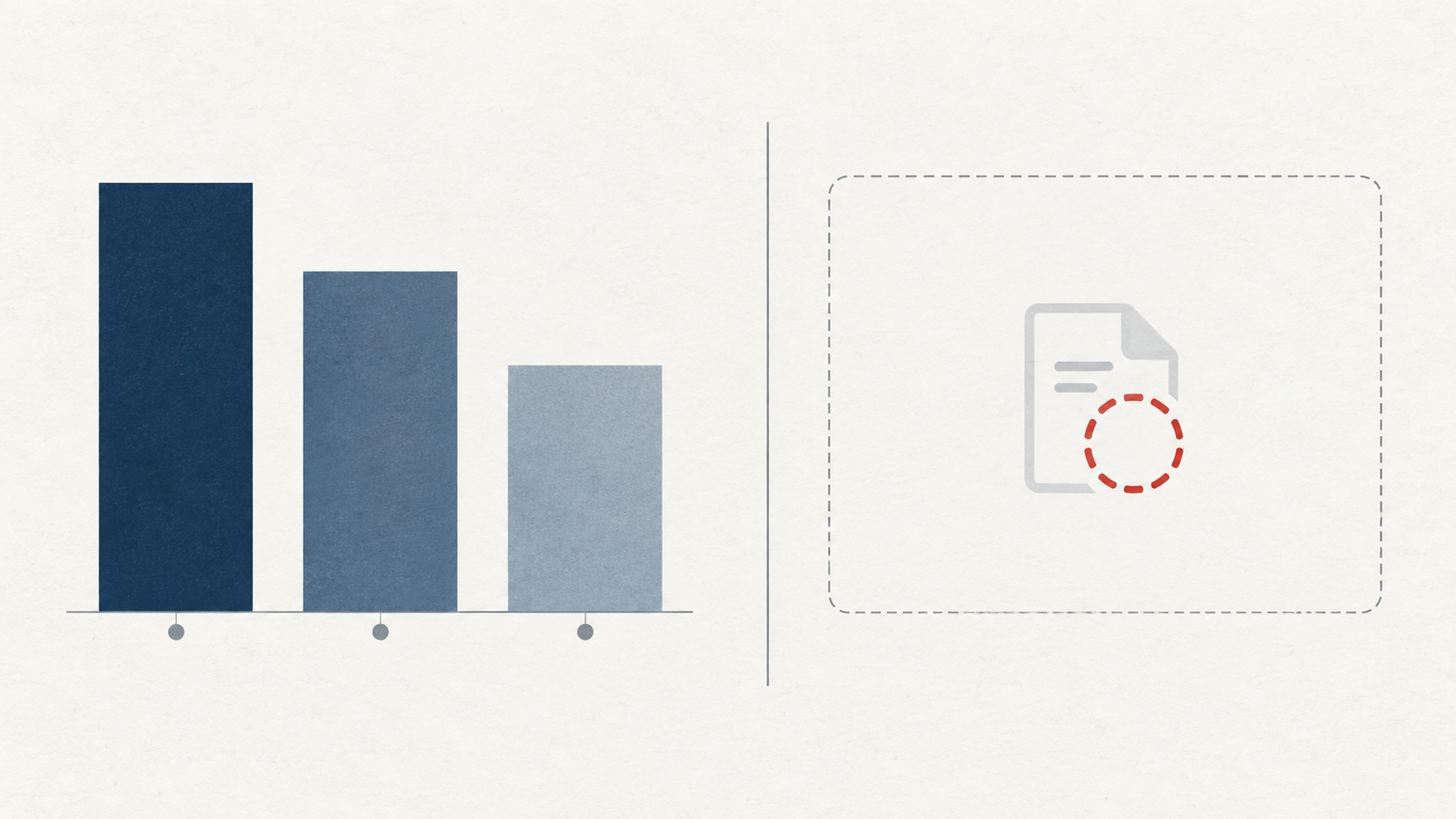
In its figures for the second quarter of 2026, UBS reports a total of 112,388 internal and external employees as of 30 June. At the end of March the figure had been 116,814, and at the end of 2025 it was 119,589. The number thus fell significantly in the first half of the year.
These figures are robust, but what they say is narrower than it initially sounds. UBS combines internal full-time positions and external employees in them. A decline in such a total headcount does not answer the question of how many employment relationships were terminated. It can include voluntary departures, retirements, positions not refilled, the end of external mandates, internal transfers or changes in how functions are allocated.
A report about concrete dismissals would therefore require at least further information: how many positions are affected? In which units and countries? Over what period? With what consequences under employment law? UBS does not provide this information in the quarterly documents reviewed.
Care is also warranted in placing the figures in time. Quarterly figures are point-in-time data, not a list of individual personnel decisions. A comparison of two reference dates can make a trend visible, but cannot explain an exact sequence of events. Anyone who derives from it a single dismissal action or a specific consequence for a Swiss site, without additional evidence, is conflating a corporate key figure with a claim about specific people.
The integration explains the pressure, but not every single figure
One real background to the declining headcount is clearly documented: the integration of Credit Suisse into UBS. In July, UBS stated that since the end of 2022 it had achieved gross cumulative cost reductions of USD 12.6 billion. More than 90 percent of the USD 13.5 billion target had thus been realised; the integration was to be substantially completed by the end of 2026.
Cost reductions and the merging of two major banks can lead to functions being reviewed and duplications being cut. But this does not mean that every reduction in the total headcount corresponds to a current wave of dismissals. Nor can the group-wide figure show whether a position is affected in Switzerland, abroad, among internal staff or at an external service provider.
The Swiss Financial Market Supervisory Authority FINMA has also described the integration as an important supervisory topic. Its documents deal with the stability and resolvability of the combined institution. FINMA does not publish its own, officially confirmed forecast of a new number of job losses.
What matters for employees and customers
For employees, the difference between headcount and dismissal is no academic footnote. A restructuring becomes personally relevant only through an official notice from the employer or a concretely communicated reorganisation. Anyone affected who has not received such information cannot draw any conclusion about their own job from the published quarterly figure alone.
Much the same applies to customers. A declining headcount does not automatically mean that services, branches or contact persons will disappear. That would require separate announcements specific to individual sites and businesses. At a systemically important institution, transparency is crucial precisely when staff and integration figures attract a great deal of public attention.
The fair finding is: partly documented, centrally open
The facts are therefore split in two. What is documented is a declining total headcount, an extensive savings target and the advancing Credit Suisse integration. What remains open is whether there is a new, additional round of layoffs of the scale claimed, how many people it would hit and which Swiss sites would be affected.
For the Swiss public, this classification matters more than a sharpened record headline. When jobs are cut, false certainties can do just as much harm as reassurances. As long as UBS does not confirm concrete new job figures, serious reporting should keep the uncertainty visible – and state precisely what the official figures actually say.
Sources
UBS: Results for the second quarter of 2026
UBS: Media release on the results of the second quarter of 2026
UBS: Quarterly report for the first quarter of 2026
FINMA: Annual report 2024, UBS/Credit Suisse integration
Trigger for the research – media report, not independently confirmed


