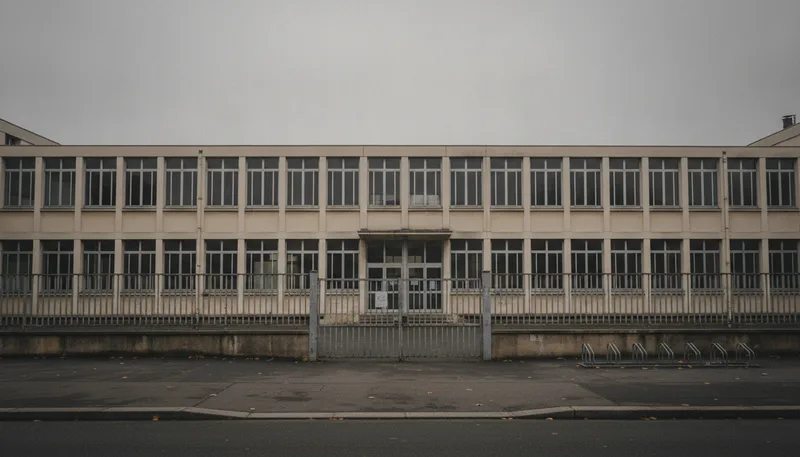
Up to 500 school closures in France: When safety sidelines lessons
After attacks and blockades, hundreds of schools are to stay closed. The measure protects in the short term but deepens the interruption to education.
Up to 500 French schools are to remain fully or partially closed on Monday. The education ministry cites security risks after several days of student protests, damage to buildings and attacks on staff. For families, the news is first of all a practical question: will classes take place, is childcare available, how safe is the route to school? Politically, it shows how quickly a conflict over education can tip into a question of public order.
According to the ministry, hundreds of secondary schools were already affected on Friday. Media also reported damaged or set-on-fire buildings and injured staff. These details still need to be checked against official interim figures; the number of closures does not describe a uniform situation but covers both full and partial interruptions.
Safety as a short-term answer
A closure can be the right call in an acute danger. It gives school leadership time to assess damage, protect staff and avoid police deployments. At the same time, it shifts lessons, exams and childcare into an already strained daily routine. The heaviest burden falls on households that cannot organise flexible work, a quiet place to learn or additional support.
This turns a security measure into a question of equal opportunity. France's centralised school system promises comparable education, yet conditions differ sharply between affluent neighbourhoods, suburbs and rural regions. Where lessons are cancelled repeatedly, the consequences hit hardest those pupils who can least make up lost ground.
The conflict goes beyond individual days of protest
The JournalPlus article already published examined the background to the student protests. The new closures add to that picture: they show that the conflict now touches the core function of the school. Organisers have announced further mobilisations and criticise the government for lacking concrete answers. A workable response must therefore link security, dialogue and the material realities of everyday school life.
For Switzerland, the case is not a direct model; education is organised at cantonal level. It is a reminder, however, that school policy quickly becomes a matter of trust. If young people gain the impression that staff shortages, infrastructure or future prospects are not taken seriously, a police deployment is not enough of an answer.
Sources
- French Ministry of Education: https://www.education.gouv.fr/
- Associated Press, 4 October 2026: https://apnews.com/article/8d7e85c276be051571d4df7df442cb9e
- Al Jazeera, 4 October 2026: aljazeera.com/news/2026/10/4/france-to-shutter-up-to-500-sc…
- OECD, Education at a Glance: https://www.oecd.org/education/