2026 Earthquakes: A Year of Shocks
From Asia to South America: The Year's Strongest Quakes and Disaster Preparedness Lessons.
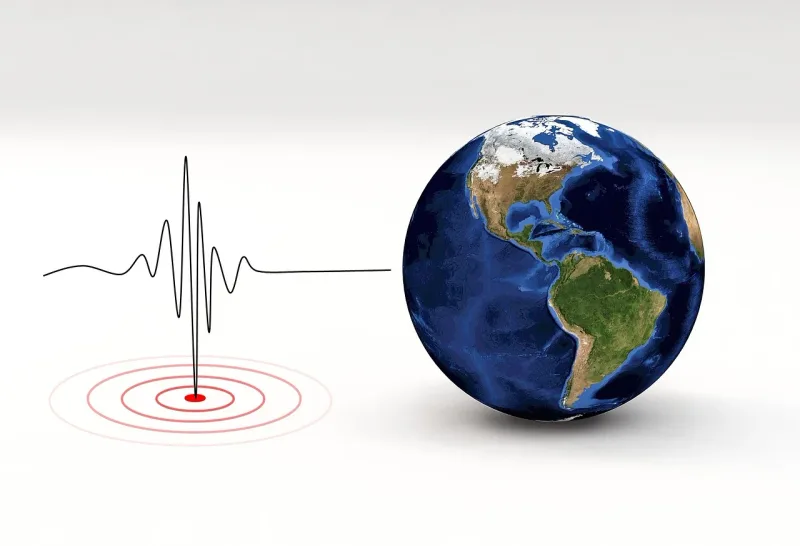
Severe tremors were measured on several continents, affecting thousands of people. Seismologists emphasize: Not only a quake's strength is crucial, but also the vulnerability of affected regions. The exact number of registered earthquakes for the current year is not yet determined; seismologists worldwide count thousands of tremors – only a small fraction reach destructive strength. Severe tremors were measured on several continents, affecting thousands of people. Seismologists emphasize: Not only a quake's strength is crucial, but also the vulnerability of affected regions. The exact number of registered earthquakes for the current year is not yet determined; seismologists worldwide count thousands of tremors – only a small fraction reach destructive strength.
Among the year's most severe quakes were tremors in densely populated areas of Asia and South America. Cities with insufficient earthquake-resistant buildings were particularly affected. Most fatalities occurred in regions where people live in simple adobe or brick structures. Modern reinforced concrete buildings with earthquake-resistant designs withstand strong tremors. International teams will document the damage for months.
What Magnitude Indicates
The strength of an earthquake is usually indicated by the Moment Magnitude Scale. It measures the energy released. An increase of one unit means approximately 32 times more energy. A magnitude 6 quake is therefore significantly more destructive than a magnitude 5 quake. For comparison: The devastating 2023 earthquake in Turkey and Syria had a magnitude of 7.8 on the Moment Magnitude Scale.
The Swiss Seismological Service (SED) at ETH Zurich registers approximately 1,300 to 1,500 earthquakes annually in Switzerland. Most are too weak to be felt. Only about 10 to 20 earthquakes per year are perceived by the population. The Swiss Seismological Service (SED) explains on its website that Switzerland is an earthquake-prone country, even if the danger is often underestimated.
Lessons for Disaster Preparedness
The 2026 events demonstrate the importance of preparedness. Early warning systems, earthquake-resistant construction methods, and regular emergency drills demonstrably save lives. Japan and Mexico have systems that warn the population seconds before the strongest tremors. Countries with high building standards recorded significantly less damage in 2026 than regions without corresponding regulations. However, even modern technology has its limits: For very large earthquakes, an early warning system provides only a few seconds of lead time.
Switzerland currently has no automatic early warning system that immediately alerts the population during an imminent earthquake. The SED operates a dense measurement network and provides real-time data to authorities. Accurate prediction of strong earthquakes is not possible. The time windows for potential warnings are short. In an emergency, simple rules of conduct apply: Seek shelter under stable furniture and keep a distance from glass and windows.
In Switzerland, the largest earthquake-prone areas are in Valais, Basel, and Graubünden. According to the SED's hazard map, earthquakes with magnitudes up to 7 are possible there. Many older buildings do not comply with current standards. Renovation is complex but urgently needed. Furthermore, for Switzerland: According to federal risk analyses, large parts of the infrastructure would be at risk in a major earthquake.
Building standard SIA 261 defines requirements for earthquake-resistant construction. The renovation of residential and commercial buildings, as well as critical facilities like hospitals and power plants, is particularly important. The Federal Office for Civil Protection (BABS) and cantonal hazard agencies are also working on preparedness. Regular drills and information campaigns aim to raise public awareness of correct behavior in an emergency.
Overview and Outlook
Switzerland's historically strongest known earthquake occurred in 1356 in Basel. A similar event today would have significant consequences for densely populated areas. According to the seismological service's assessment, an earthquake like the one in Basel is possible again in the future. While science cannot accurately predict earthquakes, it can identify risks – thus providing foundations for protective measures. Furthermore, these events foster international cooperation in damage analysis and reconstruction. Switzerland also participates with experts and financial resources in aid efforts – a contribution now being evaluated.
International seismology continues to evaluate the 2026 earthquakes. Switzerland, through the SED, is integrated into global research. For authorities and the population, vigilance, good preparation, and implementing proven protective measures remain crucial to limit the consequences of future earthquakes.