A funerary mask returns to Egypt – four years after the customs stop
The case shows how Switzerland fights the illegal antiquities trade – and why a return does not automatically clarify an object's unknown origin.
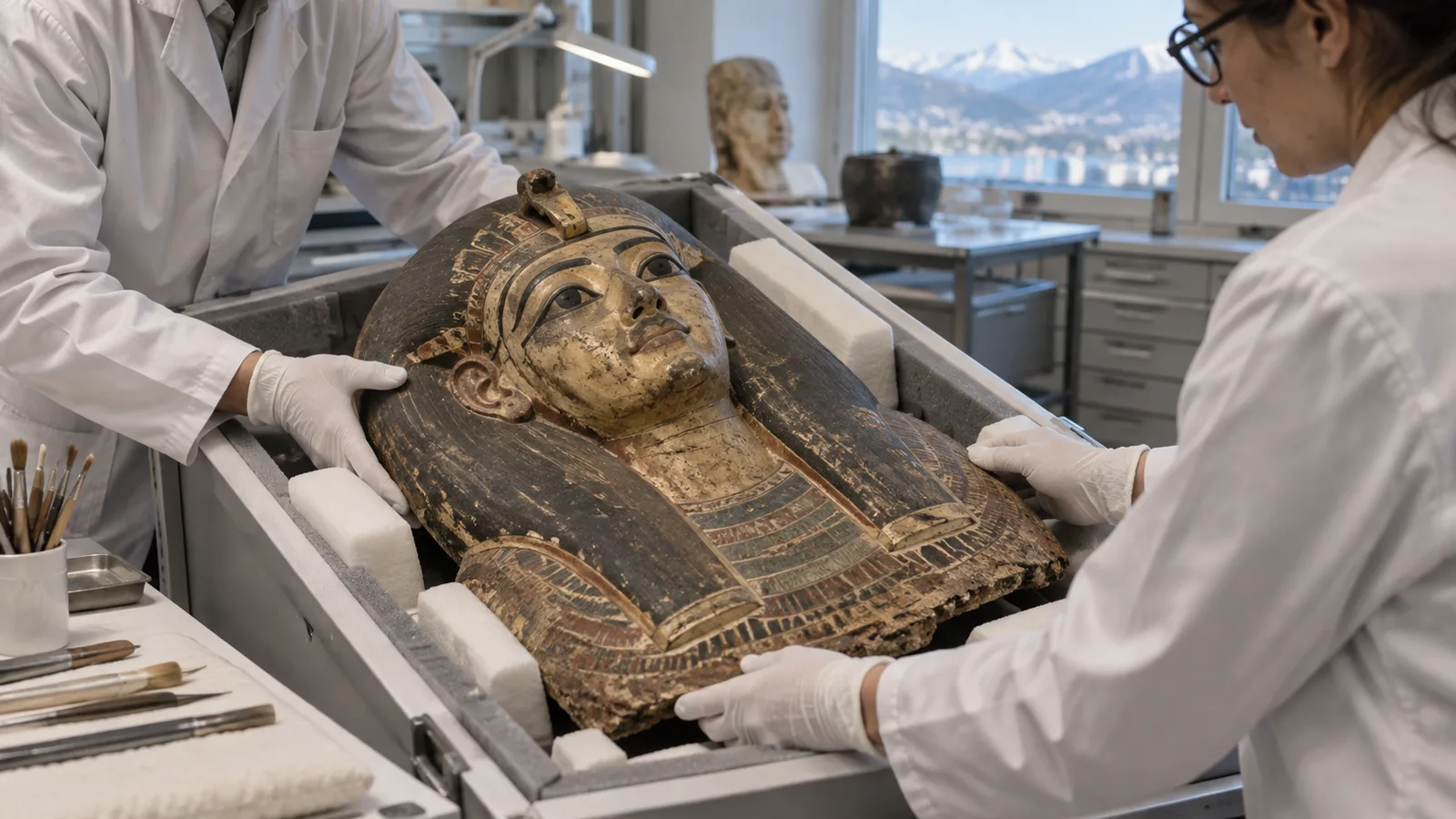
A roughly 2,200-year-old funerary mask has returned to Egypt. On 15 September 2026, Federal Councillor Elisabeth Baume-Schneider handed the object over to the Egyptian ambassador Mohamed Yehia Mohamed Negm in Bern. The process sounds like a closed restitution case. In fact, it reveals what can be irretrievably lost in many illegally traded antiquities: their archaeological context.
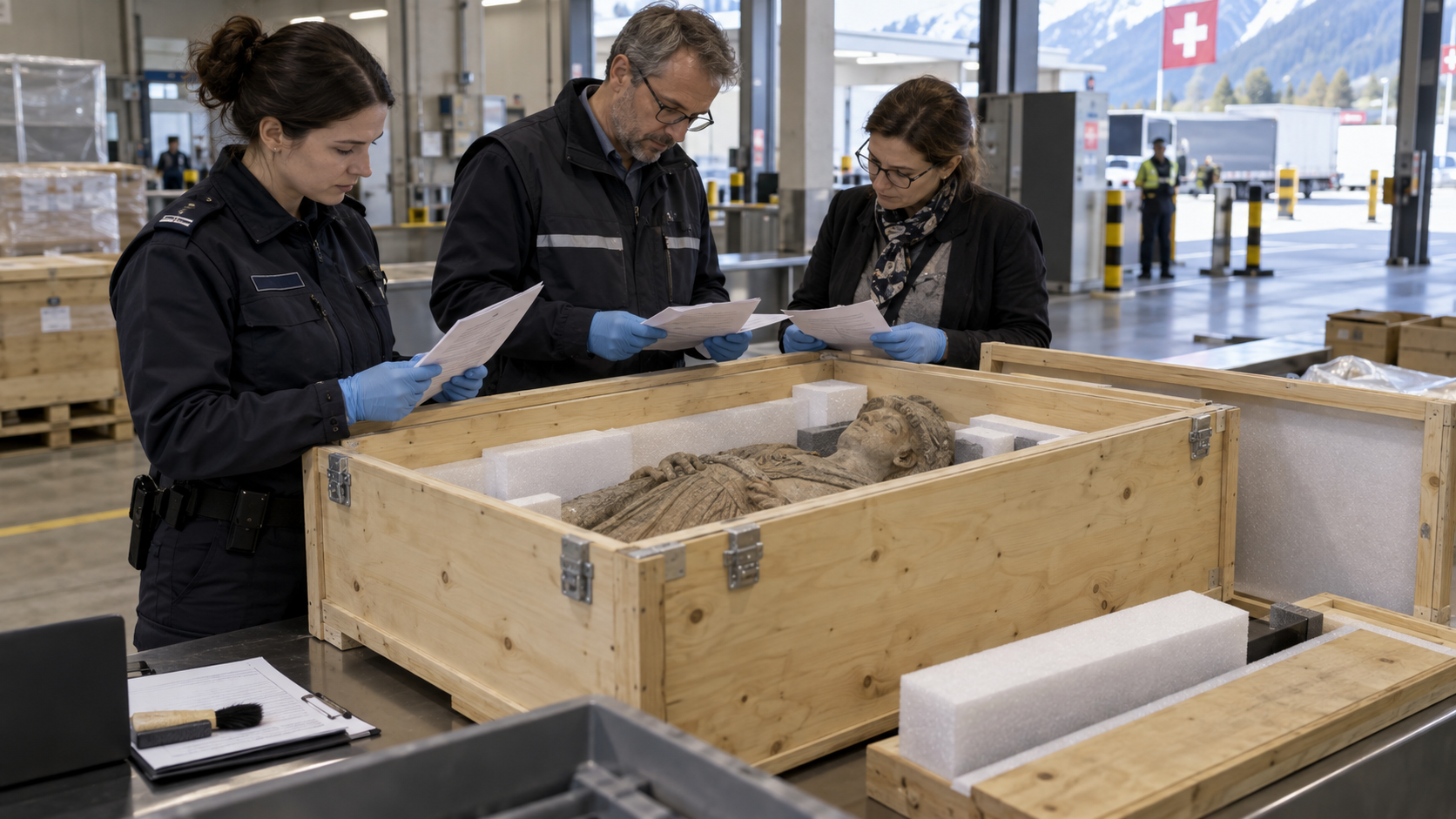
According to the Federal Department of Home Affairs, the mask was declared on 15 September 2022 at the Bardonnex border crossing near Geneva. The customs authorities stopped it and had it examined by experts. An expert report dated the piece to the Ptolemaic period of the 2nd century BC and confirmed its authenticity. Because of suspected illegal origin, the mask was seized as part of criminal proceedings.
A genuine object with an incomplete history
The authorities give the dating and the sequence of the seizure. What is not publicly documented is which tomb, collection or earlier ownership the mask comes from. That is not a side detail. For research, an antiquity is valuable not only as a beautiful individual piece. Only the find site, layer, accompanying objects and documented changes of ownership make it possible to place it historically.
Illegal excavations destroy this context. Even a successful return often cannot reconstruct it. Whether this mask comes from an illegal excavation does not emerge from the statement. What is documented is that Switzerland is returning a significant object to its country of origin; the original biography of the piece remains at least partly hidden from the public.
Why Switzerland became responsible in the first place
The basis is the Swiss Cultural Property Transfer Act. It is intended to prevent stolen or unlawfully exported cultural property from entering Switzerland or being traded through it. It is supplemented by a bilateral agreement with Egypt that has been in force since 2011. The agreement facilitates cooperation between authorities and regulates for which categories of archaeological goods special proof is required.
According to the federal government, around 80 cultural objects have been returned to Egypt since the agreement entered into force. The figure shows that the funerary mask is not an isolated outlier. It says nothing, however, about how many problematic objects remain undiscovered. Controls begin where a piece crosses a border, is offered for sale, insured or scientifically examined. If documents are missing, origin, age and ownership history often have to be reconstructed over years.
A red list is not a stolen-goods register
The International Council of Museums (ICOM) lists Egyptian objects on a so-called Emergency Red List. It does not contain a list of specifically stolen items. Rather, it shows categories of cultural property that are particularly often looted and illegally traded. Such lists help customs, police, museums, collectors and auction houses to identify suspicious pieces early.
The central check remains provenance: anyone wanting to buy, exhibit or donate an ancient object should demand a complete ownership history and valid export documents. An old photo, a dealer's invoice or the claim that an object comes from an 'old European collection' is not automatically enough. The more valuable and archaeologically sensitive a piece is, the higher the density of evidence must be.
The market bears part of the responsibility
The return strengthens cooperation between Switzerland and Egypt. But it does not shift responsibility solely onto customs and criminal prosecution. Auction houses, galleries, museums and private collectors decide through their diligence whether an object with unclear origin finds a market at all.
This is particularly relevant for Switzerland because it is an internationally connected art trading hub. Credibility is not created only at the ceremonial handover, but at the beginning of the transaction: through documents, independent clarifications and refraining from a purchase when significant gaps remain. The strongest protection against the illegal antiquities trade is a market in which an unknown origin does not increase value, but stops the deal.


