Beznau exercise: What a positive initial assessment actually means
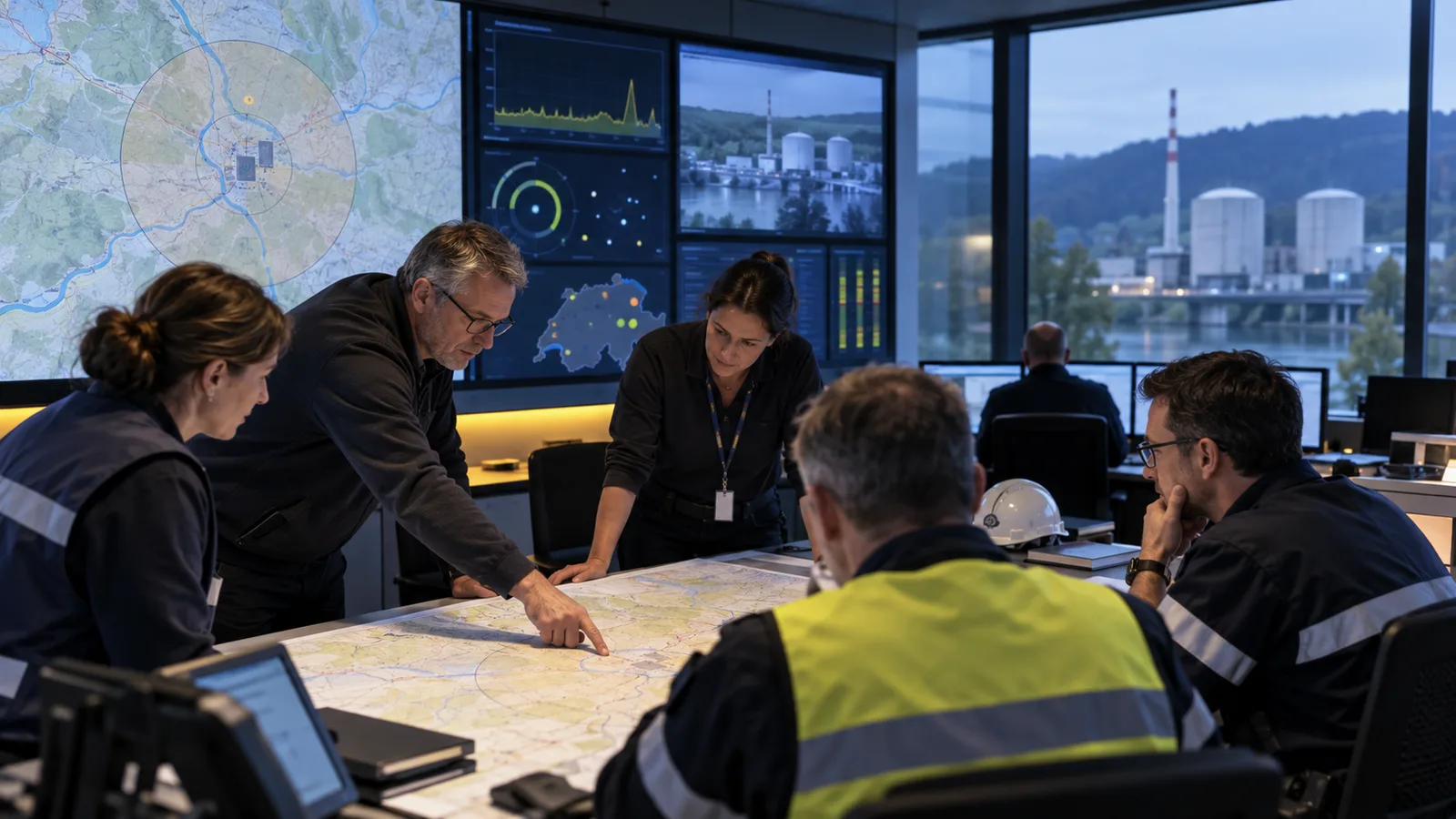
The exercise at the Beznau nuclear power plant was not a test of reactor operations. What was examined was how the crisis organisations work together.
For five days, the federal government, the cantons and technical partners rehearsed an emergency: a fictional serious accident at the Beznau nuclear power plant with a simulated release of radioactivity. After the GNU26 national emergency exercise, the Federal Office for Civil Protection (BABS) reported a positive initial assessment. The exercise objectives had been met, it said, and the most important processes of emergency protection had worked.
That is an important interim result, but not a final safety verdict. The exercise tested neither the technical condition nor the normal operation of the nuclear power plant. The focus was on cooperation between the crisis organisations, the transition from emergency management to crisis management, and communication with the public. The detailed evaluation is still pending.
What the GNU26 was about
National emergency exercises are held in Switzerland every two years. BABS runs them together with partner organisations and with one of the three nuclear power plants still in operation. The GNU26 ran from 14 to 18 September 2026. The scenario assumed a serious accident at Beznau and a release of radioactivity.
A sequence like that demands far more than technical decisions inside the plant. Authorities have to merge measurement data, assess the situation, prepare protective measures and communicate without contradictions. Risks in a crisis arise precisely at the interfaces: who decides on what data basis? Which body issues the first warning? How do findings from the specialist authorities reach the cantonal command staffs?
Measurement flights and material transports
The exercise was also visible outside the situation centres. On 17 September, the Swiss Air Force carried out radioactivity measurement flights in the wider surroundings of the nuclear power plant with a specially equipped Super Puma helicopter. According to BABS, the aircraft flew parallel tracks at a height of around 100 metres. Transports of emergency material such as generators and pumps with army trucks were also practised.
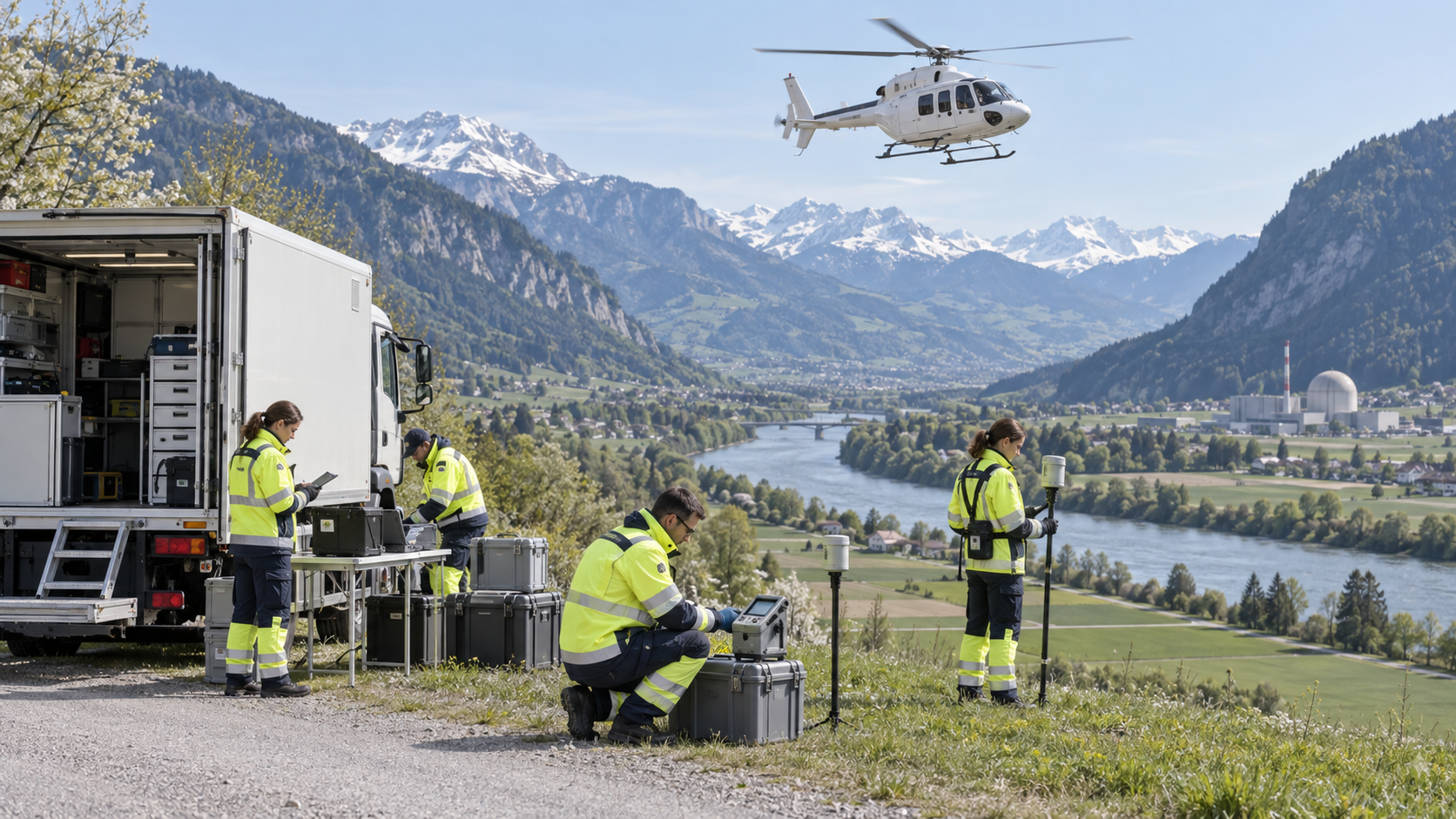
Elements like these do not only test equipment. Measurement data must feed quickly into a shared assessment of the situation, material must arrive in the right place, and reports from different bodies must not contradict one another. Under real conditions, time pressure, uncertainty and possibly disrupted communication channels would be added. That is why the later analysis matters more than a positive short assessment on the final day of the exercise.
Who took part
Alongside the Beznau nuclear power plant, participants included the Swiss Federal Nuclear Safety Inspectorate (ENSI), the National Emergency Operations Centre, the Defence Group, the Federal Office of Public Health, several cantonal laboratories, the Aargau cantonal command staff and further cantonal command staffs and partner organisations.
This breadth shows why the GNU26 was not a purely plant-level exercise. Emergency protection across Switzerland ranges from technical assessment through measurement organisation, logistics and health protection to public communication. A successful exercise does not guarantee an incident-free real emergency. But it can make weak points visible before they have consequences under real conditions.
What the positive assessment says
According to BABS, the exercise achieved its objectives; the most important emergency protection processes had worked. That statement refers to the set scenario and the observed procedures. It does not mean that every conceivable accident development was examined or that all processes were free of errors.
The distinction also matters for the public: the release of radioactivity was simulated. The operation of the nuclear power plant was not affected by the exercise. Measurement flights, vehicles and deployment activities were part of the scenario and not an indication of a real event.
The final report is the real test
BABS has announced a final report that is to record findings and potential improvements. What will be decisive is how concrete that report turns out to be: which information channels were too slow? Where did situation pictures differ? Were warning texts and responsibilities understood in the same way by all those involved? And which measures receive clear responsibilities and deadlines?
A credible exercise culture does not measure success by the fact that no weakness is found. Its value lies in exposing weaknesses in a controlled way and deriving verifiable improvements from them. The positive initial assessment of the GNU26 is therefore a starting point. The robust appraisal follows only once the detailed results are available and it becomes clear what the federal government, the cantons, ENSI and the operator change as a result.


