Ed Sheeran's emotional solo night: how a concert turned political
After several support acts withdrew, the British singer performed alone in Philadelphia and spoke about Gaza. The evening shows how dispersed the power behind major tours is.
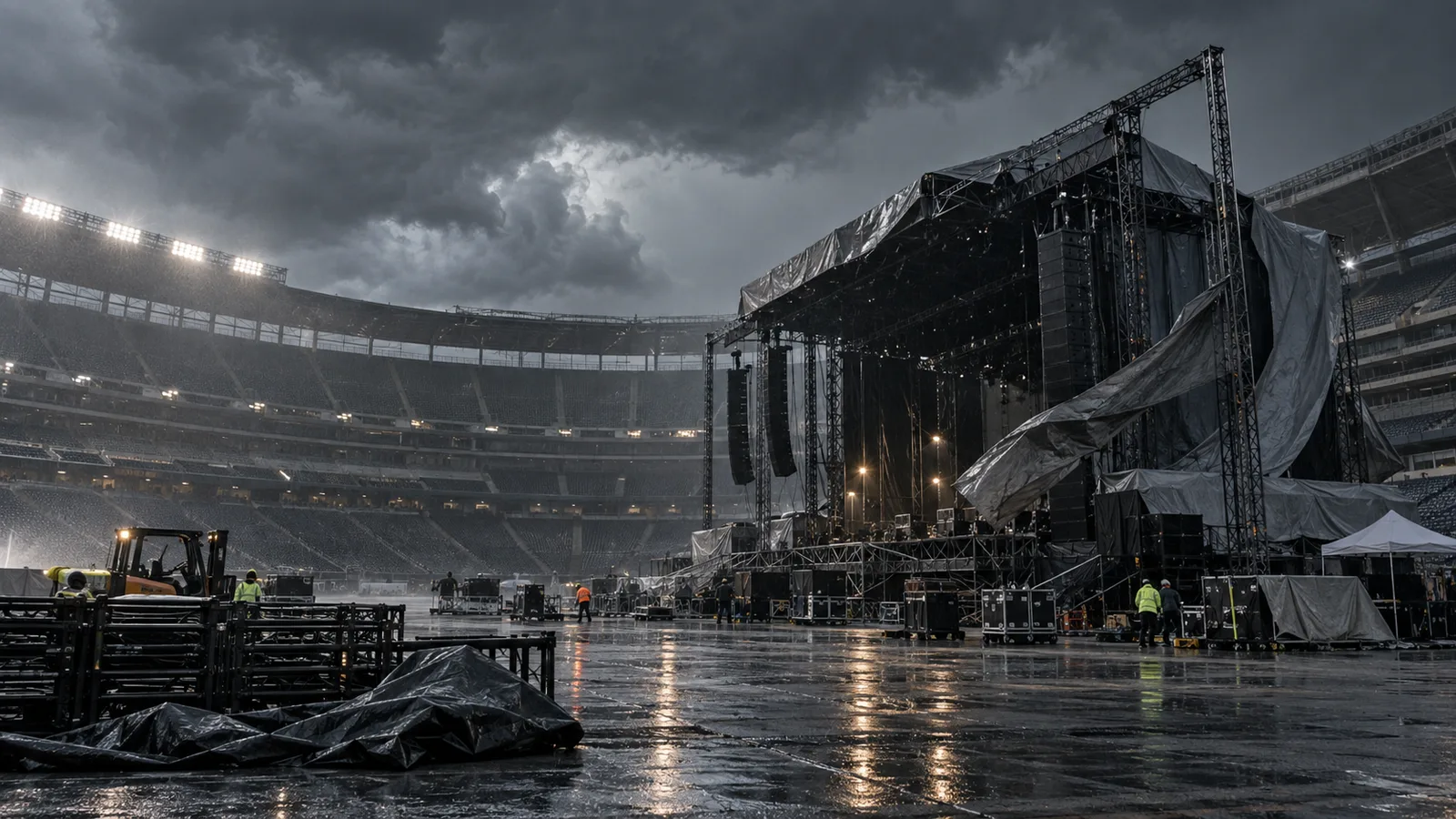
The evening began with an empty space. Several announced support acts had cancelled their sets, and Ed Sheeran initially stood alone on stage at Lincoln Financial Field in Philadelphia. Before he sang, the British musician spoke about the war in Gaza. The situation was "catastrophic and unjustifiable", the news agency AP reported. The performance later turned emotional. But the tears alone do not tell the story: what matters is how a stadium concert became the setting for a conflict over art, promoter power and political speech.
A solo opening after several cancellations
The trigger was the exclusion of rapper Macklemore from parts of the "Loop" tour. After his pro-Palestinian remarks at a concert in New Jersey, several artists declared they no longer wanted to appear as support acts, according to AP. They included the Irish band Beoga and other announced acts. Sheeran said the decision to take Macklemore off the bill had been made by the promoter and not by him.
For Philadelphia this meant the headliner opened the evening without the warm-up programme originally planned. Sheeran uses loop technology at his concerts anyway and performs many songs alone. Musically, the solo opening was therefore possible. Politically, it still looked like a visible sign that a conflict behind the stage had remained unresolved.
What Sheeran said – and what remains open
According to AP's report, Sheeran addressed the audience directly at the start. He described what was happening in Gaza as catastrophic and unjustifiable. At the same time he pointed out that he does not make every decision surrounding a major tour himself. Promoters, venues, insurers and local partners each hold their own authority. Whoever cancels a performance or drops an artist is therefore not necessarily acting in the name of the headliner.
That distinction matters. On social networks, tours are often perceived as closed brands: everything that happens under an artist's name is attributed to the star. The reality of production is more dispersed. That does not automatically relieve the headliner of public responsibility, but it explains why statements and decisions can diverge.
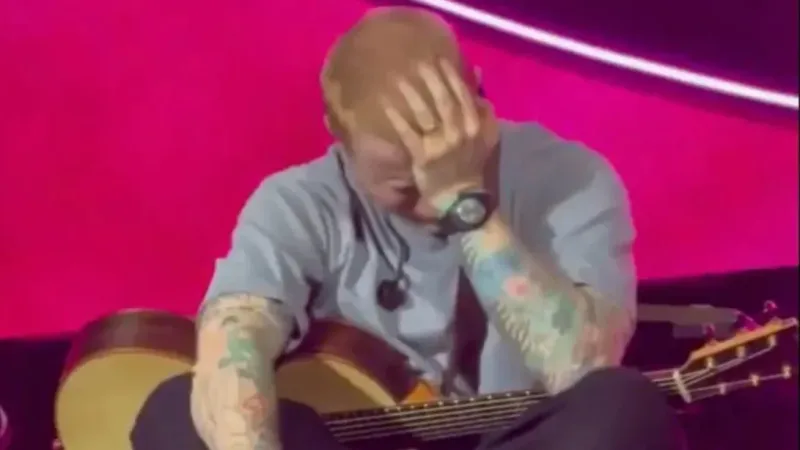
Reports that Sheeran burst into tears on stage describe an observed moment. Without a clear statement from the artist, however, no serious conclusion can be drawn about which thought triggered the emotion. A concert combines personal memories, music, audience reactions and current conflicts. The images are powerful; without a reliable statement, their cause remains open.
The power does not lie with the star alone
The case reveals a structural shift in the concert business. Stadium tours are global operations with high fixed costs. Promoters book arenas and coordinate security, marketing and ticketing; venues enforce their own house rules; sponsors and insurers assess risks. Artists have enormous reach, but they are part of a web of contracts and dependencies.
Politically charged remarks in particular create grey areas. A promoter can read a decision as risk management, while musicians interpret it as an intervention in free speech. In the United States, the right to free expression protects against state interference; it does not oblige private tour partners to accept every statement in the same way. Morally and in journalistic terms, the question remains open of how much dissent a cultural event should tolerate.
Why the case also matters in Switzerland
Swiss festivals and concert promoters also work with international agencies, sponsors and security concepts. Conflicts that begin in the United States can therefore influence tour schedules, line-ups and communication rules in Europe. For the audience, transparency is crucial: who decides on cancellations? Which contract clauses apply? And is a security justification backed by concrete risks, or merely asserted in general terms?
The most useful lesson from Philadelphia is neither to force artists into political neutrality nor to treat every on-stage remark as the binding position of everyone involved. Promoters should disclose who is responsible, artists should state their own position clearly, and media should distinguish between documented decisions and attributed motives.
Sheeran's solo evening will therefore be remembered less for a single emotional moment than for the question it made visible: who controls the political boundary of a stage – the artist, the promoter, the venue, or in the end the audience?