
France before protest Saturday: bans have legal limits
For 24 October, the government and the city of Paris are preparing additional security measures. But a political announcement replaces neither a specific order nor judicial review.
Ahead of the announced day of protest on Saturday, 24 October 2026, the French authorities are stepping up their security precautions. The government is planning additional forces; the city of Paris is preparing protection and clearance measures. After the violence of the previous weekend, it wants to prevent movable objects from being used again to cause property damage.
What is confirmed are concrete municipal preparations and the plans the interior minister explained in parliament. That is not the same as a blanket, final ban on all protests. What remains decisive are the individual orders, their geographical and temporal scope, and possible court rulings. For residents, businesses and travellers, this distinction makes a practical difference.
What the interior minister announced
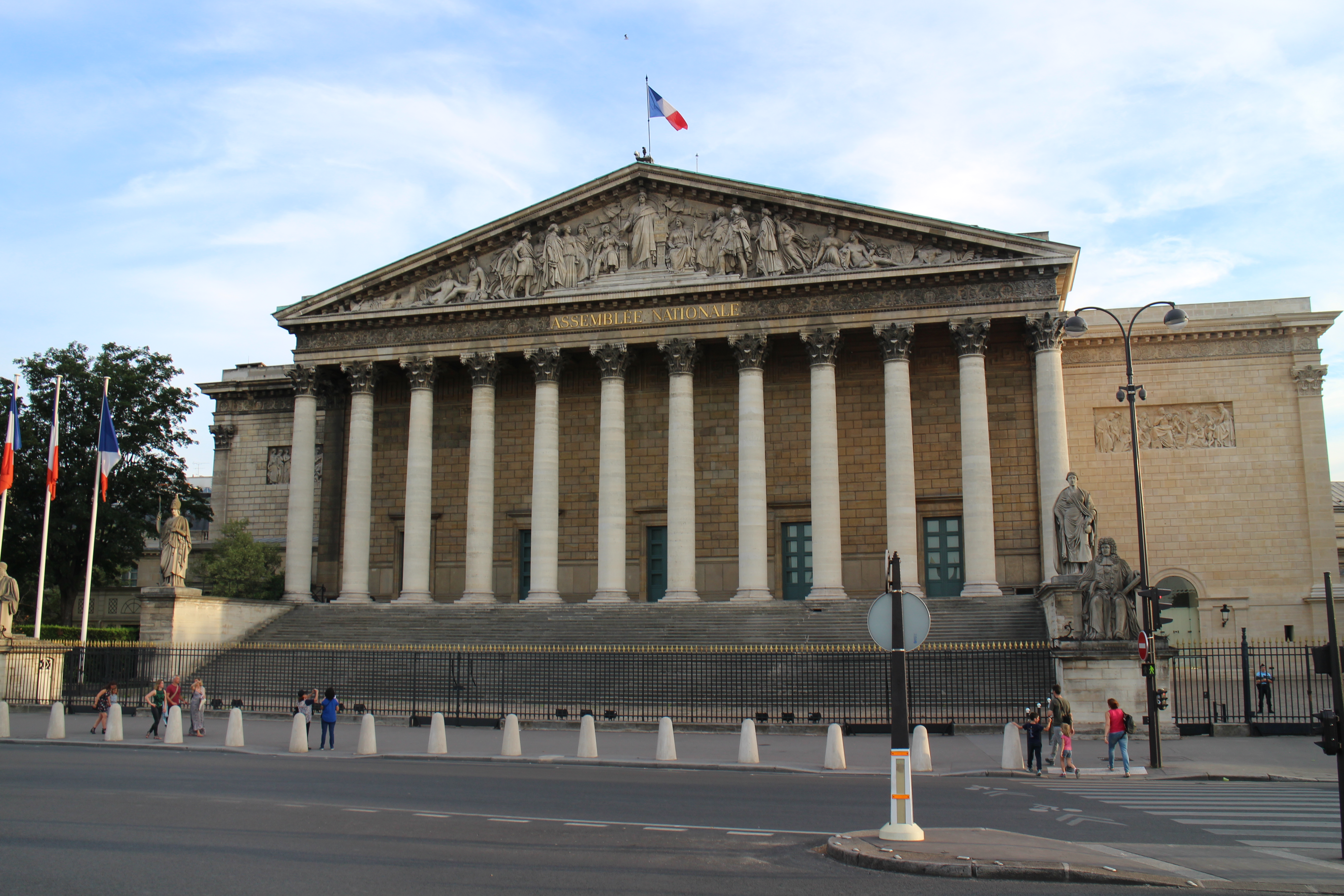
On 20 October, Laurent Nuñez outlined three priorities in the National Assembly for the coming Saturday. He held out the prospect of possible bans on unregistered as well as registered demonstrations if the authorities fear rioting and consider the planned stewards insufficient.
According to his statements, soldiers of the Sentinelle operation are to take on mainly static security tasks. That would free up police officers and gendarmes for other deployments. The minister also announced additional specialist units and a more mobile operational approach against smaller, mobile groups. These are government plans for averting danger, not an independent forecast of how Saturday will unfold.
The city clears up as a precaution
On 22 October, Paris announced that it would remove construction material, movable barriers and other potentially dangerous objects from public space. Waste bins are to be emptied, and bulky waste and combustible objects collected. Residents and businesses are asked to bring in bicycles, rubbish bins and terrace furniture, among other things, from midday on Saturday.
A municipal crisis unit is to be activated at 12:00 on 24 October. More than 1000 city cleaning staff are planned for the weekend. The city also intends to protect its buildings and deploy mediation teams. Individual events in public space are being cancelled as a precaution.
The statement explicitly separates responsibilities: maintaining public order is the task of the police prefecture. The city protects its facilities and organises prevention and cleaning. Municipal precautions are therefore not the same as having its own city-wide power to ban demonstrations.
A ban remains the last resort
The Conseil d’État set out the legal standards in more detail in a ruling of 4 December 2023. A ban on a demonstration must be suitable, necessary and proportionate. The competent authority must examine milder options, such as a different route or a shorter duration. A ban is only considered as a last resort.
The ruling also requires reasoned notification of the grounds, date, times and the area affected. A general political demand for toughness does not yet answer these questions. Conversely, the right to demonstrate does not rule out restrictions where there are sufficiently concrete dangers.
The ruling also stresses that the public should be informed as early as possible so that effective judicial protection remains available.
That courts can intervene in unfolding events was shown on 22 October: according to a report by the Anadolu news agency, the Paris administrative court suspended in summary proceedings the ban on a demonstration by the Interfac Île-de-France university alliance. The agency referred to French press reports; a detailed statement of grounds for the decision was not the basis of its report. This does not automatically lift other bans.
Travel planning needs precise locations and times
For Swiss guests in particular, it matters not to project every restriction onto the whole of Paris or the entire weekend. On 22 October, the official tourist office documented night-time curfews in certain areas around République and Les Halles as well as temporary station closures. These details must be read with their date and time, not as an immutable map of the city.
For the Louvre, the tourist office lists a compulsory reservation between 17 October and 1 November. Such an access requirement is something different from a closure. Anyone who already has a ticket should nevertheless watch for short-notice announcements from the museum.
Before departing, travellers should therefore check current transport information and access to their accommodation. For museum visits, the announcements of the respective institution apply in addition. A demonstration exclusion zone alone does not prove that a museum is closed. The useful benchmark for the weekend is not the sharpest political wording but the rule currently in force for the specific place.
Sources
- French National Assembly: session of 20 October 2026, statements by the interior minister
- City of Paris: precautions for the demonstrations of 24 October
- Conseil d’État: decision 487984 of 4 December 2023
- Paris je t’aime: current restrictions and transport information
- Anadolu: court suspends ban on the Interfac demonstration on 22 October
- Header image credit: VVVCFFrance / Wikimedia Commons
- Article image credit: Suicasmo / Wikimedia Commons
- Image licence: Creative Commons BY-SA 4.0


