Greece Protects Acropolis from Climate Change
Swiss Heritage Protection Can Learn from Mediterranean Strategies
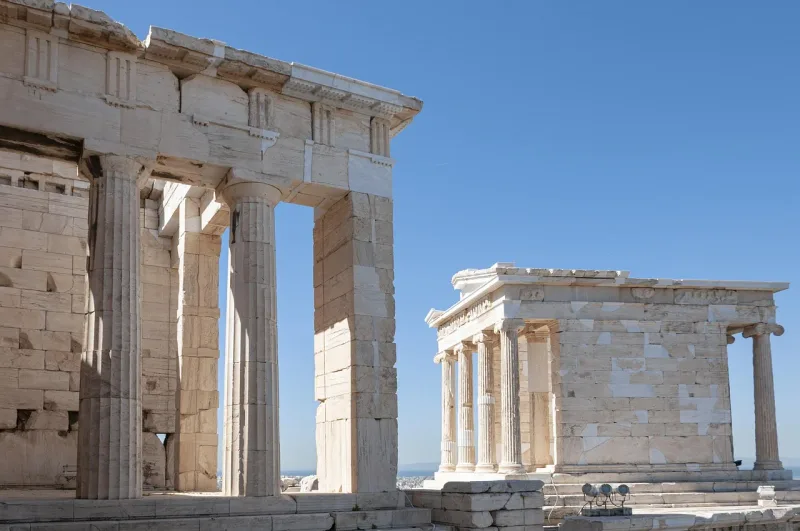
Greece's ancient sites face increasing pressure from climate change. Extreme heat, heavy rainfall, and rising temperatures affect structures over 2400 years old. The Greek Ministry of Culture has launched a comprehensive protection program. This program could serve as a model for other countries with endangered cultural heritage.
Acropolis Especially Vulnerable
The Acropolis in Athens is among the most affected monuments. Summer temperatures above 45 degrees Celsius cause marble to expand, leading to cracks in the historic structures. Heavy rain causes erosion and undermines foundations. “Climate change accelerates processes that would normally take centuries,” Maria Vlazaki, who was Secretary General of the Greek Ministry of Culture in 2019, told the BBC.
New protection measures include innovative passive cooling systems. These systems aim to protect stone surfaces from extreme heat. Improved drainage facilities direct rainwater in a controlled manner. Sensors also constantly monitor temperature, humidity, and structural changes at critical points of the buildings.
Lessons for Swiss Alpine Monuments
Swiss heritage conservationists observe developments in Greece with interest. Increasing weather extremes in the Alps also pose a growing challenge in Switzerland. Historic buildings, castles, and monasteries in mountainous regions suffer from more intense precipitation, meltwater, and temperature fluctuations.
Strategies developed in Greece could offer valuable approaches. Swiss heritage protection experts believe these can be adapted to local conditions. Systematic monitoring and preventive measures could be increasingly used in Switzerland. However, unlike Mediterranean areas, alpine monuments also face challenges from freeze-thaw cycles and increased rockfall risk.
International Cooperation Required
Experts call for more intensive international cooperation in heritage protection. UNESCO announced it will promote the exchange of experiences among countries with endangered cultural heritage. According to the Ministry of Culture, Greece is investing significant funds in archaeological sites until 2028. This is part of a broader, EU-funded cultural heritage program that also includes climate protection.
Beyond technical solutions, experts also discuss visitor management. On particularly hot days, access times could be restricted to avoid additional strain. Such concepts might become relevant long-term for popular Swiss attractions if heatwaves increase.
These developments show that climate protection and monument preservation must increasingly go hand in hand. What is being tested in Greece today could become standard in the Swiss Alps tomorrow.