High diesel prices: why a fuel rebate won't fix the supply problem
The call for relief at the pump meets resistance from the left. The current figures show that besides prices, Switzerland is also preoccupied with the vulnerability of its supply.
At the pump the debate is quickly told: when prices rise, calls for a cut grow louder. In Switzerland the SVP is demanding a fuel rebate; the parties of the left reject it. Behind this lies more than a quarrel over a few centimes per litre. It concerns the choice between a broadly distributed subsidy and targeted social relief – and it runs up against a supply situation that cannot be subsidised away.
Figures from the Federal Office for Customs and Border Security illustrate the burden. In the Basel border zone, the average diesel price in January 2026 stood at 157.48 centimes per litre. In September it was 206.10 centimes. These are not nationwide official average prices, but comparative values at an important border location. They nevertheless show the direction: the price surge was pronounced and affected the mobility of households as well as the costs of many companies.
A subsidy per litre consumed
A fuel rebate works in a simple way. The state lowers the price per litre through taxes, levies or direct compensation. Whoever fills up saves immediately. That is attractive in communication terms because the effect becomes visible at the pump.
It is precisely this simplicity that creates the distributional problem. Those who drive a lot or consume a lot benefit more in absolute terms. That may relieve commuters in rural areas, but equally households with several vehicles and companies that may or may not pass the rebate on to their customers. A fuel rebate makes no distinction as to how heavily a person is burdened financially.
The left therefore points to more precisely targeted instruments. Adjustments to health insurance premium subsidies, supplementary benefits or income-dependent transfers are conceivable. Such measures are administratively less immediate, but they are more likely to reach the households where a price increase hits the budget hardest. The SVP's counter-position is that mobility is not a question of luxury and that broad relief must come quickly.
Price and availability are two different questions
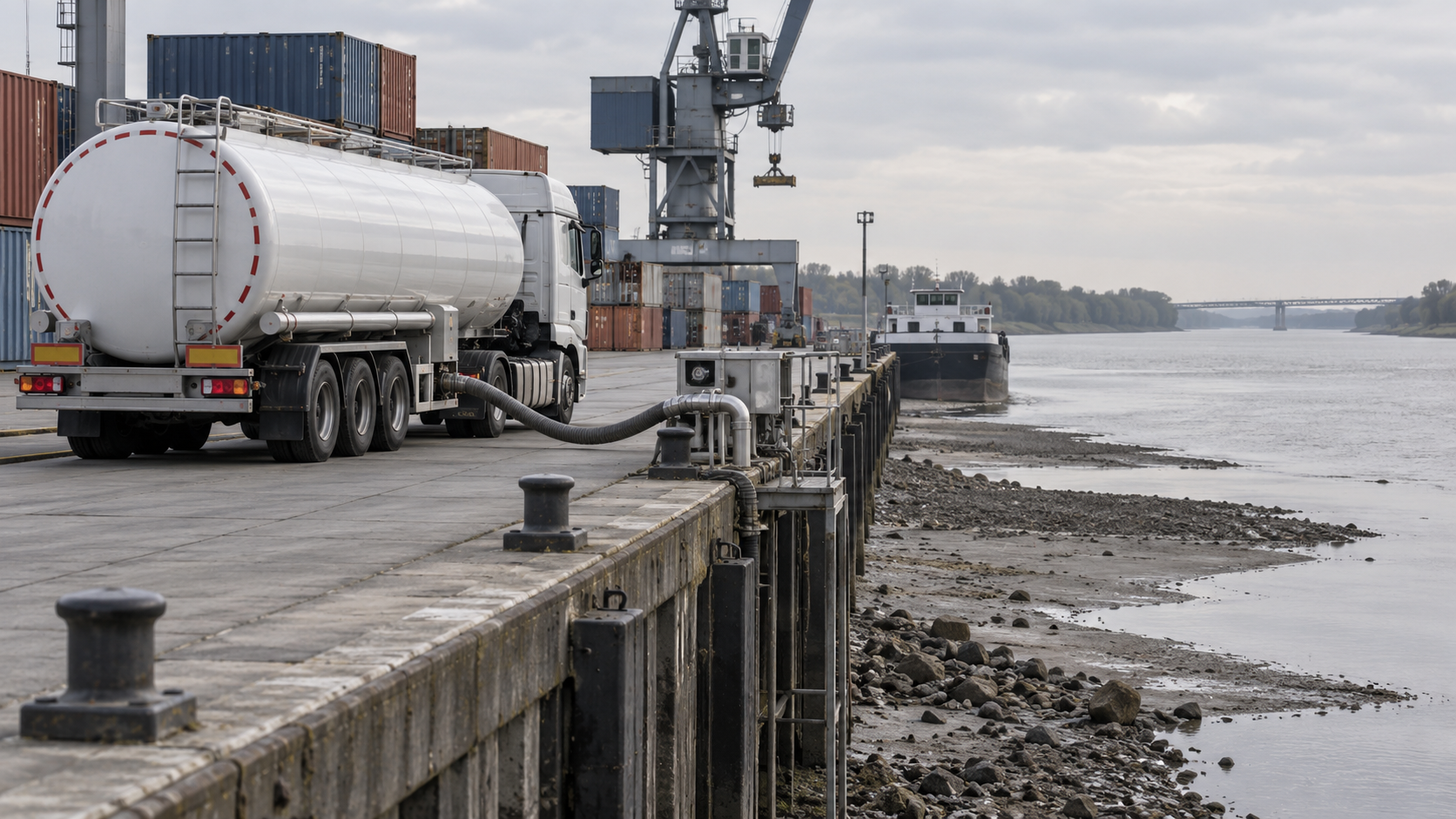
The latest developments also show why a political focus on the price can fall short. In mid-September, supply came under pressure from two factors: the Cressier refinery, Switzerland's only oil refinery, was out of operation for around two weeks because of a technical problem. At the same time, persistent low water on the Rhine hampered shipping.
From 8 to 20 September, the Delegate for Economic National Supply authorised the release of up to 30,000 cubic metres each of diesel and petrol from compulsory stockpiles. According to the federal government, this amounted to less than three percent of the compulsory stocks for both products. After Cressier had resumed operations, no further withdrawals were necessary. Supply was assured, it said, but remained tense because of limited transport capacity.
That is not an argument against social relief. It does show, however, that a price measure is no substitute for security of supply. When transport on the Rhine fails and refinery capacity is interrupted, logistics, storage and alternative routes remain the decisive levers. A rebate can even prop up demand further while supply is limited in the short term.
The uncomfortable trade-off
In such a situation a government has to weigh three goals against one another: protect purchasing power, keep supply stable and avoid needlessly stoking consumption. A universal price cut meets the first goal quickly, but does not automatically meet the others. It costs public funds and can set the wrong incentives, especially with scarce products.
A hasty conclusion would be just as wrong, however: anyone who rejects fuel rebates must not play down the extra burden on households and transport operators. The official price series shows that it is real. The substantive question is therefore whether Switzerland wants to cushion the costs as visibly as possible or as accurately as possible.
The decision on a fuel rebate is thus also a decision about priorities. The pump is the place where the pressure becomes visible. Structural vulnerability, however, is resolved where fuel is imported, stored and transported.
Sources
- BAZG: Monthly fuel prices in border zones: bazg.admin.ch/dam/de/sd-web/MKCfL0PCzPt5/Jahrestabelle%20T%…
- Federal government: Mineral oil supply after the release of compulsory stocks: https://www.bwo.admin.ch/de/newnsb/B9PaqlJnD0-G
- Federal Office for Economic National Supply: https://www.bwl.admin.ch/bwl/de/home.html
- NZZ: Debate on fuel rebates: nzz.ch/wirtschaft/ein-tankrabatt-zur-sozialen-abfederung-ko…


