Millions of Dead Fish: Record Summer Exposes Weaknesses in Swiss Waters
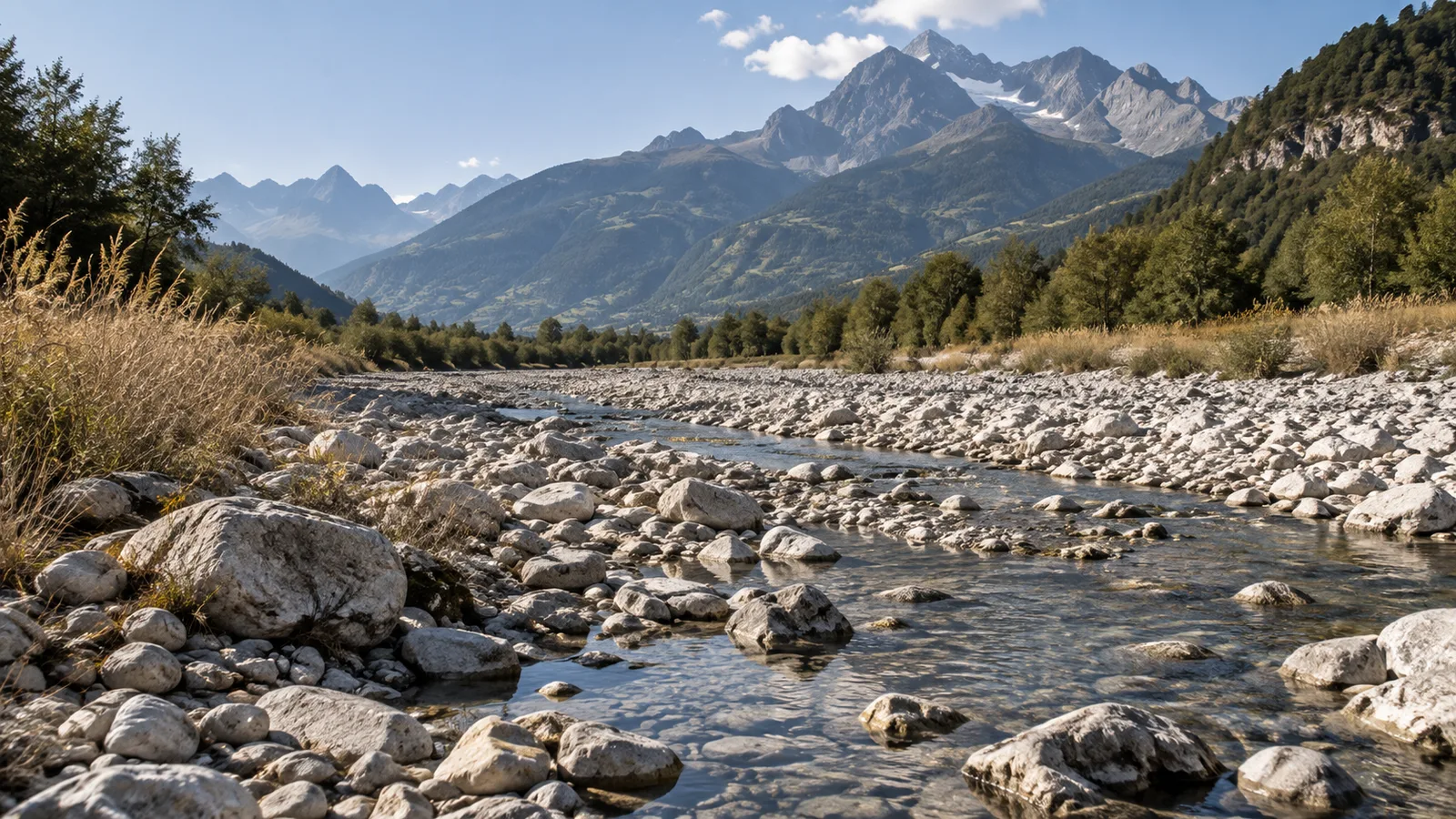
Heat and drought pushed Swiss rivers and streams to their limits. The millions of dead fish are an estimate, but data shows the crisis extends beyond an extreme summer.
Summer 2026 triggered a mass fish die-off in Swiss waters. The Swiss Fishermen's Association reports millions of dead fish. This figure is not an official count, but a preliminary extrapolation from local observations. In the Emme below Burgdorf alone, the association found hundreds of thousands of bullheads and hundreds of trout dead.
The exact number of victims remains unclear. However, the physical conditions are exceptionally well documented: Almost 60 percent of federal measuring stations recorded new peak summer water temperatures. Nearly 40 percent reported new low flow rates. In Bern, the Aare reached 24.8 degrees, and in Lucerne, the Reuss reached 26.36 degrees.
Heat and Low Water Levels Intensify Each Other
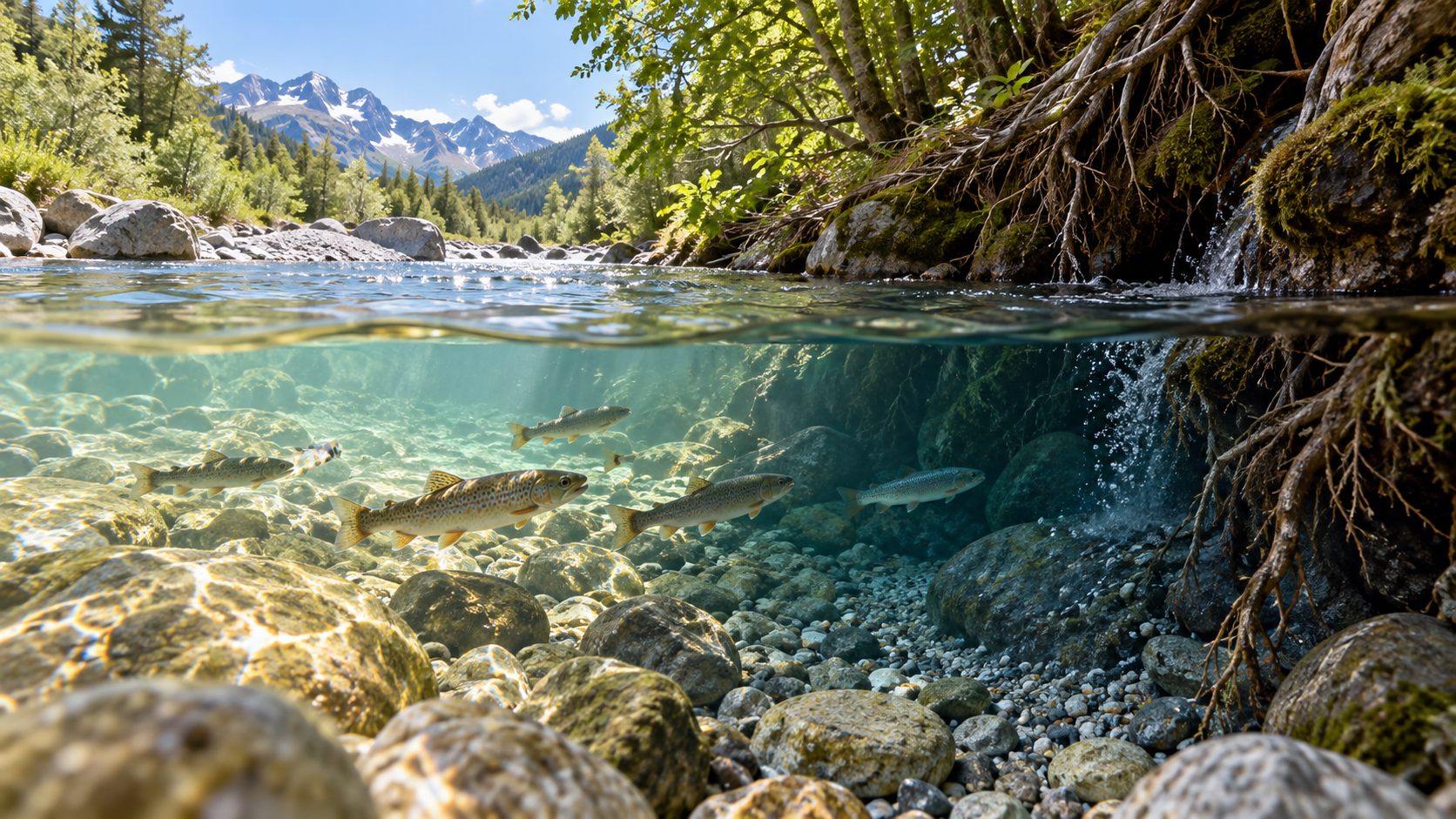
Warm water contains less oxygen than cold water. At the same time, heat accelerates fish metabolism, increasing their oxygen demand. When less water flows during drought, the habitat further shrinks. Cold-loving species like trout and grayling thus face pressure from multiple sides.
According to MeteoSchweiz, with an average of 17.2 degrees, this summer was the hottest since measurements began in 1864, 0.4 degrees above the hot summer of 2003. However, the temperature record alone does not explain why some sections collapsed while others offered refugia. It is crucial whether fish can move into cooler tributaries, deeper pools, or shaded side channels.
A Network of Over 100,000 Barriers
These escape routes are missing in many places. Eawag counts over 100,000 artificial obstacles in Swiss waters. Additionally, there are straightened banks, built-up riverbeds, and interrupted side arms. For hydropower plants, the cantons reported 636 facilities needing remediation for fish passability. By the end of 2022, planning or implementation had begun for over half of the reported facilities.
A weir does not need to directly kill fish to become dangerous in a hot summer. It is enough if it blocks the path to a cold water refuge. Water abstractions can also further weaken small streams. The Federal Office for the Environment notes that individual flowing waters continue to temporarily dry up due to abstractions, and older concessions are sometimes only adapted to current residual water regulations upon their renewal.
Why No One Knows the National Figure
Fish deaths are reported locally, often only when animals are visibly floating on the surface or lying in shallow areas. Small species, juvenile fish, and carcasses quickly carried away or eaten often go uncounted. A nationwide real-time recording system does not exist. The million estimate thus plausibly describes the magnitude from the association's perspective, not a statistically validated national balance.
This data gap is more than a methodological detail. Without standardized reports, coordinated samples, and linkage with temperature and flow data, it is difficult to assess which revitalization measures offer the greatest benefit. Switzerland measures water levels and temperatures very precisely; the biological loss accounting remains significantly cruder.
A better balance would not need to count every fish. Uniform protocols at selected waters could record when which species are affected, how long critical temperatures last, and whether accessible side waters limit losses. This would transform individual disaster reports into a trainable early warning system. Today, comparisons between regions are often difficult because observation efforts and reporting discipline vary.
Renaturation Becomes Climate Adaptation
The Federal government designates the revitalization of water bodies as a generational task over about 80 years, contributing 35 to 80 percent of the costs depending on the project. What was formerly primarily considered nature conservation is becoming infrastructure against the effects of heat: riparian trees provide shade, wider and structurally rich river spaces create deep spots, and connected side arms open up alternative routes.
This creates a distribution conflict. During dry periods, agriculture, drinking water supply, hydropower, and ecosystems all require the same scarce resource. Residual water quantities and ecological minimum standards then decide not abstractly about "nature," but whether a stream still functions as a habitat. The warmer summers become, the more expensive it will be to resolve these conflicts only during a crisis.
Eawag also expects further warming of many Swiss flowing waters, even with strong climate protection. The lesson from 2026 is therefore not that every fish die-off can be prevented. It is that the condition of a water body determines whether a hot summer becomes a local catastrophe. Millions of dead fish may be an estimate. The structural vulnerability that becomes visible behind it is not.