Green Teens: Seven habits that achieve more than perfect recycling
Switzerland recycles a lot and still produces a lot of waste. For young people, the biggest levers often lie before the rubbish bag: buy less new, use things longer, save food.
Switzerland is good at collecting – and very good at throwing away. In 2024, around 670 kilograms of municipal waste were generated per person. More than half was collected separately and recycled. That is a success, but not an all-clear: the official waste hierarchy puts prevention and reuse before recycling. For young people, this does not mean solving every decision in an ecologically perfect way. It means distinguishing the big levers from the small gestures.
\n\n
1. A reusable bottle is only good if it lasts
\n
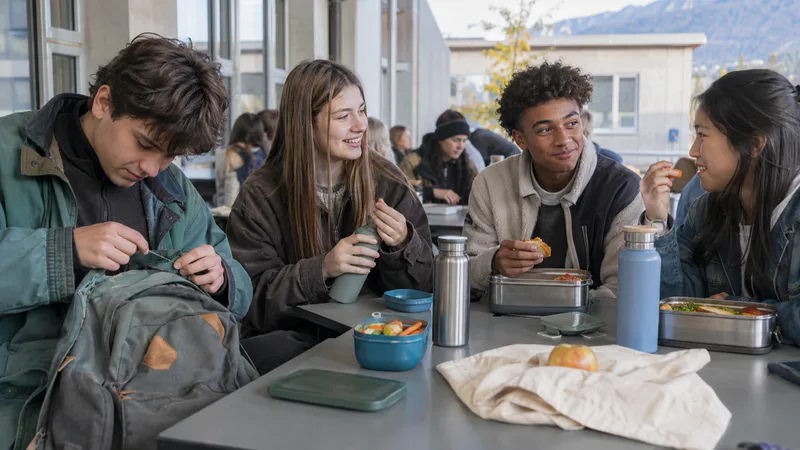
A reusable bottle saves single-use packaging – provided it is not replaced every few months by a new trend model. The simple rule is: use the bottle you have, refill it with water, don't buy anything new as long as it is watertight. PET beverage bottles are collected at a rate of over 80 percent in Switzerland; nevertheless, prevention saves manufacturing and transport.
\n\n
2. For the morning snack, check the fridge first
\n
Swiss consumption causes around 2.8 million tonnes of avoidable food losses per year along the entire value chain. Food waste accounts for about a quarter of the environmental impact of the food system. A leftover bread, a bruised apple or the previous day's dinner are therefore often ecologically more valuable than a newly bought product with green packaging.
\n\n
3. Second-hand before 'sustainable collection'
\n
Before buying new, three questions help: Can I borrow it? Is it available used? Can I repair what I have? This applies to jackets, bags, sports equipment and electronics. Second-hand doesn't have to be perfect; using an already manufactured product longer prevents additional production.
\n\n[[media:79c9e4e0-047e-419e-a234-1cc000a0b625]]\n\n
4. Keep your smartphone longer
\n
With electronics, a large part of the environmental impact lies in manufacturing and raw materials. Protecting the battery, continuing to use the case, clearing storage and having defects checked extend the service life. For new smartphones and tablets, the energy label now also provides information on robustness, battery life and repairability. Replacing a device just because of a new camera mode is rarely the strongest sustainability decision.
\n\n
5. Learning to repair – together
\n
Repair Cafés have existed in Switzerland since 2014, where volunteers contribute their knowledge and time free of charge. Not every defect can be fixed cheaply, and self-repair is dangerous when it comes to mains voltage or damaged batteries. But a loose plug, a torn backpack or a jammed zip does not automatically have to be the end.
\n\n
6. Organise school materials as a cycle
\n
Emptying folders, using usable sheets as note paper, using up pens and passing on books: this seems unspectacular, but saves recurring purchases. Classes can set up a swap box at the end of the semester. It is important that the school establishes clear rules for ownership, condition and hygiene.
\n\n
7. Making the journey a habit
\n
Walking, cycling or taking public transport to school is not realistic everywhere. But where it is safe and feasible, sustainable mobility is particularly effective when it is routine rather than the exception. Getting off one bus stop earlier or carpooling to training sessions can be interim solutions. Safety comes first: visibility, helmet and safe routes are more important than a perfect record.
\n\n
Why recycling alone is not enough
\n
The discrepancy is clear for plastics. Around 790,000 tonnes of plastic waste are generated in Switzerland every year; about nine percent are processed into recyclates, the largest part is used for energy recovery. Incineration with energy recovery is orderly disposal, but not a closed material cycle.
\n
The strongest 'Green Teen' plan is therefore not a long list of bans. It consists of a few habits that save money and work repeatedly: use up food first, share things, use devices longer and avoid waste. Anyone who implements four of them permanently achieves more than someone who wants to do everything perfectly for a week.
\n
The plan becomes measurable with a simple monthly question: What had to be bought new or thrown away less often? Photos of the fridge before shopping, a shared material box in the class or a repair list show progress better than an abstract CO₂ value. Schools can support this by making drinking water, swapping opportunities and separate collection accessible. Responsibility therefore does not remain solely with young people, but is shared between households, schools, retail and politics.
\n\n
Sources
\n
- FOEN: Waste statistics 2024
- FOEN: Plastics in Switzerland
- FOEN: Food losses
- SFOE: Electronic devices and energy label
- Repair Café Switzerland: Information