
OSCE in Warsaw: Why human rights are a security issue for Switzerland
As OSCE chair, Switzerland is putting the rule of law, media freedom and torture prevention at the centre of its security diplomacy.
Human rights look at first glance like a policy field distinct from security. In the OSCE, the two belong together. The organisation and Switzerland justify this approach by arguing that lasting security and stability are impossible without human rights, fundamental freedoms and democratic institutions. That is why the Organization for Security and Co-operation in Europe explicitly counts the "human dimension" as part of its comprehensive concept of security.
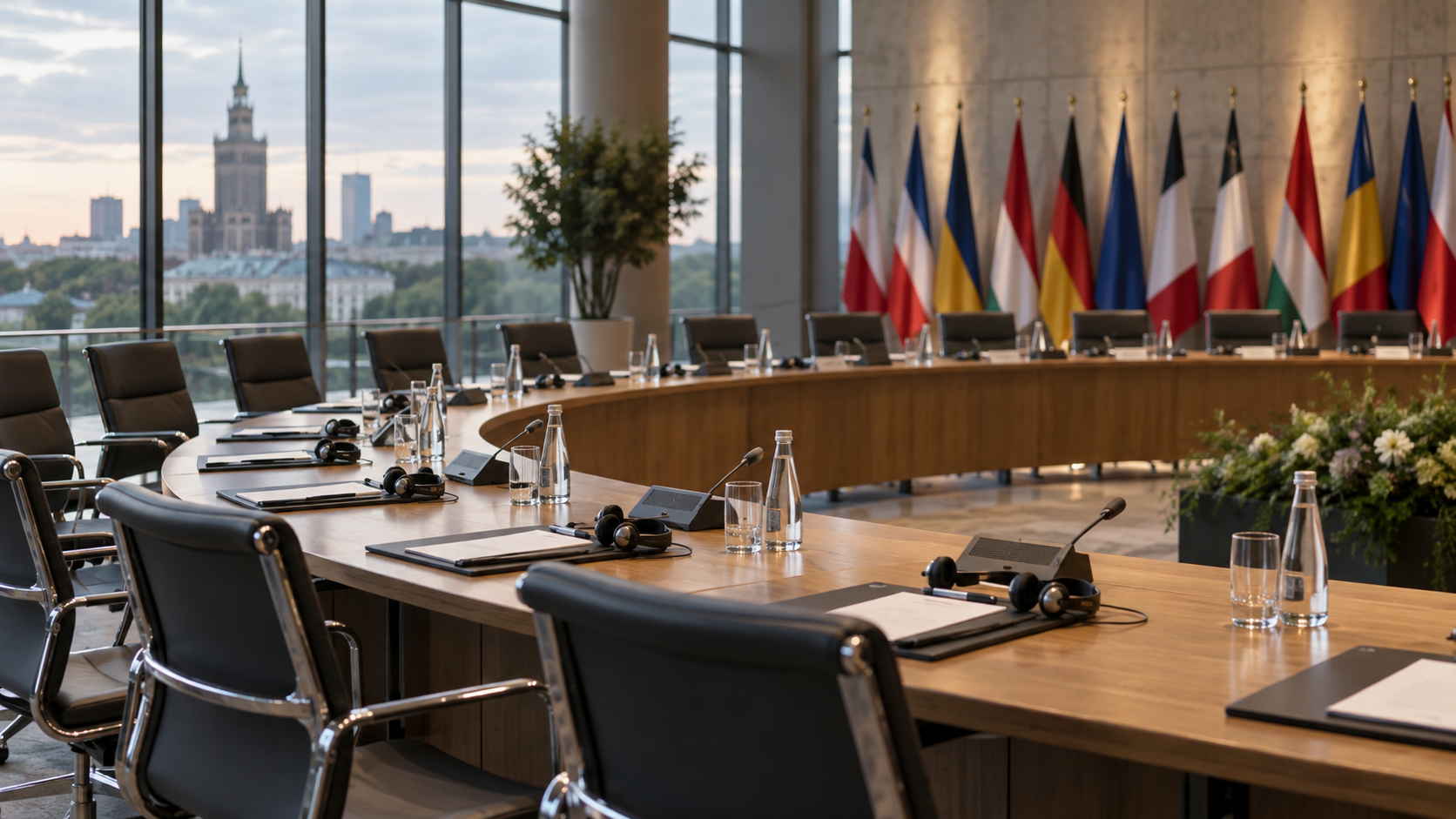
The OSCE's annual conference on the human dimension runs in Warsaw from 5 to 15 October 2026. According to the organisation, more than 1,800 people from states, institutions and civil society are taking part. The agenda includes the rule of law, media freedom, democratic elections, minority protection, equality, freedom of assembly, torture prevention and the fight against discrimination. So this is not an abstract human rights debate, but a discussion of the rules and institutions that shape everyday life and political stability in Europe.
The conference is especially visible for Switzerland, because the country holds the OSCE chairmanship in 2026 and organises the event together with the Office for Democratic Institutions and Human Rights, ODIHR. Switzerland is relying on dialogue and on the implementation of commitments that already exist. At the conference, the Swiss chairmanship presented a roadmap for the prevention and eradication of torture. The FDFA stresses that the document creates no new norms. It gathers standards, legal obligations, political commitments and good practices so that states can apply them better in day-to-day practice.
What does this mean for ordinary Swiss citizens? The effect is indirect, but it concerns a country that is closely interwoven with Europe economically, politically and socially. From a Swiss point of view, what matters are predictable neighbours, functioning rule-of-law states and a space in which conflicts can be raised early. That affects travel, trade, research, the safety of Swiss citizens abroad and the question of how well European states cooperate in cross-border crises.
The significance also shows up in new technologies. In Warsaw, the OSCE is discussing how surveillance, automated image analysis and data processing can affect freedom of assembly and the space available to civil society. For Switzerland, this is not only a foreign-policy topic: questions of control, transparency and the rule of law accompany every debate about digital security here as well.
It would be wrong, however, to derive an immediate security gain from a conference. The OSCE does not pass new Swiss laws in Warsaw, and a roadmap does not prevent torture by itself. What remains decisive is whether states implement their commitments and whether civil society, courts, media and international institutions can perform their watchdog role. That is precisely why such meetings matter: they create a place where states and human rights organisations can return to the same obligations even in difficult political times.
The Swiss chairmanship thereby combines two concerns. It wants to promote concrete improvements in implementation and at the same time keep the OSCE capable of acting as a channel of dialogue. For the public, that is less spectacular than a military exercise or a summit on weapons. But it is part of preparedness: security does not begin only where a conflict escalates, but also where fundamental rights, trust in institutions and peaceful political participation are protected.