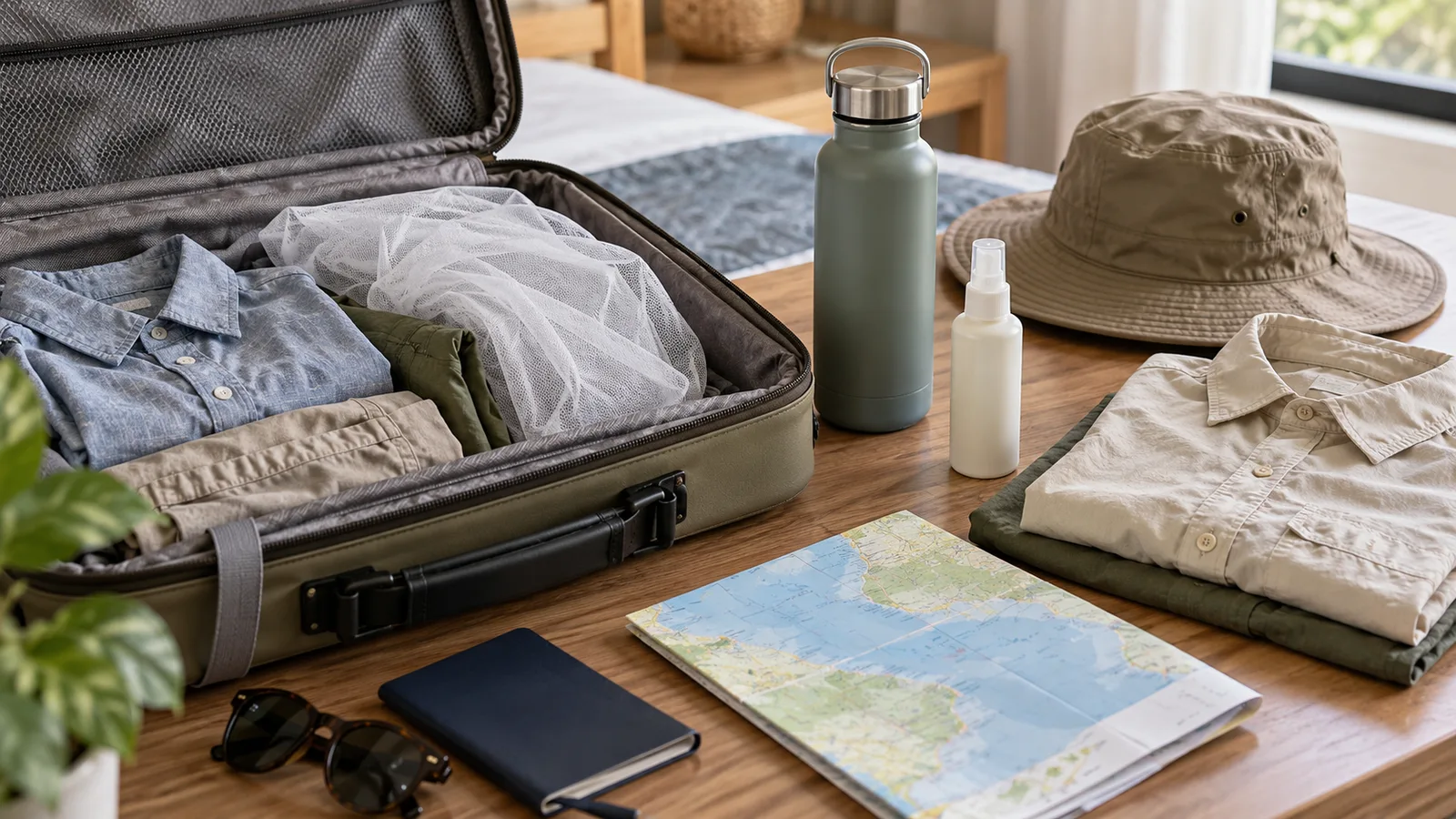
Travel advisory is not an entry ban: What Swiss travellers must check
Security situation, entry rules, health and insurance are separate questions. Those who keep them apart before a trip decide on a sounder basis.
Advice is not a travel ban
Travel advice can sound drastic. «Travel is discouraged» or «travel should be postponed» are not a border closure and not a formal exit ban. The Federal Department of Foreign Affairs uses its advice to describe the security situation in countries and regions. The aim is to help Swiss citizens put risks into perspective before a trip.
The decision on whether a trip goes ahead remains in principle with the travellers. That is precisely why the wording matters: advice is neither an all-clear nor an individual safety guarantee. It is an assessment of the situation based on the information available to the authorities.
Four questions instead of one search
Anyone who searches only for «travel warning» often mixes up four different subjects. First, the security situation: conflicts, political tensions, crime, natural hazards or regional instability. Second, entry: passport validity, visas, transit rules and local registration. Third, health: vaccination recommendations, medical care and personal risks. Fourth, financial cover: cancellation terms, assistance services and possible exclusions in the insurance contract.
For Swiss travellers, the FDFA is the right starting point for the security situation. Binding entry rules, by contrast, are issued by the authorities of the destination country or its representation abroad. Tour operators and insurers may impose additional conditions, but they do not replace government information.
Region instead of country name
Looking at the map is especially important. A security situation can differ sharply within a single country. The FDFA therefore often breaks its advice down by region. Anyone who reads only the country name may interpret a local warning too broadly or a regional escalation too narrowly.
The timeline matters too. Travel advice is updated when the situation changes. So it is not enough to consult an old screenshot or a summary from social media. What counts is the current entry shortly before departure.
Preparation that actually helps
Good travel preparation is concrete: route, accommodation and contacts should be documented and up to date. Anyone travelling to an area with a heightened security situation should know the Swiss representations and how to reach family or travel companions. The FDFA's Travel Admin app can also help reach Swiss travellers in an emergency, but it does not replace personal precautions.
If the situation deteriorates, the Swiss representation can provide support; however, it cannot guarantee seamless care or departure under all circumstances. That too belongs to an honest risk assessment.
Safety starts before booking
Travel advice is most useful when it is not treated as a dramatic headline but as an invitation to check things carefully. Anyone who examines security, entry, health and insurance separately makes a decision that is not risk-free but is informed.