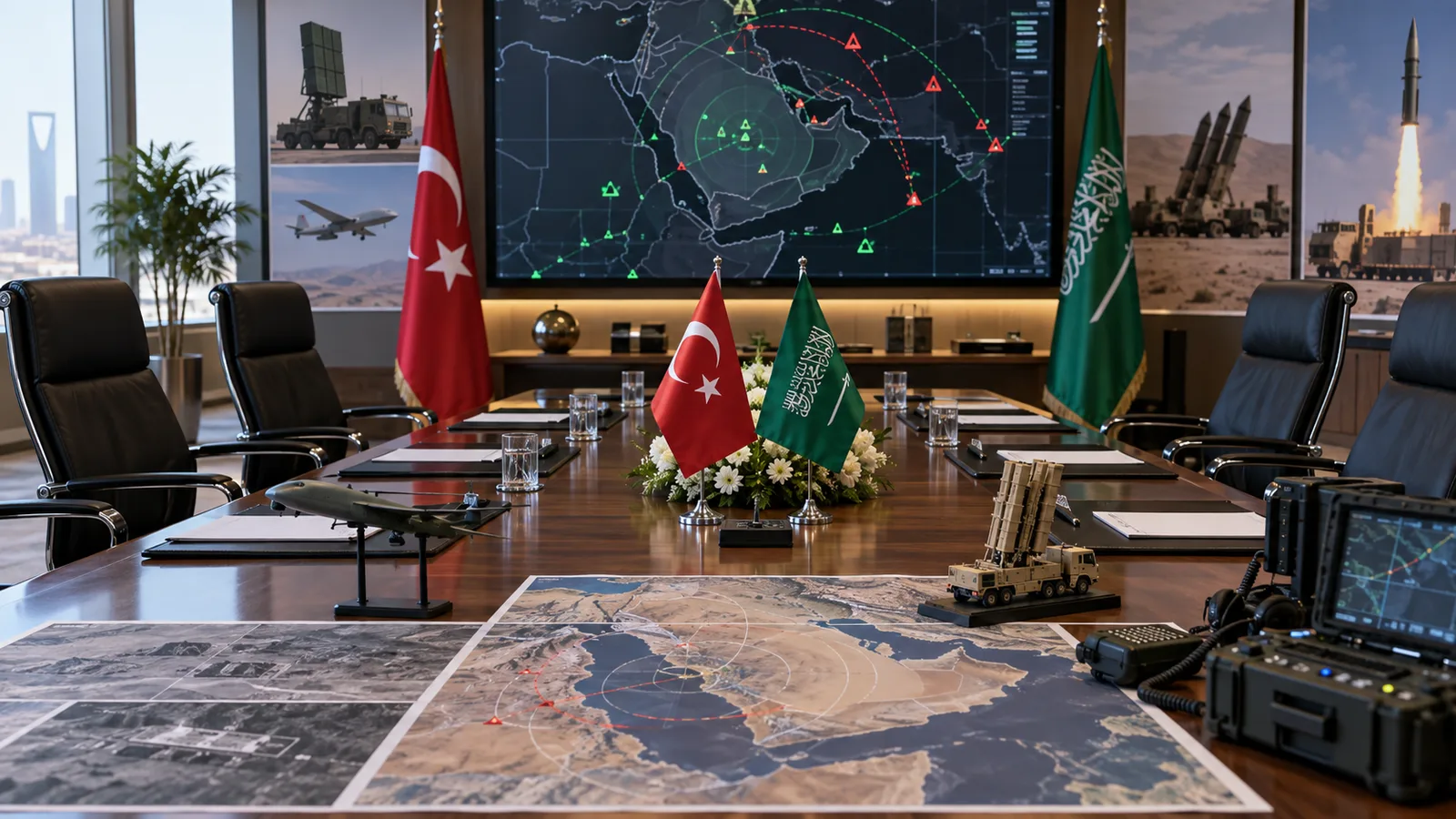
Turkey offers Saudi Arabia military aid – but backing stays technical
Ankara signals support for drone and missile defence. That does not yet establish an automatic mutual defence obligation or the deployment of Turkish troops.
The Turkish Foreign Minister Hakan Fidan has stated that his country is ready to support Saudi Arabia with its defence needs. The statement comes at a time of new Houthi attacks and growing concern about the airspace over the Arabian Peninsula. It sounds like a far-reaching pledge of assistance. So far, however, only technical help and existing capabilities have been named publicly – no commitment of Turkish combat troops.
An offer with deliberately wide latitude
According to Fidan, Turkey can provide support on request. This could include advice, training, maintenance, information sharing and systems for detecting and intercepting drones and missiles. What exactly Saudi Arabia has requested has not been made public.
This openness is diplomatically useful. Ankara signals reliability without defining rules of engagement, scope or costs. Riyadh gains additional options without publicly committing to a particular supplier or a joint command.
The new pact is not an automatic entry into war
Turkey, Saudi Arabia and a third partner agreed in Mecca at the end of August 2026 on deeper security policy cooperation. The joint declaration stresses consultations, defence cooperation and regional stability. Such formulas can be politically significant, but they are not automatically comparable with Article 5 of NATO.
The wording is decisive: does an attack trigger a legally binding military obligation, or initially consultations? Which institution decides on assistance? Does the pact apply equally to state attacks, drones of non-state groups and cyber operations? As long as these questions remain open, calling it an unrestricted mutual defence guarantee would go too far.
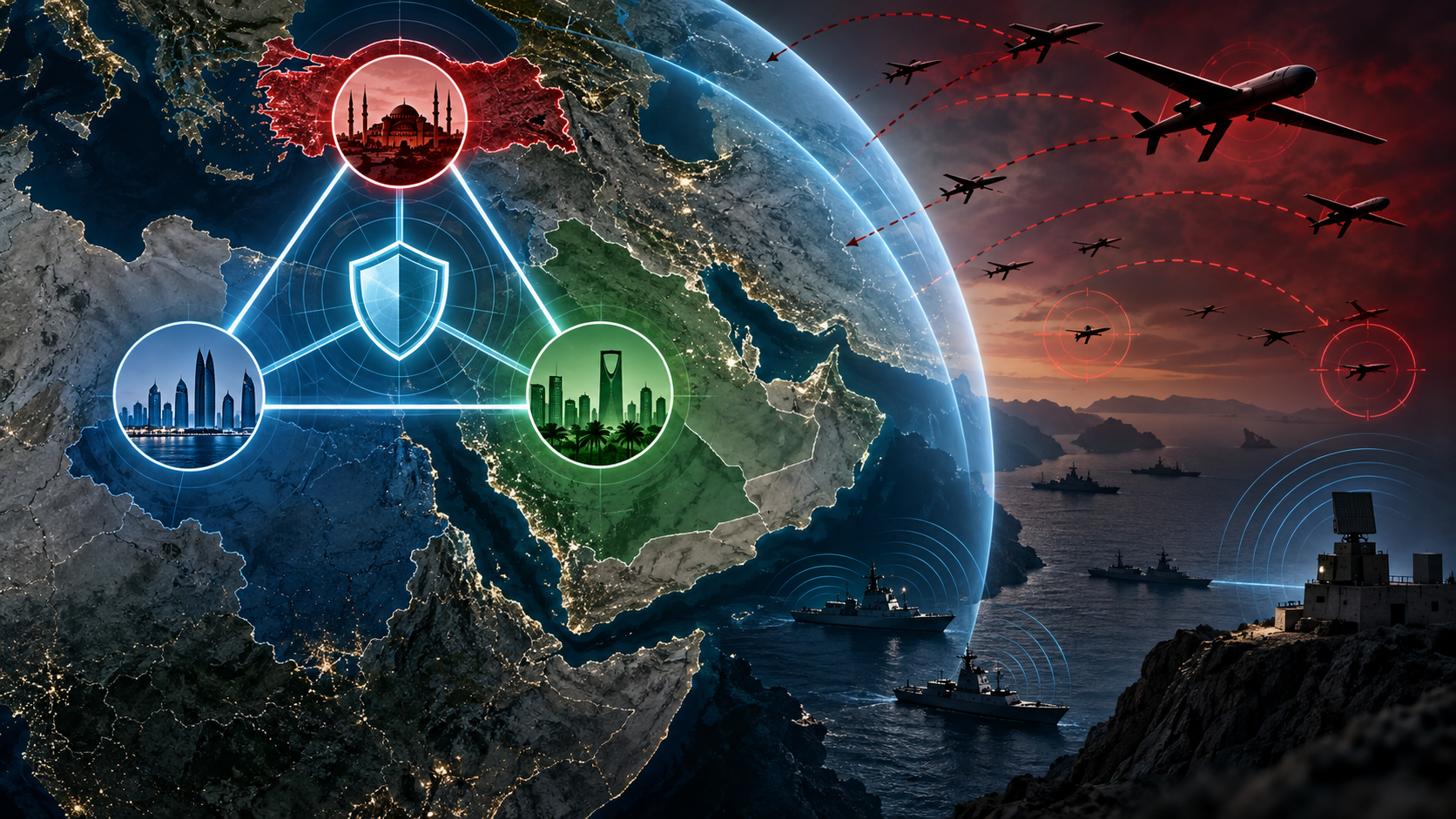
Drone defence is at the centre
The Houthi movement in Yemen has used missiles and drones against targets in Saudi Arabia, the United Arab Emirates, Israel and the Red Sea in recent years. Small, relatively cheap flying devices can tie up expensive interception systems. For defenders, what therefore matters is a graduated network of radar, electronic warfare, air defence and rapid situation assessment.
Turkey has a growing arms industry with drones, sensors, guided missiles and electronic systems. Saudi Arabia, for its part, is investing in local production and is looking for various partners. Cooperation could therefore range from short-term technical assistance to joint manufacturing. However, no concrete contracts were named in the current declaration.
Ankara expands its regional influence
Relations between Turkey and Saudi Arabia were heavily burdened after the murder of Jamal Khashoggi in 2018. Since then, both governments have expanded cooperation on economic and political terms. Defence is one area in which Ankara combines export opportunities with strategic influence.
For Riyadh, Turkey offers a complement to the United States and European suppliers. Diversification can reduce dependencies, but it creates new questions about technical compatibility. Radar, command and weapons systems of different origins must be able to exchange data securely. Without integration, even modern equipment remains piecemeal.
The escalation risk remains
More air defence can protect civilian infrastructure and make attacks less attractive. At the same time, it can accelerate a regional arms race. If defence systems are combined with offensive capabilities, intelligence cooperation or counter-attacks, the risk of miscalculation rises.
For Switzerland, the development is relevant above all through energy prices, trade and humanitarian diplomacy. Attacks near important oil and shipping routes quickly affect insurance and markets. Bern therefore has an interest in protecting civilian infrastructure, but equally in de-escalation and clear boundaries under international law.
Fidan's offer is for now a political signal with a technical core. Whether a joint defence system, arms deals or genuine military assistance emerges from it will be decided only by concrete requests, contracts and rules of engagement.