US fusion funding: $175 million for Helion's semiconductor plans
Washington and Helion have signed a letter of intent for research funding. The state is to receive a minority stake. A commercially viable fusion power plant has still not been demonstrated.
The US wants to support semiconductor technology for future fusion facilities. On 22 October the Department of Commerce announced four letters of intent totalling up to 389 million dollars. Up to 175 million of that is earmarked for Helion, a fusion company in the state of Washington. According to the authority, the state is to receive a minority stake without voting or control rights as a condition of the funding.
The news is a financing decision in preparation, not proof of a finished power plant. A letter of intent must be distinguished from a definitive funding agreement and from money already paid out. Equally important is the purpose: the programme stems from the semiconductor research of the CHIPS and Science Act. Components, modules and manufacturing processes that are also needed for fusion are to be funded.
Power electronics as a bottleneck
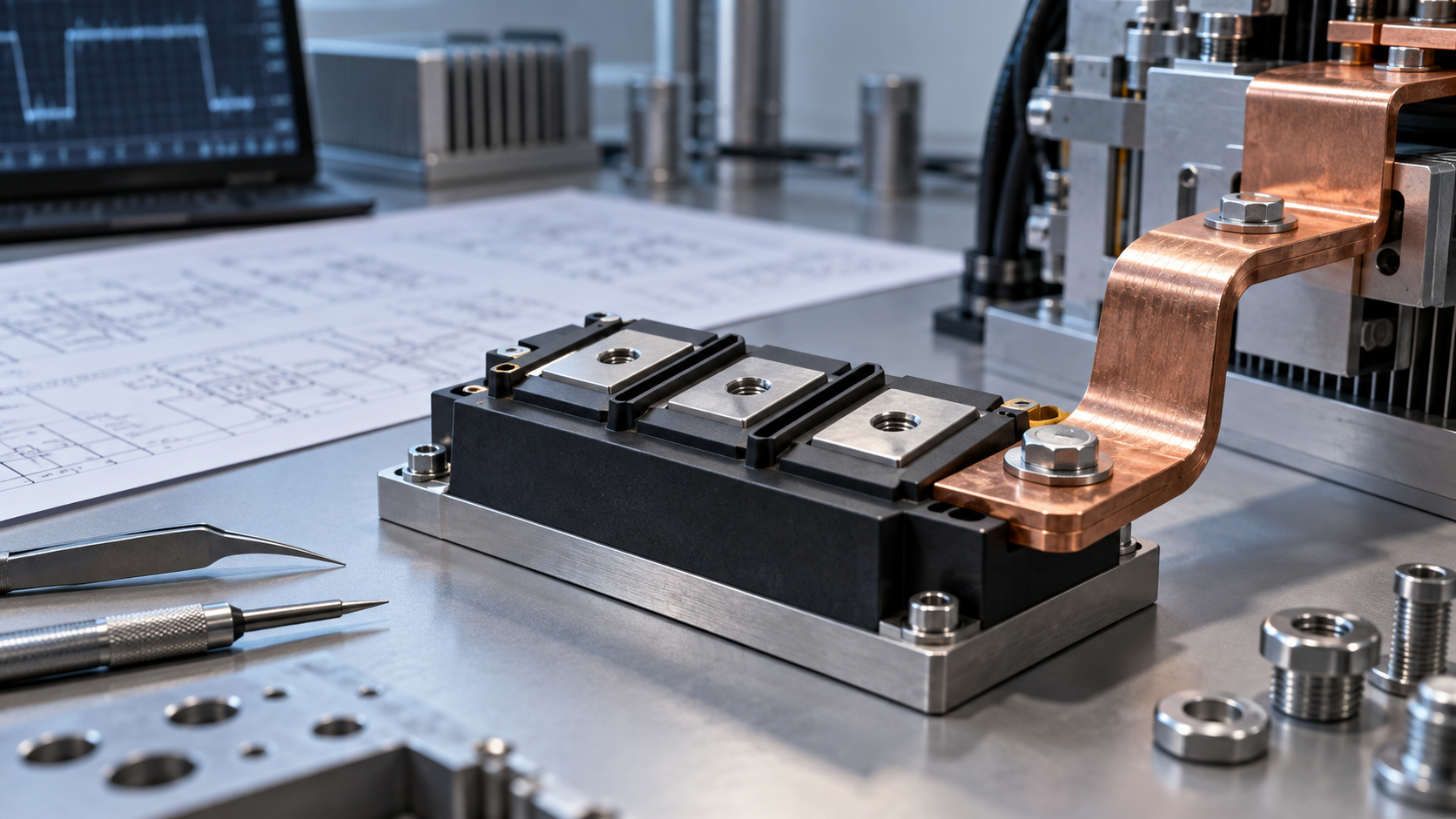
Helion's concept works with powerful pulsed electrical systems, according to the company. These must repeatedly switch and recover large amounts of energy. That requires suitable high-voltage semiconductors and power modules. The US department describes exactly this use: the electronics are to drive and control the magnets of the fusion generators and recover energy from them.
Helion additionally expects 50 million dollars in private capital. Together with the possible federal contribution this would amount to 225 million dollars for the announced project. That sum is therefore not entirely public funding. The company names research and development in Everett as well as work on tools, design and processes with an industrial partner in Burlington, Vermont.
From the government's point of view, the programme is also intended to reduce dependence on foreign manufacturing. Whether the funded technology will achieve the intended efficiency, lifetime and cooling is a question of development. Such goals describe the mandate; they must not be read as results already delivered.
Helion is part of a larger programme
The letters of intent also cover Commonwealth Fusion Systems with up to 85 million dollars, Vertical Semiconductor with up to 73 million and Sibelco with up to 56 million. The announcement thus spans various parts of the energy and semiconductor supply chain. It cannot be reduced to a single bet on one reactor type.
Commonwealth Fusion Systems describes its planned contribution as research on electronics for plasma heating, power electronics and diagnostics. The public goals are thus more concrete than the general promise of cheap fusion energy. At the same time, this work too remains research and development: funding does not yet say when reliably available electricity for customers will result from it.
What Switzerland is already investigating
At the Swiss Plasma Center of EPFL, the Tokamak à Configuration Variable, or TCV, is a facility for plasma physics. Its particular purpose is the investigation of different plasma configurations and of the physical questions that future large fusion facilities must solve. EPFL names energy losses, fast particles, instabilities, heat removal and the ongoing control of the plasma as research fields, among others.
According to the university, this work is supported by EUROfusion and Swiss funds. It contributes to international projects such as ITER and DEMO. That distinguishes the TCV from an announced commercial power plant project. Anyone who lumps both together under the term fusion should therefore name the different tasks: scientific fundamentals and experimental data on the one hand, the development of industrial systems on the other.
For assessment, separate stages therefore count: the development of suitable components, their reliable operation and finally the economic viability of an entire facility.
Financial participation distributes opportunities and risks
According to the US Department of Commerce, the planned minority state stake is to create value for taxpayers. That does not imply a guaranteed return. The value of the stake and research progress depend on whether the companies reach their technical and economic goals. The definitive agreement, its conditions and later verifiable performance will be decisive.
For Switzerland, the concrete link lies in research and technical expertise, not in an immediately changed electricity supply. The US announcement shows that in fusion even comparatively unremarkable components such as power semiconductors become strategic. Whether this yields economically usable energy must be shown by facilities and operating data. Public and private funders should therefore not just compare large financing sums but the next verifiable technical steps.