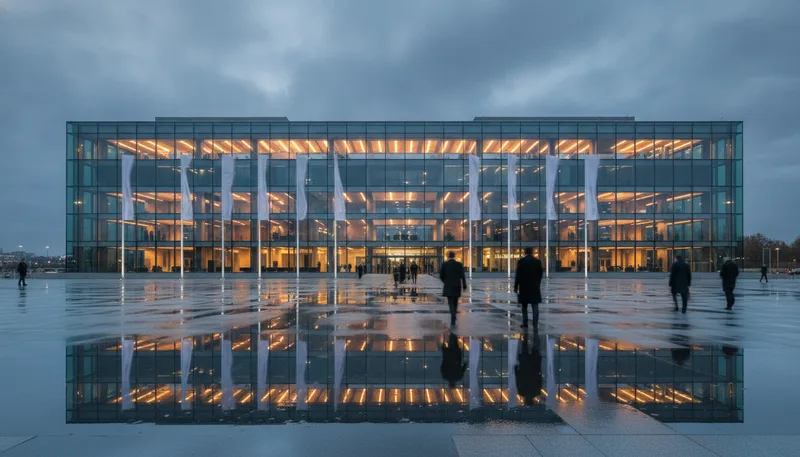
Warsaw Security Forum: What Switzerland Wants to Learn from Poland
Markus Mäder and Divisional General Daniel Keller represent Switzerland at the Warsaw Security Forum. The focus is resilience – a term that benefits Switzerland only when it becomes concrete in everyday life.
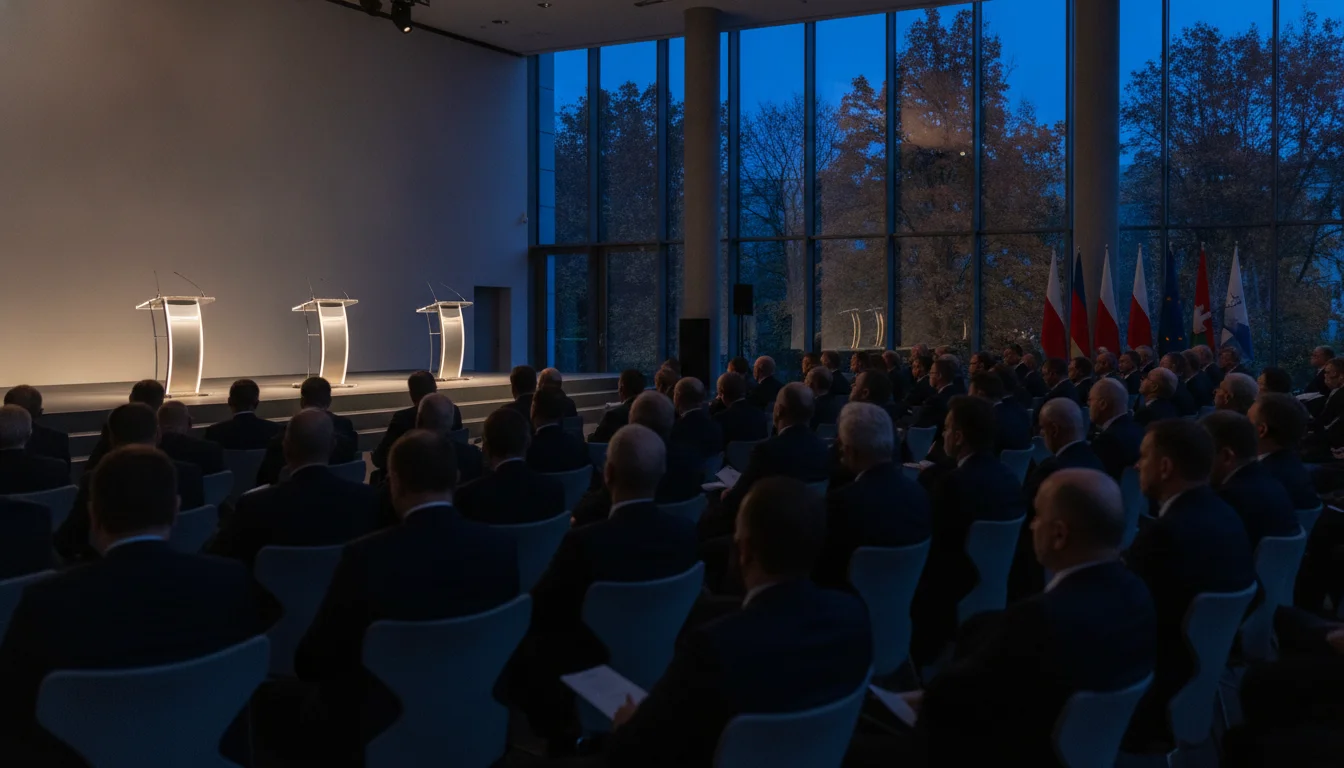
On 12 and 13 October, representatives from politics, the armed forces, business and academia are meeting at the Warsaw Security Forum. Switzerland is represented by State Secretary for Security Policy Markus Mäder and the Chief of the Army Staff, Divisional General Daniel Keller. The visit is not a departure from neutrality. Rather, it shows that neutrality depends on a precise assessment of one's own situation.
Resilience as a concrete security question
At the forum, Mäder intends to present the Swiss view of societal and institutional resilience. The term means the ability of a state and its population to cope with crises, keep basic functions running and recover afterwards. That ranges from cyber defence and energy supply to reliable information, civil protection and functioning authorities.
The 2026 Security Strategy names strengthening resilience as one of three strategic directions. This gives political weight to a term that easily remains abstract. It becomes tangible only once it is translated into responsibilities, exercises and investments: who protects critical infrastructure? How do the cantons and the federal government respond to digital attacks? How does verified information reach the population?
Poland offers experience, not a blueprint
On the margins of the forum, Mäder meets the Polish State Secretary at the Ministry of Defence, Paweł Zalewski. Poland is modernising its armed forces and lies geographically closer to the threats that shape Europe's security debate. Switzerland can draw insights from this – about precaution, military planning and societal resilience.
At the same time, it would be wrong to adopt Polish concepts directly. Switzerland has different alliance commitments, different federal structures and a different security policy tradition. Learning therefore does not mean copying. It means examining experiences in such a way that they fit the country's own legal order, militia structure and threat situation.
Exchange must feed back into the situation assessment
The FDFA and the DDPS justify the visit by saying that insights from the forum should feed into the army's assessment of the situation. That is the substantive yardstick for such conferences. What counts is not the number of talks, but whether they lead to a better analysis: which developments in eastern and northern Europe affect supply chains, cyber risks or the protection of critical infrastructure in Switzerland?
The security policy debate is often framed as a choice between isolation and integration. In practice, Switzerland needs both: independent decisions and reliable information about its environment. International conferences can be useful for this, provided they turn into neither a symbolic occasion nor mere backdrop.
The Warsaw Security Forum does not deliver ready-made solutions for Bern. It can, however, enable a comparison that is hard to obtain at home. For Switzerland, this perspective is valuable if resilience does not remain a buzzword but arrives as verifiable precaution in the everyday life of the state, the economy and the population.