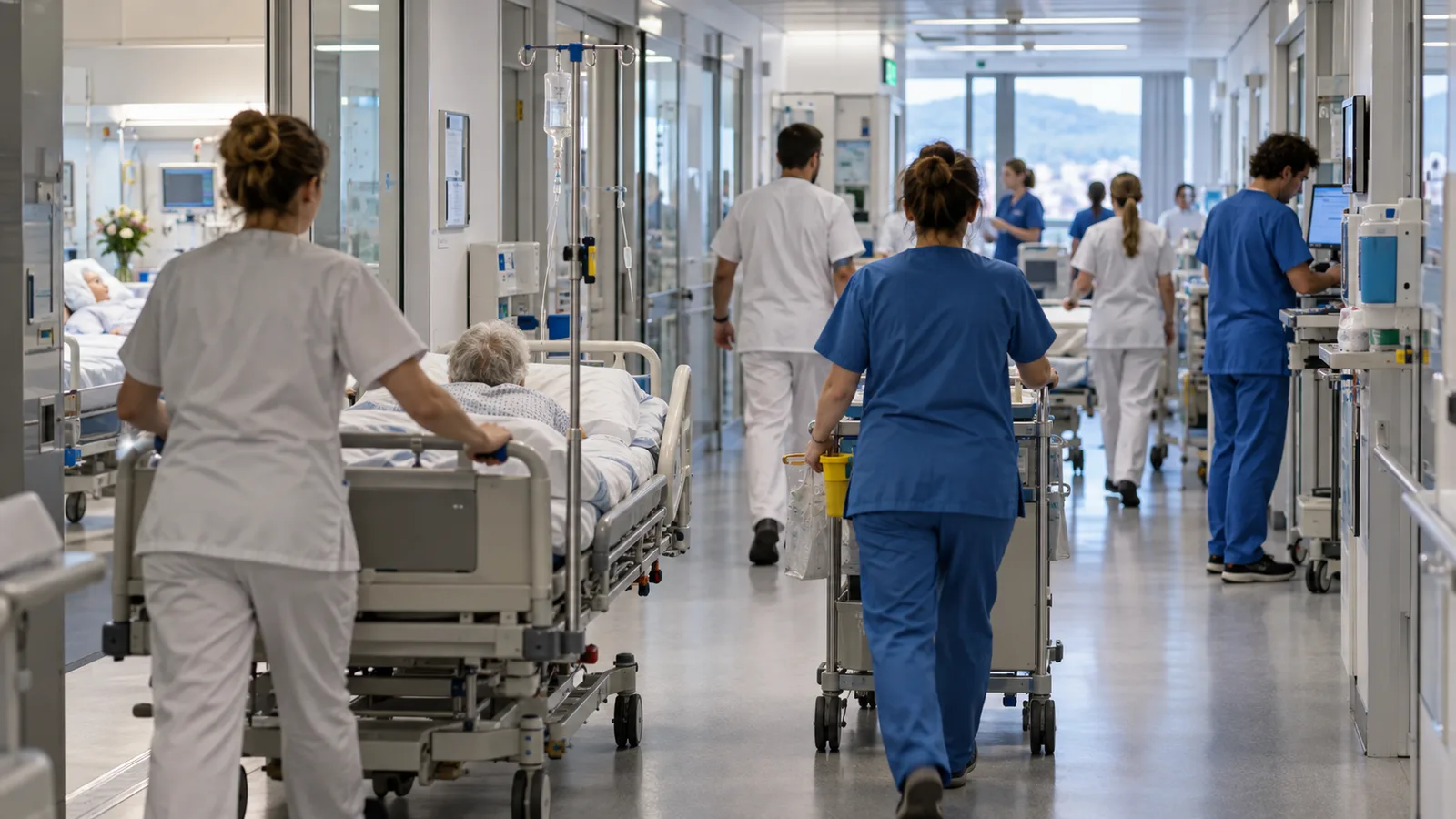
Zurich hospitals: more cases, lower unit costs, staffing open
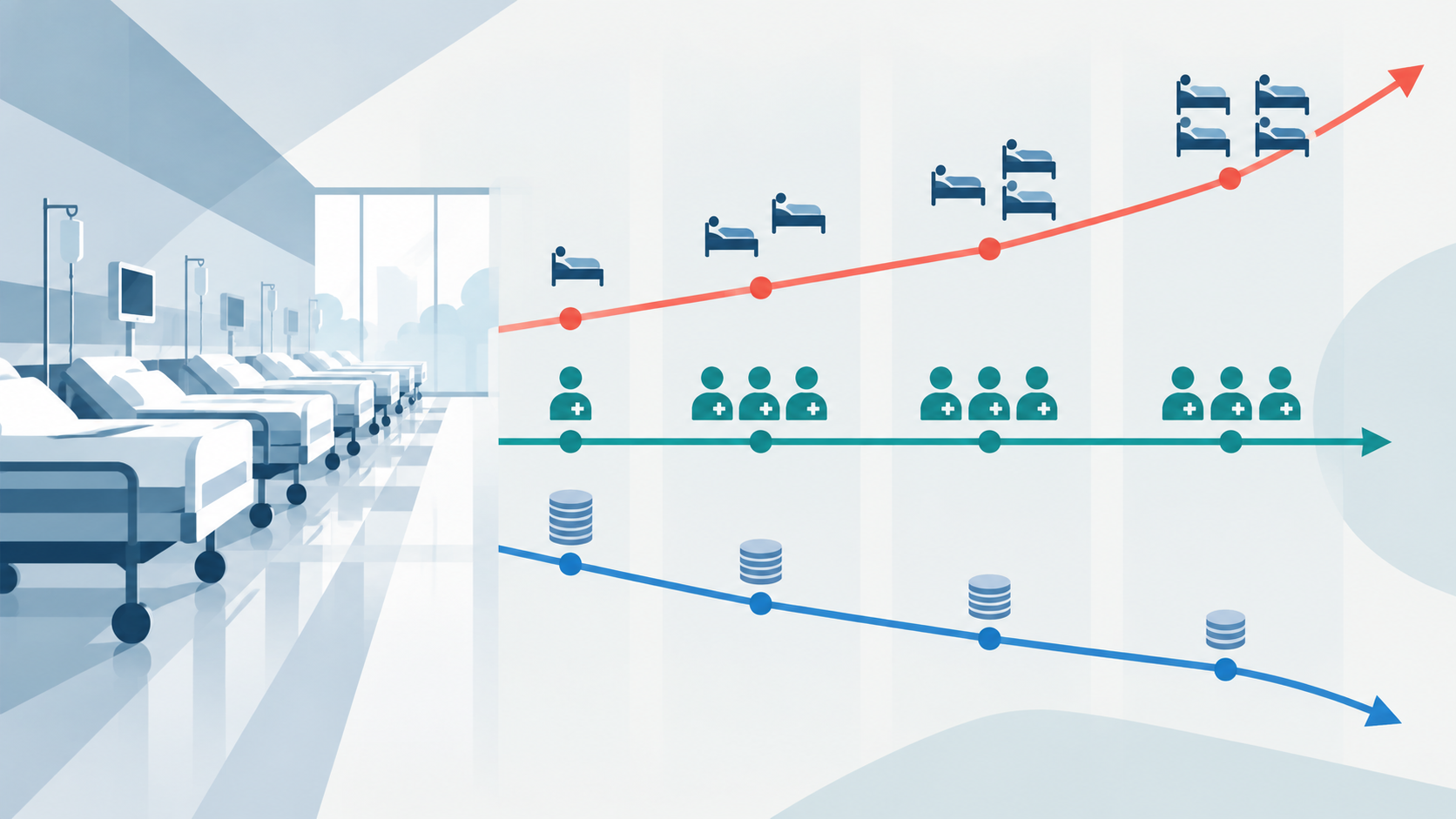
In 2025 inpatient cases rose by 3.4 percent while severity-adjusted case costs fell by 1.6 percent. Weaker job growth makes the workload question more pressing, but does not prove it.
The Zurich hospital-list hospitals treated significantly more inpatients in 2025, while fewer new positions were created than in the previous year. At the same time, average costs per case, adjusted for case severity, fell once again. The three findings point to efficiency gains — but on their own they do not yet demonstrate a heavier burden on any single occupational group.
3.4 percent more inpatient cases
According to the Zurich Department of Health, the number of inpatient treatments at acute hospitals on the hospital list rose by 3.4 percent. Birthing centres and the Sune-Egge, among others, are excluded. Demographic change has a particularly strong effect: 85 percent of the additional discharges involved people over 60 years of age. Compared with 2024, that age group accounted for 6,115 additional cases.
That is more than a short-term volume effect. As the population ages, demand for treatment tends to rise, and conditions become more complex more often. Case numbers alone therefore say nothing about how nursing-intensive or time-intensive the individual stays were.
Case costs fall despite higher total output
The average case costs under the Health Insurance Act (KVG), adjusted for severity, stood at 10,770 Swiss francs in 2025. That is 171 francs, or 1.6 percent, less than in the previous year. At twelve of the 21 acute hospitals examined, case costs fell; at nine, they rose. Total costs of inpatient KVG services nevertheless increased by 2.1 percent because of the higher number of cases.
This combination matters: a lower unit price does not automatically mean lower total spending. If a system treats more cases, total costs can rise even though each standardised case costs less on average. Conversely, a single cost increase is not necessarily a sign of poor efficiency if the range of services, standby capacity or building costs change.
Staffing grew more moderately
The Department of Health notes that significantly fewer new positions were created than in 2024. However, the media release does not give an aggregate figure for all new full-time positions. The finding therefore cannot support the claim that staffing shrank to the same extent that case numbers rose.
Assessing the actual workload would require additional indicators: full-time equivalents by occupational group, hours worked, shift staffing, overtime, staff turnover, sickness-related absences, vacancies and the care needs per case. Even shorter stays can intensify work processes, because admissions and discharges happen more often.
Emergency and paediatric care distort simple comparisons
Regional hospitals handle around a third of the canton's inpatient KVG cases. Hospitals with emergency departments also bear the costs of infrastructure that is available around the clock, even when it is not fully used in every hour. Such standby services make direct rankings between hospitals difficult.
At the University Children's Hospital, 2025 was also shaped by the first full year of operation in the new building and by the particular complexity of paediatric medicine. Paediatric services cannot readily be compared with the case mix of a general acute hospital. The severity-adjusted indicator improves comparability, but it does not remove all structural differences.
What the figures actually show
It is well documented that Zurich's acute hospitals handled more inpatient cases in 2025 and reduced adjusted average costs. It is equally documented that job growth was weaker than in the previous year. From this, a productivity gain can be derived: per standardised case, less cost was reported on average.
What is not thereby proven is an automatic overburdening of staff. Given rising volumes and a labour market with scarce specialists, this is a plausible question, but it must be examined using staffing and quality data. Patient safety, readmissions, treatment quality and the health of employees are as much part of efficiency as francs per case.
Demographic pressure remains
The key signal in the figures therefore lies in their direction. More older patients meet a system that lowers costs per case and expands its workforce less strongly. In the short term this can succeed through better processes, digitalisation, the shift to outpatient care or changed lengths of stay. Permanently, it requires proof that quality and working conditions keep pace.
The next debate should therefore not end at "more cases, fewer positions". What matters is which services are delivered with how much staff time — and whether the measured efficiency also remains sustainable for employees and patients.
Sources
Canton of Zurich: Case costs of Zurich hospitals fall again in 2025
Canton of Zurich: Figures and facts on hospitals and clinics