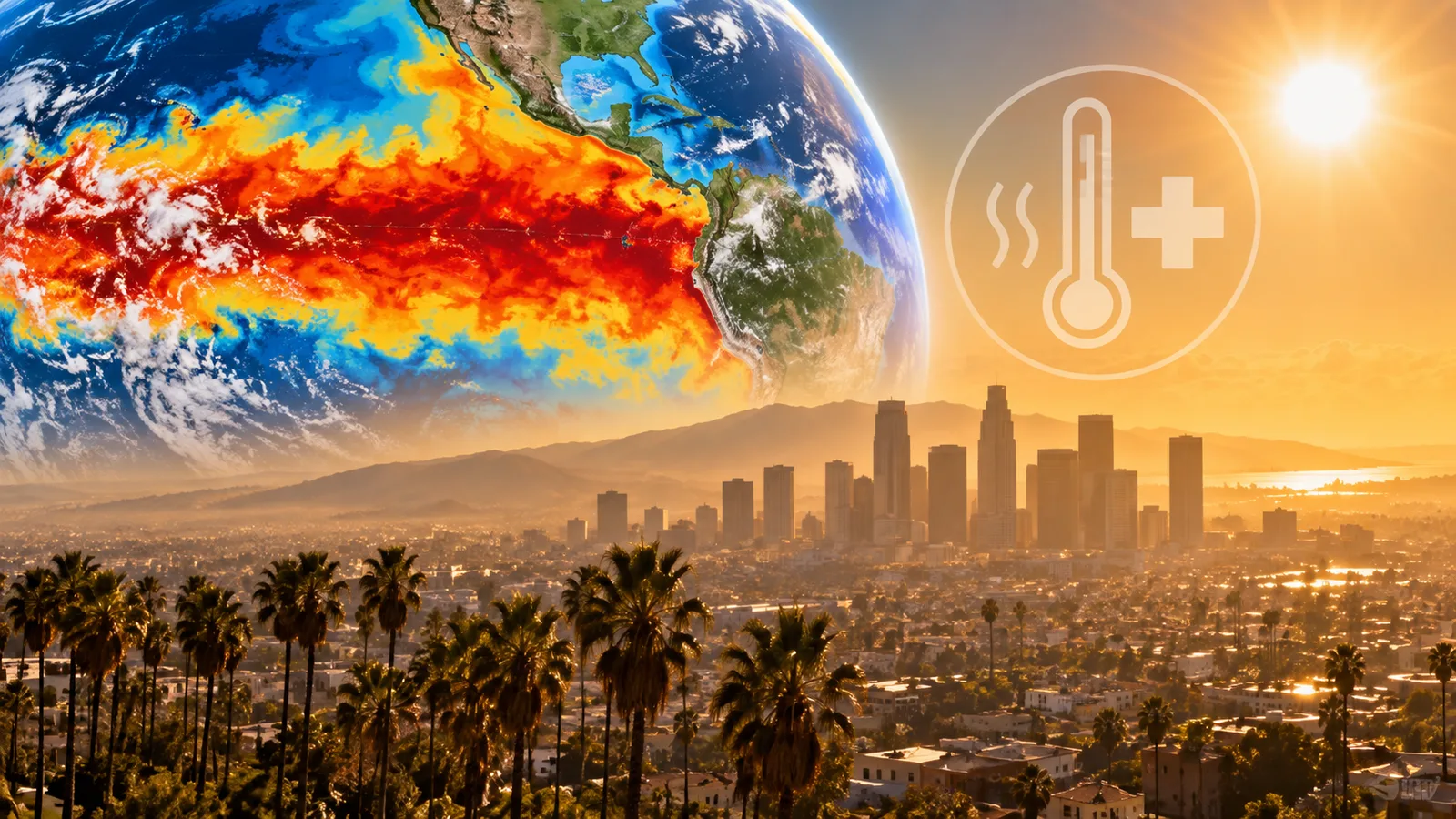
451,000 Heat Deaths From El Niño? Behind the Forecast
A new model calculation warns of hundreds of thousands of additional heat deaths. The figure is not an observed death toll and not yet peer-reviewed certainty – it shows a risk scenario.
One number is drawing attention worldwide: 451,000 people could die additionally from heat during an exceptionally strong El Niño phase. It comes from a report by the Climate Impact Lab and refers to the period from June 2026 to February 2027. As a headline it reads like a prediction. Scientifically it is something else: the output of a model that combines weather forecasts with historical links between temperature and mortality.
What the figure actually means
The Climate Impact Lab assumes a population-weighted land temperature anomaly of about 1.2 degrees Celsius above the long-term average. For September 2026 to February 2027 the report gives 1.16 degrees. It also projects 44 percent more days of extreme heat worldwide than in the comparison period.
From these temperature assumptions the team derives additional heat-related deaths. To do so it uses statistical relationships from 24,378 regions. According to the report, the estimate of 451,000 refers to June 2026 to February 2027 compared with an average year from 1996 to 2025. For the six months from September to February the report lists roughly 239,000 deaths separately, with an uncertainty of plus or minus 11,000.
That difference matters. Anyone who cites only the largest figure without giving the period and the basis of comparison conveys false precision. These are neither counted deaths nor a diagnosis for individual countries.
A model that still awaits independent review
The calculation combines a 51-member ensemble of seasonal temperature forecasts from the European Centre for Medium-Range Weather Forecasts with empirical temperature-mortality curves. This makes it possible to estimate possible consequences under different weather trajectories.
According to the report, the full methodology is to appear only in an upcoming specialist publication. The present short report is therefore not yet a completed, independently peer-reviewed study. That does not make the calculation worthless, but it limits how confidently individual country figures can be read. Climate scientist Akshay Deoras told Al Jazeera, warning in particular against treating regional winter forecasts as overly precise months in advance.
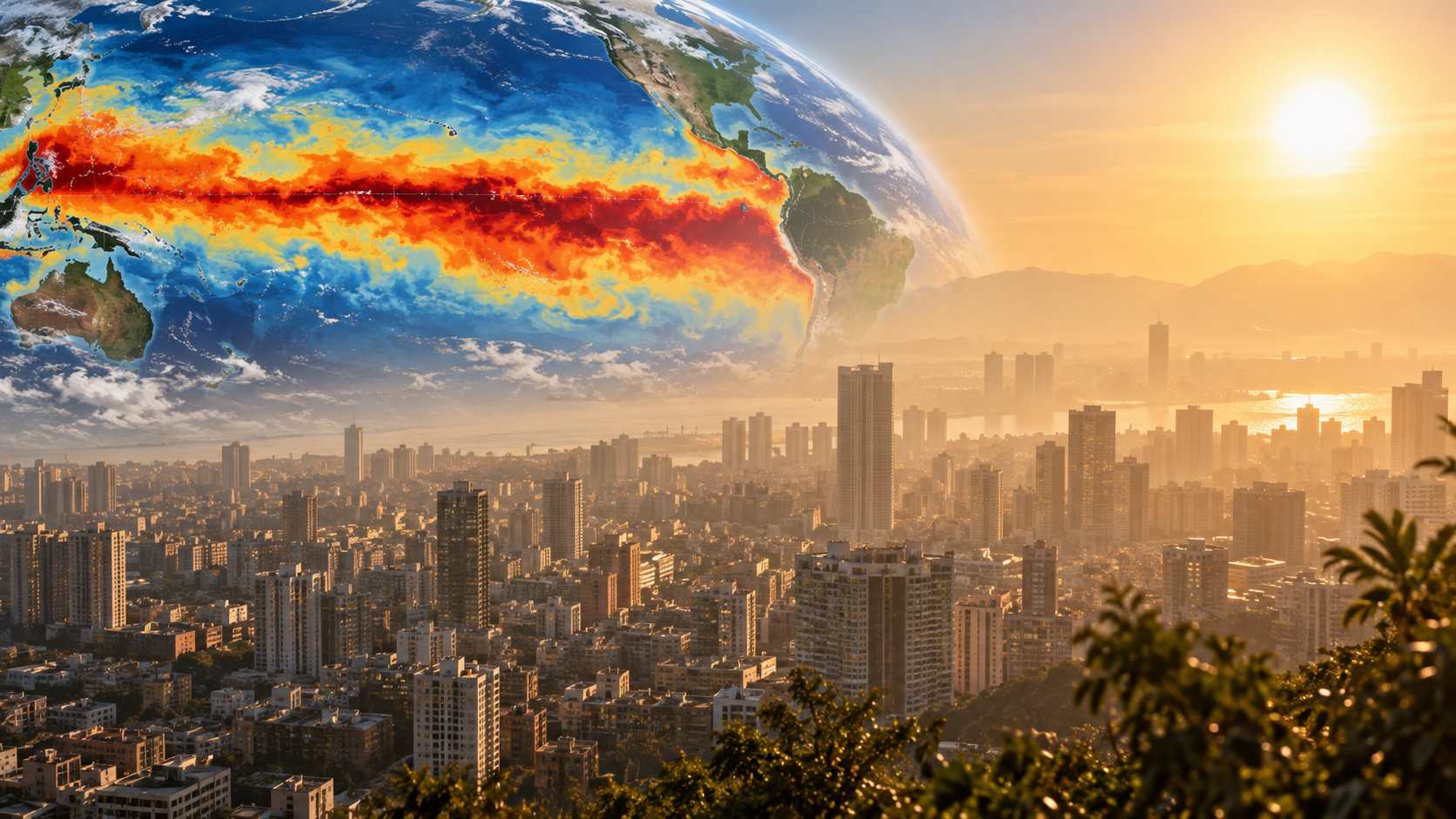
El Niño shifts weather and temperature patterns; the health consequences depend heavily on location and adaptation. · JournalPlus / AI-generated symbolic image
Why the Global South would be hit harder
The model identifies particularly high burdens for the Sahel, parts of Africa, South and Southeast Asia and Latin America. It names, among others, Nigeria with around 31,400, Indonesia with 19,300 and Sudan with about 17,500 additional deaths. Such figures are not official forecasts by the respective states.
The geographic concentration is nonetheless plausible. In already hot regions even a moderate additional warming can cross life-threatening thresholds. At the same time, air-conditioned spaces, stable power supplies, robust health systems and early warning systems are missing in many places. People who work outdoors, older people, small children and the chronically ill face an elevated risk.
Wealthier countries are not protected, but they are more often able to adapt. Cooling centres, workplace rules, heat plans and medical care lower mortality. Precisely this adaptation is hard to capture fully in statistical models: it can improve, but it can also fail during power outages or conflicts.
What El Niño does – and what it does not
El Niño refers to a periodic warming of the central and eastern tropical Pacific. It alters atmospheric circulation and influences rainfall and temperatures in many regions. The phenomenon does not, however, cause the same weather everywhere. Drought in one region can occur at the same time as heavy rain in another.
Long-term global warming plays a part as well. A strong El Niño event today starts from an already higher temperature level than it did decades ago. So a specific later heatwave cannot be explained by a single cause: it may stem from El Niño, the climate trend or local weather patterns.
A warning for preparedness, not a death list
The serious response to the 451,000 is neither panic nor all-clear. The figure shows what order of magnitude an unfavourable weather trajectory could reach under this model. Its greatest strength lies not in apparent precision but in making vulnerable regions visible early.
Authorities can use seasonal forecasts to prepare heat action plans, drinking water supplies, workplace rules and power reserves. Whether the feared mortality actually occurs depends precisely on how people and states respond. A forecast here is not fate but a window of time for prevention.


