Consumer prices in autumn 2026: what drives the LIK
The basket decides: rents, electricity and imported goods – and the open question of where BFS measurement, SECO forecast and SNB assessment diverge.
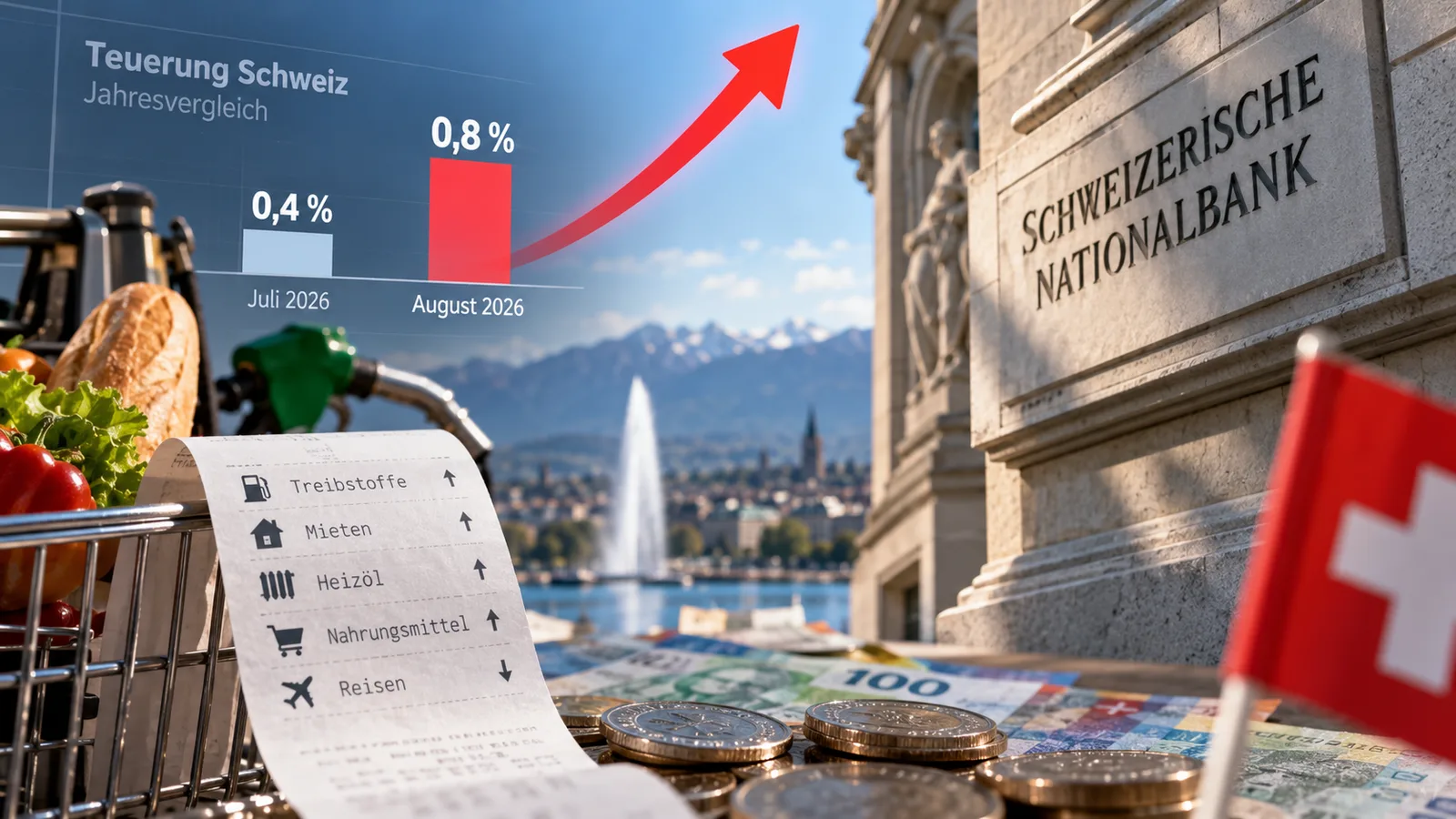
The national consumer price index (LIK) of the Federal Statistical Office (BFS) is the reference figure whenever inflation is discussed in Switzerland. It reflects the price development of a fixed basket of goods and services and is published monthly. The September figures appear, as scheduled, in early October. The publication date, the annual inflation rate and the month-on-month change must be taken from the press release and the publication calendar of BFS. No verified figures are available for this draft, which is why it names none – an estimated number would be worse than an open gap.
The basket dictates the weights
Anyone who wants to understand what is driving inflation has to look behind the headline. The LIK does not know a single inflation rate, but a weighting scheme: each group of goods contributes to the overall result in line with its share of household expenditure. The weights and the base year of the basket are revised periodically. Without the current methodology documentation it is therefore impossible to quantify how many tenths of a percentage point a single item contributes to the monthly or annual result. That also applies to the two items most often named in public debate: rents and electricity.
Housing rents count as one of the heaviest items in the basket. Under the BFS methodology they are not derived from newly concluded leases but from the existing rental stock. This construction has consequences: it dampens swings and reflects market movements with a delay. How large the rent contribution actually was in the reporting month appears only in the BFS detailed data. The date and value of the most recent reference interest rate publication must also be checked separately; the reference interest rate is the figure that guides adjustments to existing tenancies.
Electricity tariffs are set outside the BFS
Unlike rents, electricity price collection is not the responsibility of the BFS. Tariff data are collected and communicated jointly by the Federal Office of Energy (BFE) and the Electricity Commission (ElCom). Whether tariffs will rise, fall or stay unchanged as of 1 January 2027 can be demonstrated solely through these primary sources – not through media reports and not through estimates. In the basket, the electricity price moreover shows up only with the weight that the current methodology assigns to it; this weight, too, must be checked before a contribution to the overall index is asserted.
Imported goods are the third force moving the index. Their index contribution depends on exchange rates, world market prices and supply chains, and thus follows a different logic from rents and electricity tariffs. Whether these items had a driving or a dampening effect in the reporting month can be read only from the BFS detailed series broken down by origin. To assume a direction in advance would be an assertion, not a measurement. This is precisely where robust analysis separates itself from a plausible narrative.
Keep measurement and forecast strictly apart
The BFS reports past inflation. SECO and the SNB work with forecasts, that is, with assumptions about the future. Comparing the two is permissible only if the measurement period, the forecast horizon and the delimitation are disclosed. Specific forecast values for the reporting period and the definition of the comparison period can be taken from the SECO and SNB press releases; they are missing from the present material. The methodological criticism of the LIK, for instance of how rents and health costs are recorded, is equally unchecked: without named authors, traceable arguments and any counter-positions it remains an assertion and does not belong in a factual article.
The next verifiable milestone is therefore unspectacular: the original BFS release on the September figures, then the tariff publications of BFE and ElCom, and finally the forecast commentaries of SECO and SNB. Only on that basis can it be said which items moved the index and where measurement and forecast diverge. Anyone who needs a number before then must look it up in these sources – not in a summary that cannot substantiate it.
Sources
- BFS – National consumer price index (secondary source)
- BFS – Prices (statistics portal) (secondary source)
- BFE – Federal Office of Energy (secondary source)
- SECO – Press releases (secondary source)
- SNB – Press releases (secondary source)


