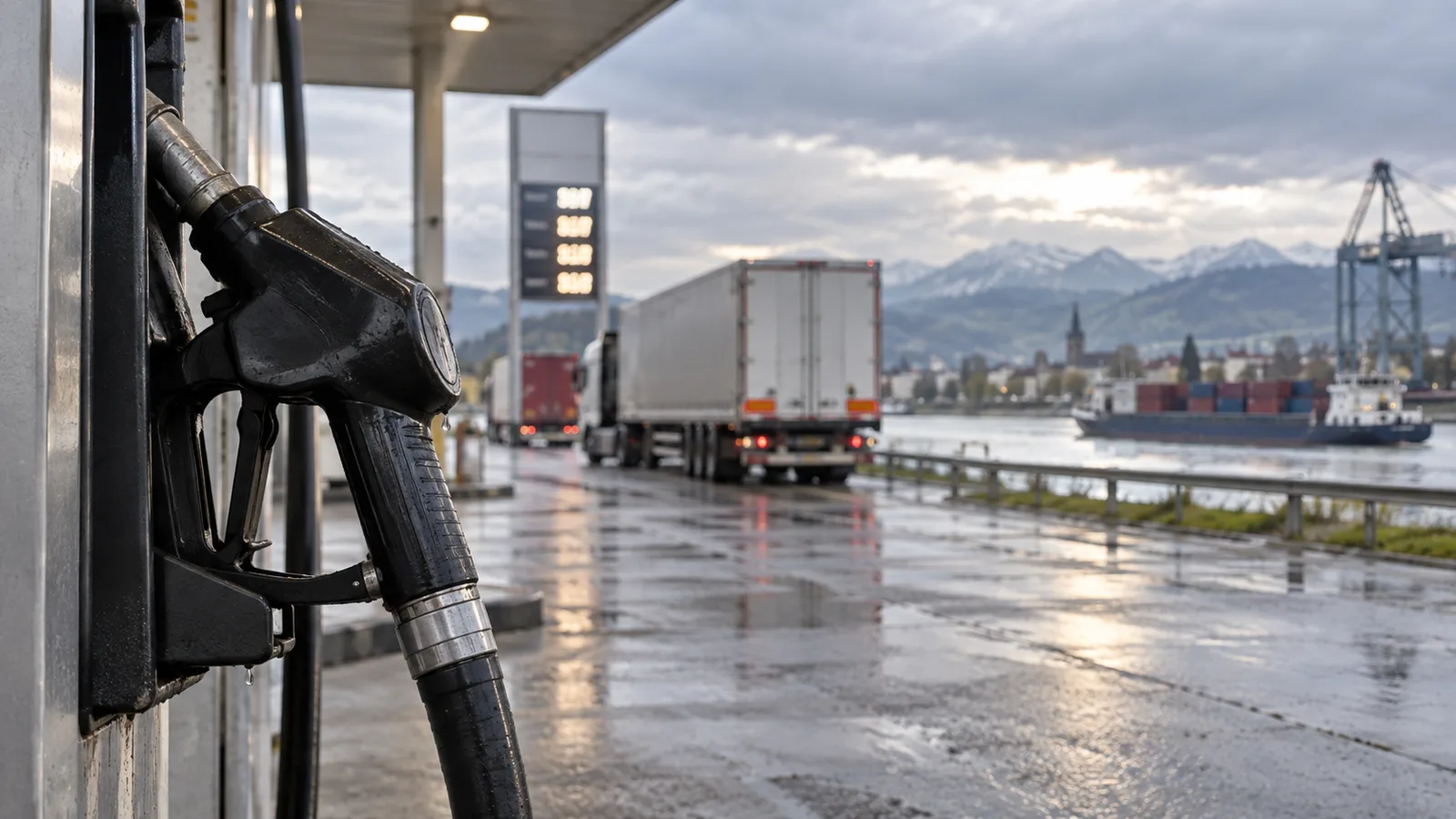
Global Diesel Squeeze: Why Switzerland May Feel the Price Surge
High product quotations meet strained transport routes. Yet the Swiss pump price follows neither immediately nor one for one.
Diesel has become markedly more expensive on international product markets. In September, the International Energy Agency (IEA) reported sharply higher crude oil and middle distillate prices. In the United States, diesel temporarily topped 200 dollars per barrel in early September; quotations also climbed strongly in Europe and Asia. For Swiss motorists and transport companies this is a warning signal, but not yet a precise price forecast.
Diesel is not simply crude oil
No crude oil is sold at the pump. Between the oil field and the tank lie transport, refining, trading, storage and distribution. Diesel belongs to the so-called middle distillates. When refineries go down, export flows fall or demand for jet fuel and heating oil rises at the same time, diesel can gain more than crude oil.
That is exactly what the current market shows. According to the IEA, net diesel exports from the Gulf region and Russia in August were well below earlier levels. At the same time, refinery margins in the Atlantic basin reached unusually high levels. Such distortions make the finished product more expensive, even if the crude oil price later eases somewhat.
Switzerland carries additional logistics risks
Switzerland covers its needs through imports and the refinery in Cressier. In September both came under pressure: low Rhine levels made transport harder, while Cressier was out of operation for around two weeks. The Federal Office for National Economic Supply therefore released limited quantities from mandatory stockpiles.
According to the federal authorities, up to 30,000 cubic metres of diesel and petrol were made available between 8 and 20 September. The released volumes amounted to less than three percent of mandatory stockpile holdings and must be replenished within six months. The refinery has since resumed operations, but the supply situation remained tight.
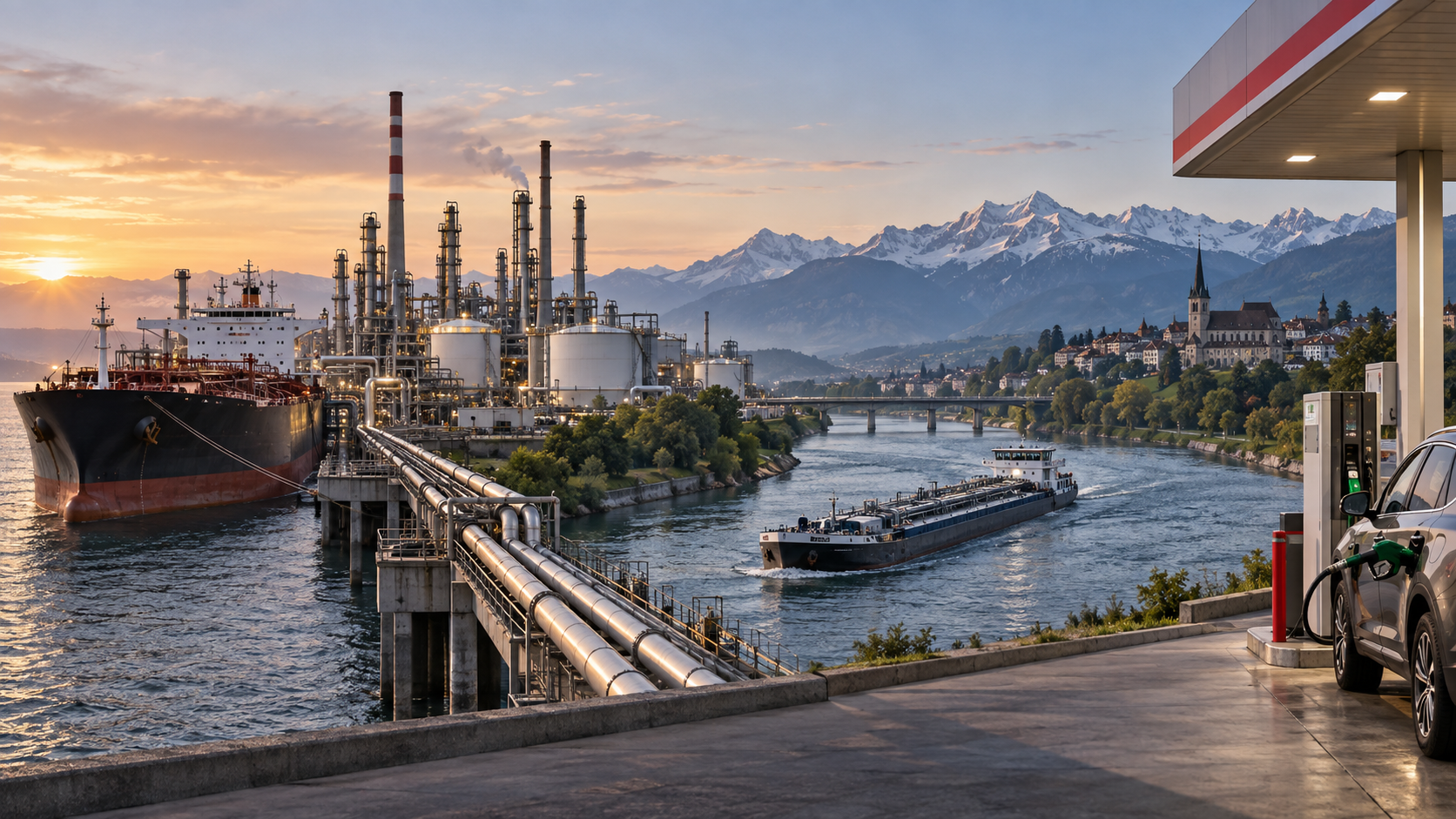
Besides the global market, the Swiss end price also depends on the exchange rate, stocks, transport and levies. Image: JournalPlus / AI-generated symbolic image.
Why the pump price reacts with a delay
Filling stations do not buy every litre at the current exchange price. Existing stocks, running supply contracts and regional competition delay the pass-through. The exchange rate adds to this: oil products are usually traded internationally in dollars. A stronger franc can cushion part of a dollar price increase; a weaker franc amplifies it.
The end price also includes the mineral oil tax, the mineral oil tax surcharge and value added tax. The fixed levies do not rise automatically with the crude oil price, but VAT works proportionally. Transport costs differ depending on the route. When the Rhine is low, a vessel can carry less, which means more trips or alternative transport become necessary.
The claim that "diesel rises by 30 percent internationally, so it will rise just as much in Switzerland" is therefore wrong. A significant increase is possible, but its size and timing depend on the entire supply chain. Regional price differences between filling stations also persist.
Who feels the effect first
A price surge hits companies with a high diesel share hardest: road haulage, construction, agriculture and commercial vehicle fleets. Part of the extra costs may later flow into freight rates and product prices. How large this second-round effect becomes depends on duration, competition and existing contracts. A single week of high quotations is not proof of it.
Private households can change little on the global market in the short term. They can compare prices along routes they are already planning, avoid unnecessary trips, check tyre pressure and drive with foresight. Stockpiling is neither necessary nor sensible; the federal authorities are not speaking of a supply failure.
Duration is what counts
Three risks currently coincide for Switzerland: expensive international products, fragile Rhine logistics and the need to replenish released mandatory stockpiles later. Easing in crude oil, refineries or water levels can quickly reduce the pressure. If margins stay high for weeks, however, the effect at Swiss filling stations becomes more likely and more lasting.
The international jump is therefore an early indicator, not a receipt. Reliable statements only emerge from actually observed Swiss retail prices over several days – and from the question of whether the supply chain is working normally again.
Exchange rate and levies do not fully dampen the global market
Crude oil and products are traded internationally in dollars. A stronger franc can partly cushion a price increase, a weaker one amplifies it. Swiss end prices also contain fixed levies and distribution costs; that is why the price at the pump does not move one for one with the international diesel price. Refinery, transport and storage holdings create additional delays. The effect often shows up over days or weeks rather than at the same moment as every market move.


