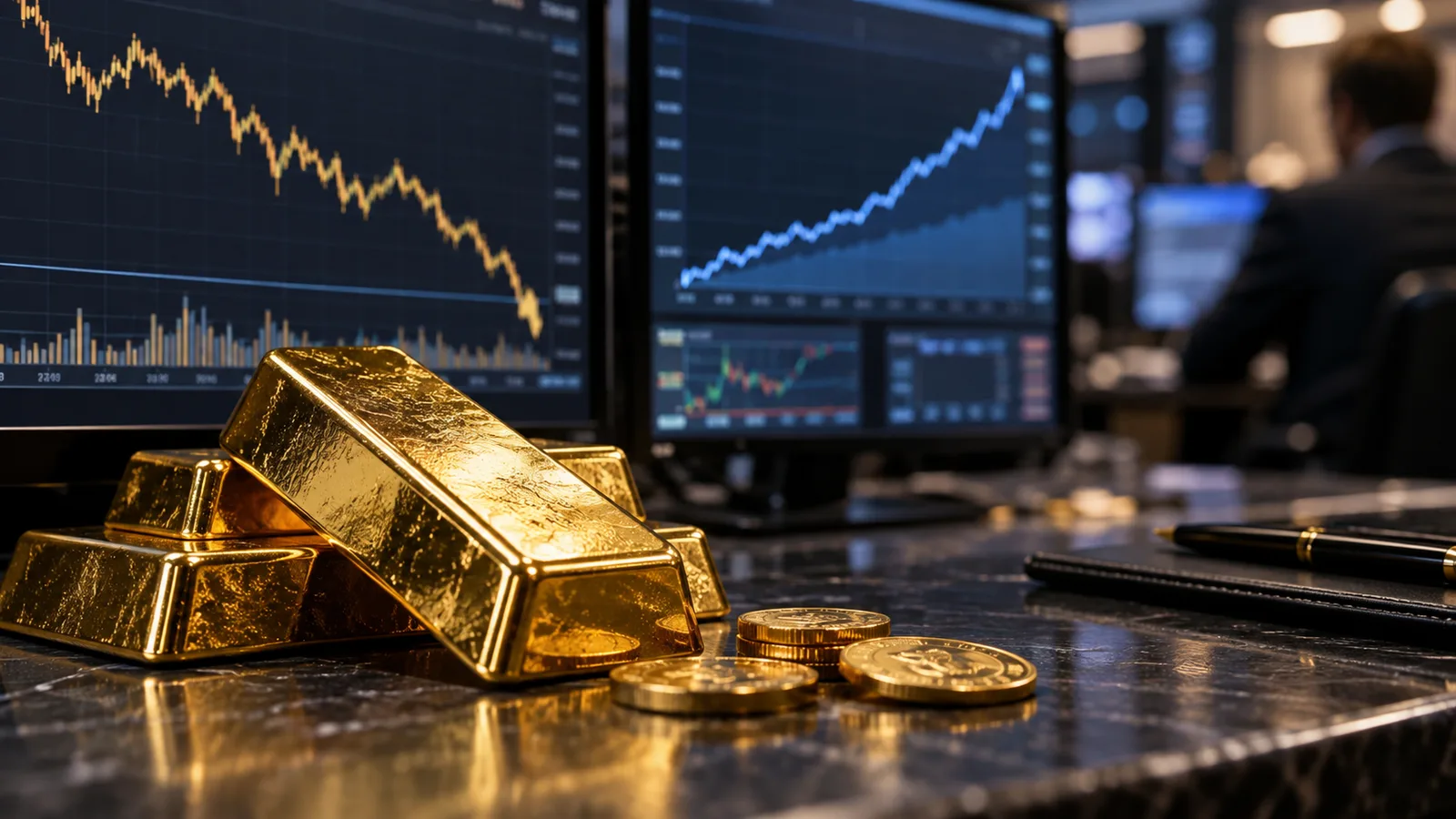
Gold Falls Despite Crisis Appeal: How the Dollar and the Fed Drive It
After the US rate hike, gold loses more than two percent on the week. The decline shows why «safe haven» is no guarantee of price stability.
Gold has ended the week with a clear decline. On Friday, 25 September, the spot price stood at 06.32 GMT at 4,274.90 dollars per fine ounce, according to Reuters, more than two percent below a week earlier. The trigger was not a single event but a combination of higher expected US interest rates, rising bond yields and a firmer dollar.
The Fed Has Raised the Price of Money
On 16 September the US central bank raised its target range for the key interest rate by 0.25 percentage points to 3.75 to 4.00 percent. It justified the move with inflation that remains elevated. In the following days several central bank officials signalled that additional tightening was possible. On Friday, the market priced in a probability of around 71 percent for another increase in October, according to Reuters.
Such probabilities are snapshots, not decisions by the Fed. They change with inflation, labour market and economic data. For the gold market, however, the direction is what counts: when safe government bonds yield more, the opportunity cost of holding an asset that itself pays no running interest rises.
Why the Dollar Has a Say
Gold is traded internationally predominantly in US dollars. When the dollar rises, the same ounce initially becomes more expensive for buyers holding euros, francs or other currencies. That can dampen demand. At the same time, yields on long-dated US government bonds climbed. The dollar gained over the week.

The link is strong, but not mechanical. Gold can gain even when interest rates are rising, if geopolitical risks, fear of inflation, purchases by central banks or capital inflows into funds dominate. A weak week therefore proves neither the end of an uptrend nor that gold has lost its reputation as a crisis asset.
«Safe Haven» Does Not Mean Stable Prices
The term «safe haven» is often misunderstood. It does not describe a guarantee against daily losses. Gold carries no default risk from a borrower, yet its market price fluctuates. Anyone who needs liquidity during a stress phase may have to sell at an unfavourable moment.
The inflation protection that is often cited also works over long periods rather than from week to week. In the short term, high real interest rates — that is, yields after deducting expected inflation — can weigh on gold. That is precisely the current tension: inflation is elevated, yet the Fed's response simultaneously strengthens interest-bearing alternatives and the dollar.
For Swiss Investors, the Franc Counts
A gold price of 4,274.90 dollars is not automatically the return of a Swiss portfolio. The exchange rate matters as well. If the franc appreciates against the dollar, it can partly or fully neutralise a rise in the gold price expressed in dollars. If the dollar strengthens, it can cushion a decline in the metal price expressed in francs.
On top of that come product costs. Physical bars and coins carry bid-ask spreads as well as storage costs. Funds and exchange-traded products charge fees and may be collateralised differently. Currency hedging reduces exchange-rate swings but also costs money. A headline about the spot price does not answer these questions.
Demand Has Several Sources
Beyond monetary policy, physical demand also has an effect. Reuters reported slightly stronger demand in India after the price correction had drawn in buyers ahead of the festive season. That observation concerns a specific market and period; it does not establish a general rule that jewellery demand increases after every price decline.
Institutional purchases by central banks or funds can move the market as well, but they follow different motives than the jewellery business. It would therefore be too simple to explain every daily loss with a Fed rate alone. Such purchases can support the price, but they do not have to outweigh the influence of the dollar and yields immediately. For a robust analysis, what counts is the combination of futures market, fund flows, physical demand and monetary policy.
What the Week Actually Shows
The decline illustrates how quickly expectations about monetary policy feed into commodity prices. It is not, however, a standalone investment recommendation. Anyone holding gold as a diversification should consider position size, time horizon, liquidity needs and currency risk separately.
The next price impulse can come from US inflation data, Fed communication, bond yields or geopolitical developments. The cleanest conclusion from the reporting week is therefore not that gold has suddenly become unsafe. It is this: even a crisis metal has a price that is renegotiated every day against the dollar, interest rates and risk expectations.


