Letters Become a Losing Business – Parcels Drive Postal Market
Digitalization and Online Retail Shift Dynamics in Swiss Delivery Market
Switzerland sends fewer letters but orders more parcels. What sounds trivial in daily life alters the economic foundation of the entire postal system. In 2025, the Swiss postal market generated revenue of 4.3 billion Swiss francs from approximately 2.5 billion shipments. Overall revenue slightly decreased by 0.3 percent. Behind this stability, individual segments are moving in opposite directions.
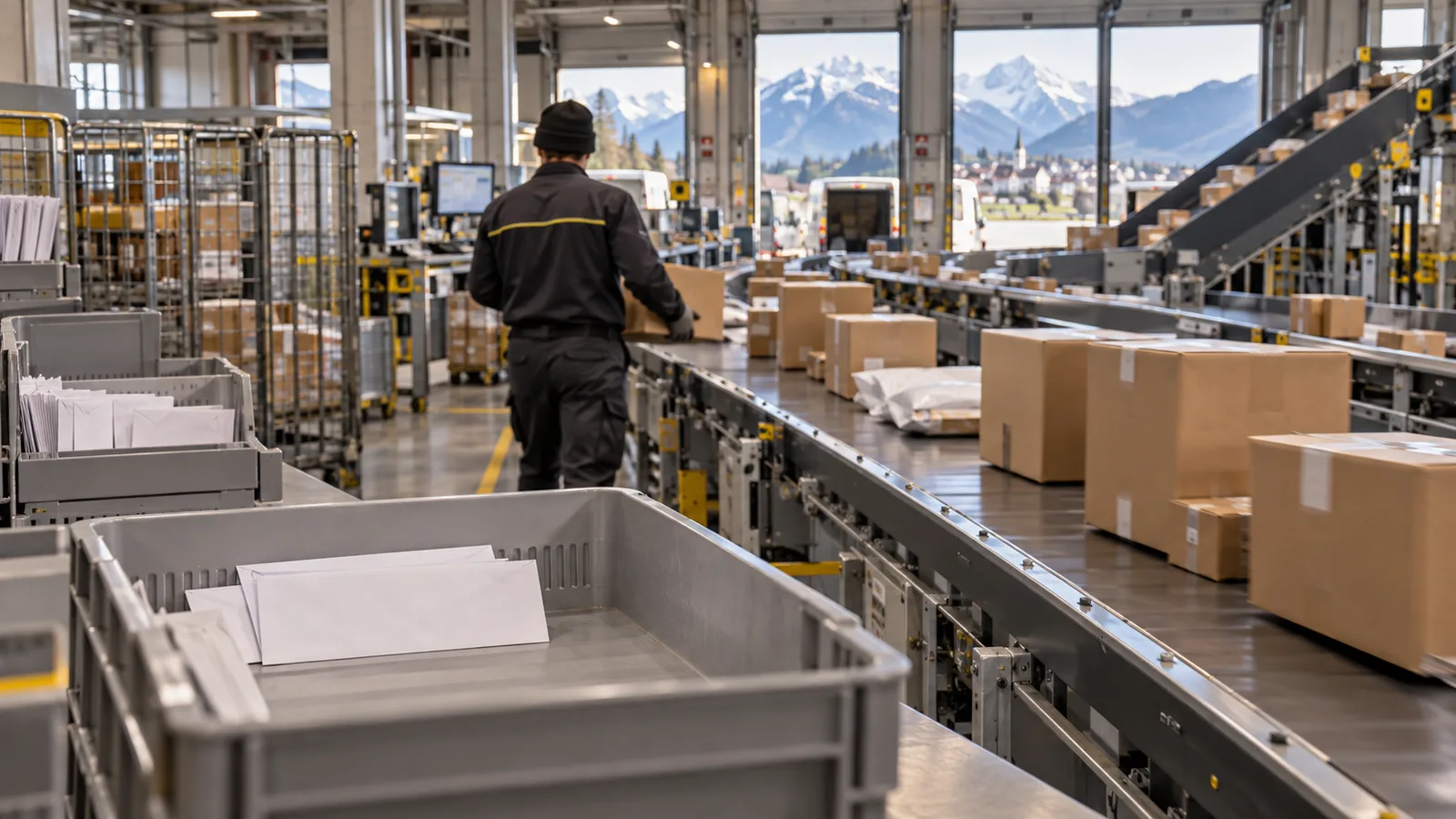
The volume of addressed letters stood at about 1.5 billion shipments, roughly one fifth lower than in 2021. According to the Federal Postal Commission (PostCom), revenues from the letter business no longer covered costs for the first time. Simultaneously, courier, express, and parcel shipments increased by four percent in both volume and revenue in 2025. Import shipments showed a particularly strong growth of twelve percent.

The Network Remains, Usage Changes
A delivery network incurs high fixed costs. Personnel, vehicles, sorting centers, and delivery routes do not automatically become one-fifth cheaper just because fewer letters arrive in mailboxes. Basic universal service still requires households across Switzerland to be regularly accessible – even in mountainous or sparsely populated regions.
Historically, the profitable letter business helped finance this network. If this contribution disappears, cross-subsidization becomes more difficult. Parcels are growing but are more complex: They require more space, often personal delivery, and cause additional trips if delivery is unsuccessful. Furthermore, this sector faces stronger competition.
Cheap Imports Come at a Price
The strong increase in import shipments reflects cross-border online trade. For consumers, small direct orders are convenient and often inexpensive. For logistics companies, they mean many individual shipments with high processing effort. Additionally, questions arise regarding customs, product safety, packaging waste, and fair competitive conditions for Swiss retailers.
A growing volume of parcels also increases traffic in neighborhoods. Deliverers can mitigate this effect with bundled deliveries, pickup stations, and electric vehicles. However, efficiency gains remain limited if multiple providers serve the same street sequentially.
Europe Grows Faster
Compared to Europe, the Swiss market shows moderate development. Between 2020 and 2024, postal revenues in comparable European markets grew by an average of 5.6 percent per year; in Switzerland, it was 0.8 percent. Exchange rates and market definitions complicate direct comparisons, but the gap indicates structural pressure.
Politically, the scope of basic universal service is therefore being discussed. Access to post offices and agencies, delivery frequency, and transit time requirements cost money. Since April 2026, 90 percent of domestic letters and parcels must arrive on time. Simultaneously, in each canton, 90 percent of the population should have access to a service point within 20 minutes – or within 30 minutes if a home service is offered.
What This Means for Swiss Citizens
Less letter mail could mean higher prices, later delivery, or a smaller branch network in the long term. Elderly people, associations, small businesses, and regions where digital alternatives or private delivery services are less effective would be particularly affected. Conversely, many households desire fast and affordable parcels, without additional delivery vans at their doorstep.
A sustainable reform must openly weigh these needs. It can promote digital delivery but must not abruptly exclude anyone. Clearly defined state services, more efficient shared infrastructure, and prices that better reflect actual costs are conceivable. The goal should not be to artificially keep letters alive. It should be to ensure reliable communication and delivery in all regions – even if the classic envelope loses its former role.